
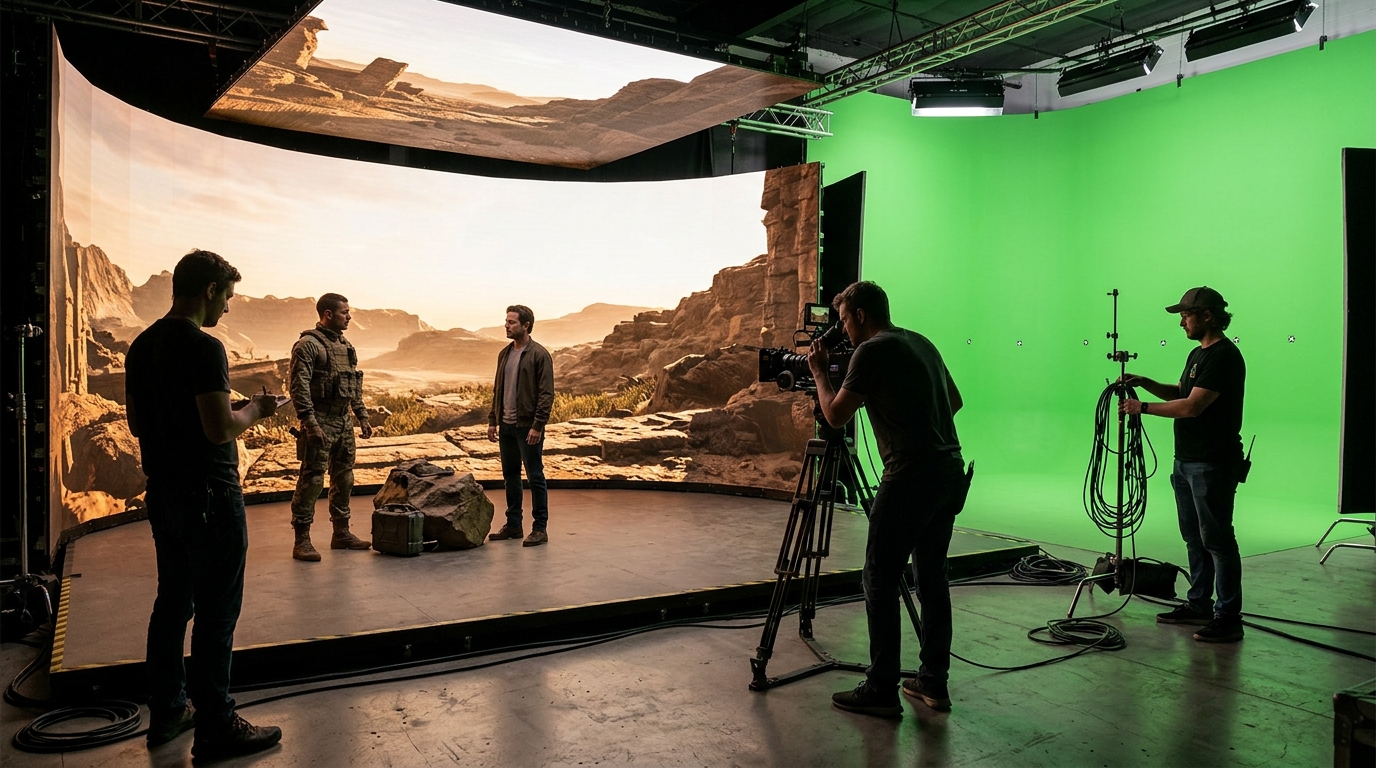
Virtual production is rapidly redefining the filmmaking landscape, with industry reports indicating that the global LED volume market is projected to grow significantly through 2030. This shift is driven by the need for real-time visual effects and immersive on-set lighting. For production companies, the decision to adopt this technology is not just about trends, but about tangible efficiency gains. Understanding the precise moment to switch from traditional chroma key methods to an Unreal Engine-powered volume is critical for budget and creative success.
Understanding the Technology
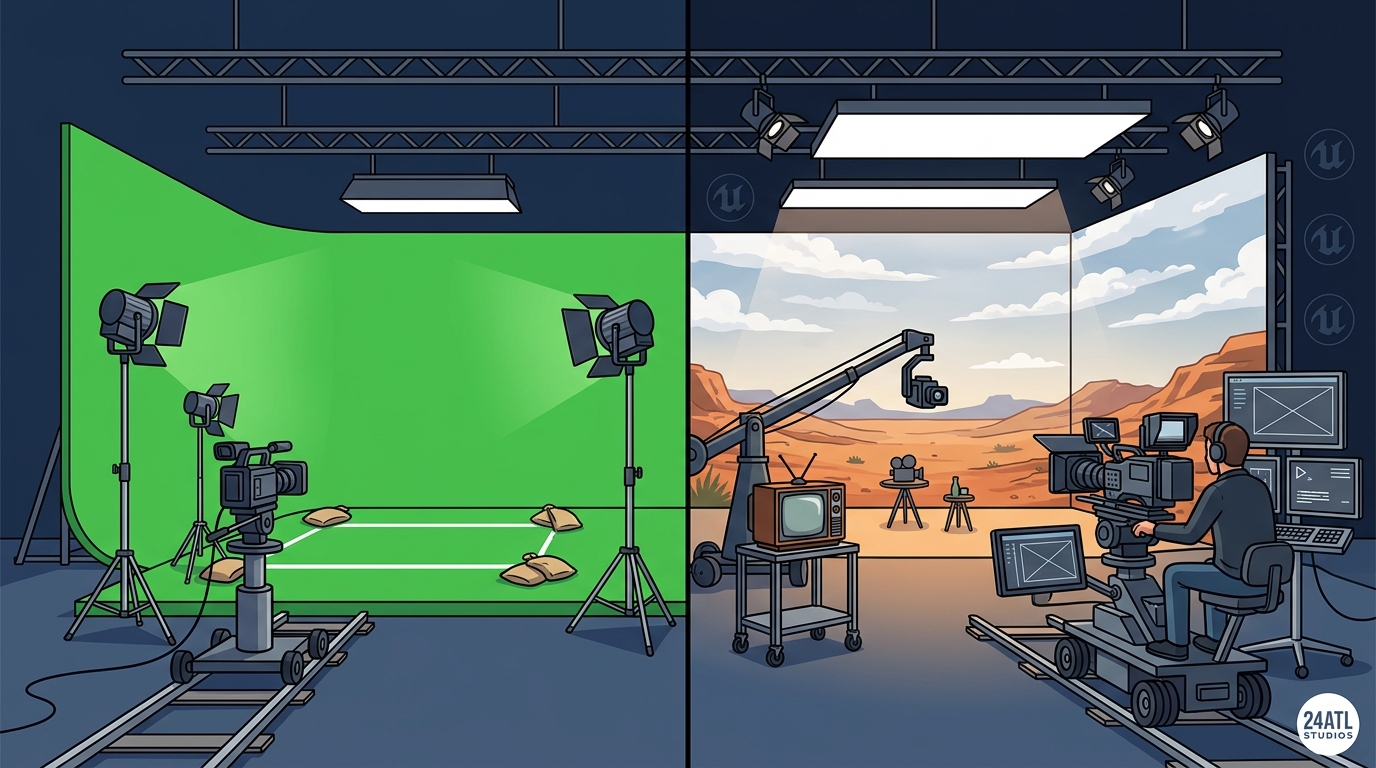
Before making a decision, it is essential to define the core mechanisms of both systems. Green screen is a chroma keying technique where a specific shade of green is isolated in post-production to replace the background with digital assets. This method has been the industry standard for decades due to its low cost and flexibility.
In contrast, LED volume is a virtual production environment where high-resolution LED panels surround the set, displaying real-time 3D environments rendered by game engines like Unreal Engine. This technology allows directors to see the final composite on set, eliminating the guesswork of post-production. At 24ATL Studios, we leverage this exact technology to provide immersive soundstages that streamline the production cycle.
The fundamental difference lies in when the visual effects are rendered. Green screen pushes the work to post, while LED volume brings it to pre-production and on-set. This shift impacts every department, from cinematography to acting.
Lighting Realism and Actor Performance
One of the most significant advantages of LED volumes is the quality of lighting. In traditional green screen setups, actors are often isolated in a void, receiving no natural light from the environment they are supposedly in. This can lead to flat, disconnected performances and requires extensive lighting adjustments to match the digital background later.
With an LED volume, the background itself becomes the light source. This means that if the scene is set in a sunset, the actors and foreground props are illuminated by the warm, directional light of the virtual sun. This creates realistic reflections in eyes, windows, and metallic surfaces, which are notoriously difficult to fake in post-production. According to industry data, productions using LED volumes report a significant reduction in post-production VFX hours because the lighting is captured in-camera.
Furthermore, actor performance improves dramatically. When performers can see the environment they are interacting with, their reactions become more authentic. They are not looking at a green wall and imagining a dragon; they are looking at a dragon rendered in real-time. This immediacy fosters a more grounded and emotional performance.
Cost Efficiency and Location Savings
While the upfront cost of renting an LED volume studio can be higher than a green screen stage, the total production budget often tells a different story. The primary financial benefit of virtual production is the elimination of location scouting, travel, and logistics for remote or dangerous environments.
Consider a commercial or film that requires a scene in Paris or on a distant planet. With green screen, you must budget for crew travel, permits, equipment transport, and weather contingencies. With an LED volume, you can shoot that scene in Atlanta, GA, in a controlled studio environment. This not only saves money but also reduces the carbon footprint of the production.
Additionally, the speed of iteration is a major cost saver. In a traditional workflow, changing a background element might require reshoots or expensive digital painting in post. In a virtual production environment, the art department can adjust the environment in real-time. This agility allows for creative exploration without the associated financial penalties.
When to Choose an LED Volume
There are specific scenarios where an LED volume is the superior choice. Recognizing these triggers can help producers make the right technical decision.
Complex Lighting Scenarios
If your project involves complex reflections, such as car process shots, glass buildings, or shiny vehicles, an LED volume is essential. Green screen struggles with these elements because the green spill is difficult to remove from reflective surfaces without losing detail. The car process capabilities at modern studios allow for seamless integration of moving vehicles with dynamic backgrounds.
Real-Time Client Approval
For commercials and high-stakes corporate videos, clients often demand to see the final look during the shoot. An LED volume provides an immediate, high-fidelity preview of the final composite. This transparency builds trust and reduces the risk of costly revisions after the shoot is complete.
Immersive Music Videos and Events
Artists and event planners increasingly seek immersive experiences. The ability to create a "Mobile Wall" environment allows for unique lighting and visual imagery that adapts to the performance. This is particularly effective for music videos where the visual aesthetic is as important as the audio.
When to Stick to Green Screen
Despite the advantages of LED volumes, green screen remains a vital tool in the filmmaker's arsenal. It is not obsolete; it is simply specialized.
Extreme Scale and Fantasy
If your project requires environments that are physically impossible to render in real-time on current hardware, green screen may still be necessary. While Unreal Engine is powerful, there are limits to the complexity of crowds, weather simulations, and physics that can be rendered live. For massive battle scenes or intricate magical effects, post-production VFX offers greater control.
Budget Constraints
For low-budget independent films or micro-commercials, the rental cost of an LED volume studio may be prohibitive. Green screen stages are widely available and significantly cheaper to rent. If the project does not require the lighting benefits or real-time feedback of a volume, green screen is the more economical choice.
Non-Standard Angles
LED volumes have blind spots. If your camera work requires extreme wide-angle lenses or shots that look directly at the corner seams of the LED wall, green screen provides a more flexible canvas. The curvature of LED panels can also introduce distortion if not calibrated correctly for specific lens choices.
Comparison Summary
| Feature | LED Volume | Green Screen |
|---|---|---|
| Lighting | Real-time, dynamic, accurate reflections | Artificial, requires post-matching |
| Actor Performance | High, due to visible environment | Variable, requires imagination |
| Post-Production Time | Reduced, in-camera VFX | Extended, keying and compositing |
| Cost | Higher upfront, lower logistics | Lower upfront, higher logistics |
| Best For | Commercials, Car Process, Music Videos | Low-budget films, Extreme VFX |
Key Takeaways
- Real-Time Feedback: LED volumes allow directors and clients to see the final composite on set, reducing revision cycles.
- Lighting Accuracy: The LED wall provides natural, dynamic lighting that enhances realism and reduces post-production work.
- Location Savings: Virtual production eliminates the need for travel and location permits for remote environments.
- Car Process: LED volumes are ideal for vehicle shots, providing accurate reflections and dynamic backgrounds.
- Cost Considerations: While upfront costs are higher, total production costs may be lower due to efficiency gains.
- Technical Limits: Green screen is still necessary for extreme VFX scales that exceed real-time rendering capabilities.
- Industry Adoption: Major productions are increasingly adopting LED volume technology for its creative and logistical benefits.
Frequently Asked Questions
Is LED volume production more expensive than green screen?
The hourly rate for an LED volume studio is typically higher than a green screen stage. However, the total project cost may be lower due to savings on location scouting, travel, and post-production VFX hours. The efficiency gains often offset the initial rental premium.
Can I shoot a music video in an LED volume?
Yes, LED volumes are highly effective for music videos. They allow for dynamic, changing backgrounds that react to the music, creating a unique visual experience. Studios like 24ATL Studios specialize in creating custom tailored Unreal Engine environments for this purpose.
What is the "Car Process" in virtual production?
The car process involves placing a vehicle on a trailer or rig inside the LED volume. The background moves in sync with the car's movement, creating the illusion of driving through a real environment. This eliminates the need for dangerous or expensive location shoots.
Do I need Unreal Engine expertise to use an LED volume?
While knowledge of Unreal Engine helps, most professional studios provide technical support and pre-built environments. You do not need to be an expert to benefit from the technology, as the studio handles the rendering and asset management.
Can LED volumes handle large crowds or complex weather?
Current LED technology can handle complex weather effects like rain and snow. However, rendering massive crowds in real-time can be challenging. For extreme scale, a hybrid approach using both LED volume and green screen may be optimal.
How does LED volume improve actor performance?
Actors can see their surroundings, which helps them react naturally to the environment. This leads to more authentic emotional responses and reduces the need for extensive direction regarding eye lines and interaction.
Is green screen obsolete?
No, green screen is not obsolete. It remains a cost-effective solution for projects with limited budgets or those requiring VFX that exceed real-time rendering capabilities. It is a complementary tool rather than a replacement.
Book Your Production
Ready to elevate your next project with cutting-edge virtual production? Whether you need a custom Unreal Engine environment, a car process setup, or a full-scale film production, 24ATL Studios is here to help. Our team of experts is dedicated to delivering exceptional results with precision and creativity. Contact us today to schedule your shoot and experience the future of filmmaking.