
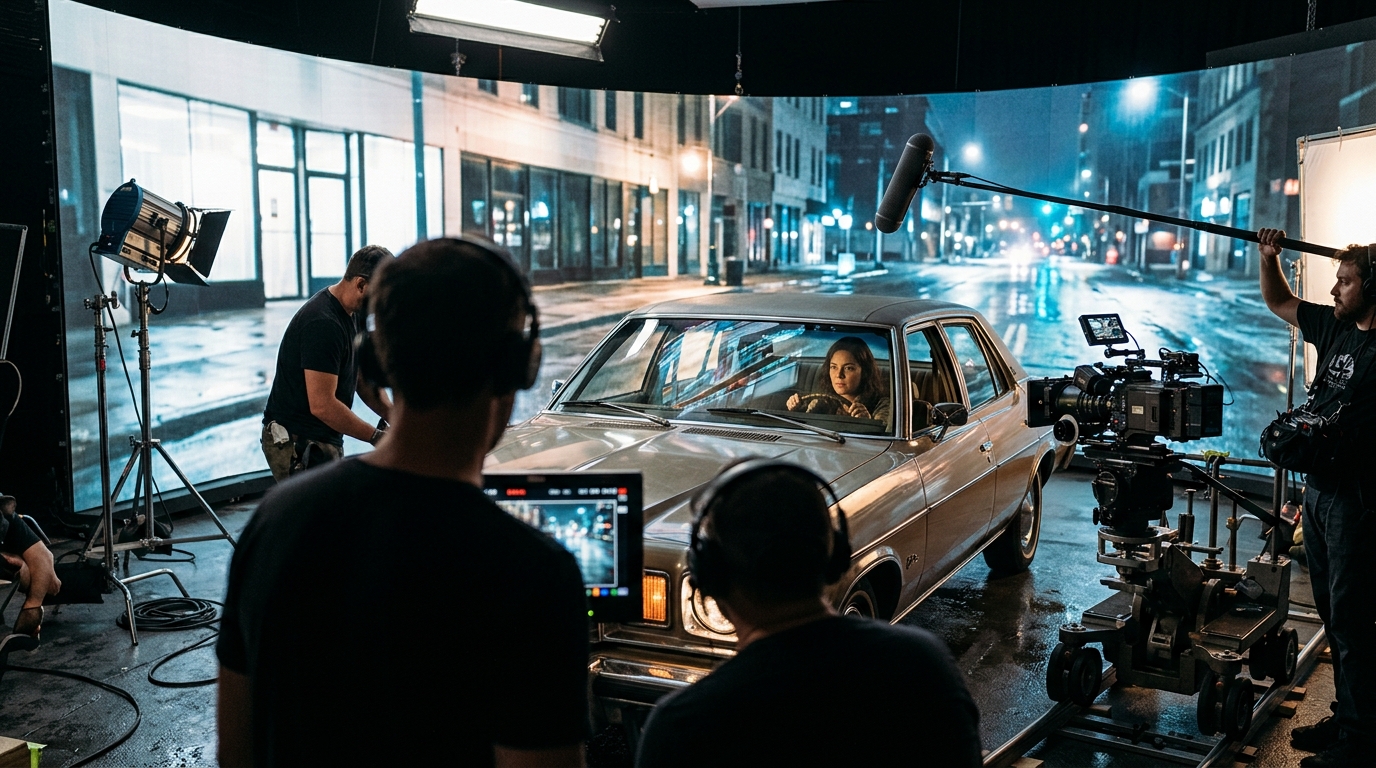
Traditional car process trailers are becoming obsolete in high-end production. Modern filmmakers are shifting to LED volume walls to eliminate the logistical nightmare of towing heavy rigs. This transition allows for real-time lighting changes and dynamic backgrounds. The industry standard is moving toward virtual production for efficiency.
Why Abandon Process Trailers?
Process trailers have long been the backbone of automotive cinematography. However, they come with significant operational drawbacks. The primary issue is the physical limitation of the environment. You are confined to a fixed set of background plates or a limited green screen area. This restricts the director's ability to change locations dynamically during a take.
Another major factor is the lighting mismatch. Traditional trailers struggle to match the dynamic lighting of the car's interior with the exterior environment. This often results in post-production VFX work that is both expensive and time-consuming. According to industry reports, post-production costs for green screen car scenes can exceed 40% of the total visual effects budget. This statistic highlights the financial inefficiency of the traditional method.
Logistics also play a critical role. Moving a process trailer requires heavy-duty towing vehicles and specialized crew. This adds layers of complexity to the production schedule. It also limits the locations where you can shoot. You are often restricted to large, open parking lots or soundstages. This lack of flexibility can stifle creative vision.
Understanding LED Volume Technology
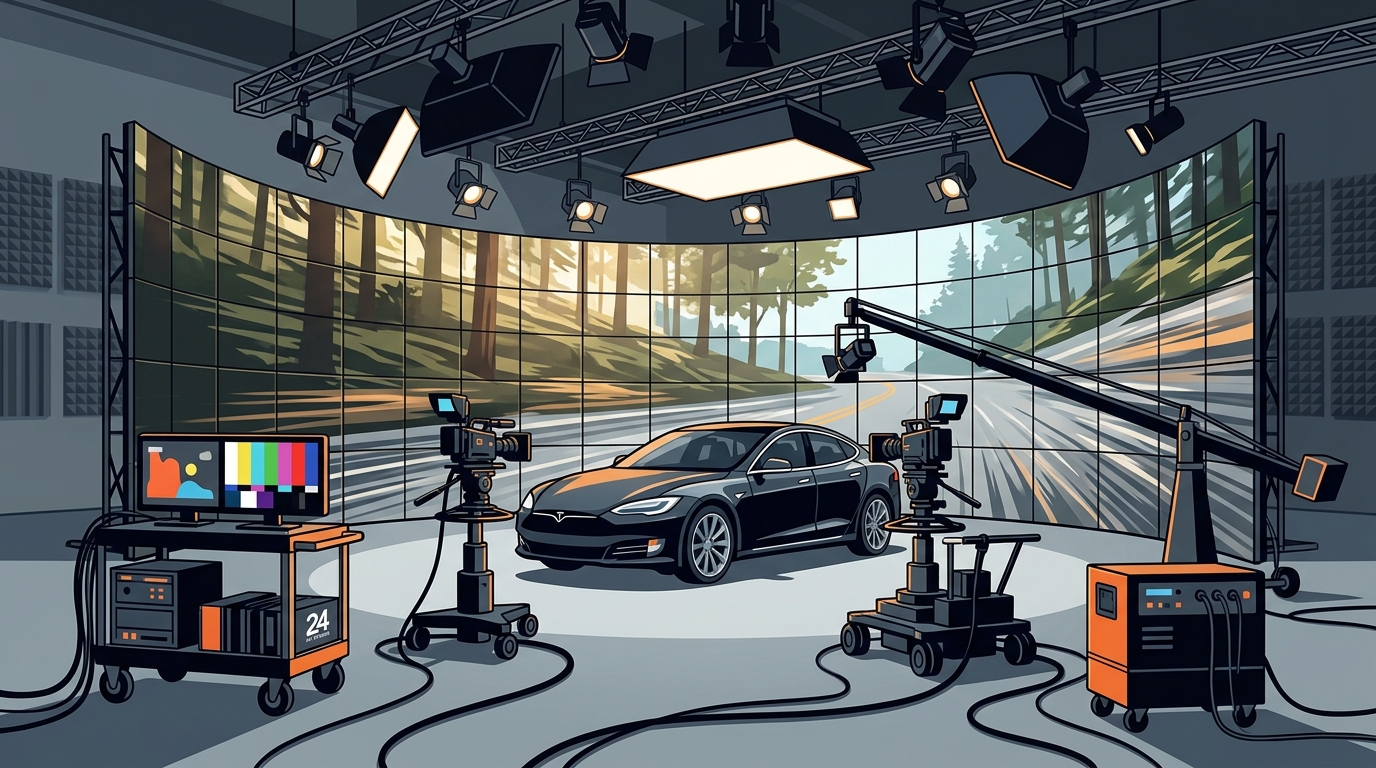
LED volume walls represent a paradigm shift in filmmaking. This technology uses high-resolution LED panels to create immersive, real-time environments. The key innovation is the ability to display dynamic backgrounds that react to camera movement. This creates a seamless integration between the physical car and the virtual world.
LED volume is defined as a large-scale display system that wraps around the set to provide realistic, interactive backgrounds. Unlike green screens, these walls emit actual light onto the actors and the car. This eliminates the green spill problem that plagues traditional chroma keying. The result is a more natural and accurate color representation in the final footage.
The technology also solves the lighting problem. Because the background is displayed on the walls, the light reflects naturally onto the car's surface. This means the reflections on the car's paint match the environment perfectly. Directors can change the time of day or the weather conditions instantly. This level of control is impossible with physical process trailers.
The Unreal Engine Advantage
At the heart of modern LED volume studios is Unreal Engine. This real-time 3D creation tool allows for the generation of photorealistic environments. The engine processes the camera's position and orientation in real-time. This ensures that the background perspective matches the camera's movement exactly.
Unreal Engine is defined as a real-time 3D computer graphics engine used for creating interactive content. In the context of film production, it powers the virtual sets displayed on the LED walls. The engine's ability to render high-fidelity graphics at 60 frames per second is crucial. This ensures that the background remains smooth and free of motion blur artifacts.
The integration of Unreal Engine also allows for pre-visualization. Directors can walk through the virtual set before shooting begins. This helps in planning camera angles and lighting setups. It also allows for adjustments to the environment based on creative feedback. This pre-production phase saves significant time and money during the actual shoot.
Shooting Without a Trailer: The Workflow
Shooting a car scene without a process trailer requires a different workflow. The first step is to secure a studio with a large enough LED volume. The space must accommodate the car and the camera movement. At 24ATL Studios, we provide custom tailored Unreal Engine environments to fit your concept. This ensures that the virtual set matches your creative vision.
Next, the car must be positioned correctly within the volume. The car's interior lighting must be balanced with the virtual environment. This is achieved by adjusting the LED wall's brightness and color temperature. The goal is to create a seamless blend between the physical and virtual elements.
Camera tracking is the final critical component. The camera's position is tracked in real-time by the LED volume system. This data is sent to Unreal Engine to update the background perspective. This synchronization is what creates the illusion of movement through a real world. Without accurate tracking, the illusion breaks, and the virtual background will appear static.
Post-production costs are significantly reduced in this workflow. Because the lighting and backgrounds are captured in-camera, there is less need for VFX cleanup. This simplifies the post-processing cycle and accelerates the delivery timeline. The simplicity of VFX in the post processing cycle is a major advantage for producers.
Cost vs. Benefit Analysis
While LED volume technology may seem expensive upfront, the long-term benefits are substantial. The primary cost saving comes from reduced post-production work. Traditional green screen car scenes require extensive rotoscoping and lighting matching. LED volume eliminates much of this work. This can cut production costs in half by saving on locations, car process trailers, green screen spill and more.
Another benefit is the flexibility of the shoot. You can change the environment instantly. This allows for multiple variations of the same scene without resetting. This efficiency is particularly valuable in commercial production where time is money. The ability to iterate quickly leads to better creative outcomes.
Here is a comparison of the two methods:
| Feature | Process Trailer | LED Volume Wall |
|---|---|---|
| Background Flexibility | Fixed or Limited | Infinite, Real-Time |
| Lighting Accuracy | Low (Green Spill) | High (Real Reflections) |
| Post-Production Cost | High | Low |
| Logistical Complexity | High (Towing, Setup) | Low (Studio Based) |
| Creative Iteration | Slow | Instant |
Key Takeaways
- LED volume walls eliminate the need for physical process trailers, reducing logistical overhead.
- Real-time lighting from LED panels provides accurate reflections on car surfaces.
- Unreal Engine powers the virtual sets, allowing for dynamic background changes.
- Post-production costs are significantly lower due to reduced VFX requirements.
- 24ATL Studios offers custom tailored Unreal Engine environments for unique concepts.
- The technology allows for instant changes in time of day and weather conditions.
- Camera tracking is essential for maintaining the illusion of movement.
Frequently Asked Questions
Can I shoot a car scene without a process trailer?
Yes, you can shoot a car scene without a process trailer by using an LED volume wall. This technology provides dynamic, real-time backgrounds that replace the need for physical trailers.
How does LED volume technology work for car scenes?
LED volume technology uses high-resolution panels to display virtual environments. Camera tracking ensures the background moves in sync with the camera, creating a realistic illusion of movement.
Is Unreal Engine necessary for LED volume production?
Unreal Engine is the industry standard for powering LED volume walls. It allows for real-time rendering of photorealistic environments that react to camera movement.
What are the cost benefits of using LED volume over process trailers?
LED volume reduces post-production costs by minimizing VFX work. It also saves on location fees and logistical expenses associated with moving process trailers.
Can I change the background during the shoot?
Yes, one of the main advantages of LED volume is the ability to change backgrounds instantly. This allows for creative flexibility during the shoot.
What is the role of camera tracking in LED volume?
Camera tracking monitors the camera's position and orientation. This data is sent to the rendering engine to update the background perspective in real-time.
Are there any limitations to shooting with LED volume?
The main limitation is the size of the LED wall. The car and camera must fit within the volume. However, modern studios offer large enough spaces for most productions.
Book Your Shoot
Ready to elevate your production with the same Unreal Engine Technology used on Disney’s Mandalorian? Contact 24ATL Studios today to schedule your virtual production session. Visit our home page to learn more about our services. Explore our team page to meet the experts behind the technology. Check out our props section for additional set dressing options. Learn more about our car process capabilities. Discover our event space for corporate presentations. Contact us via our design services page for custom proposals.