
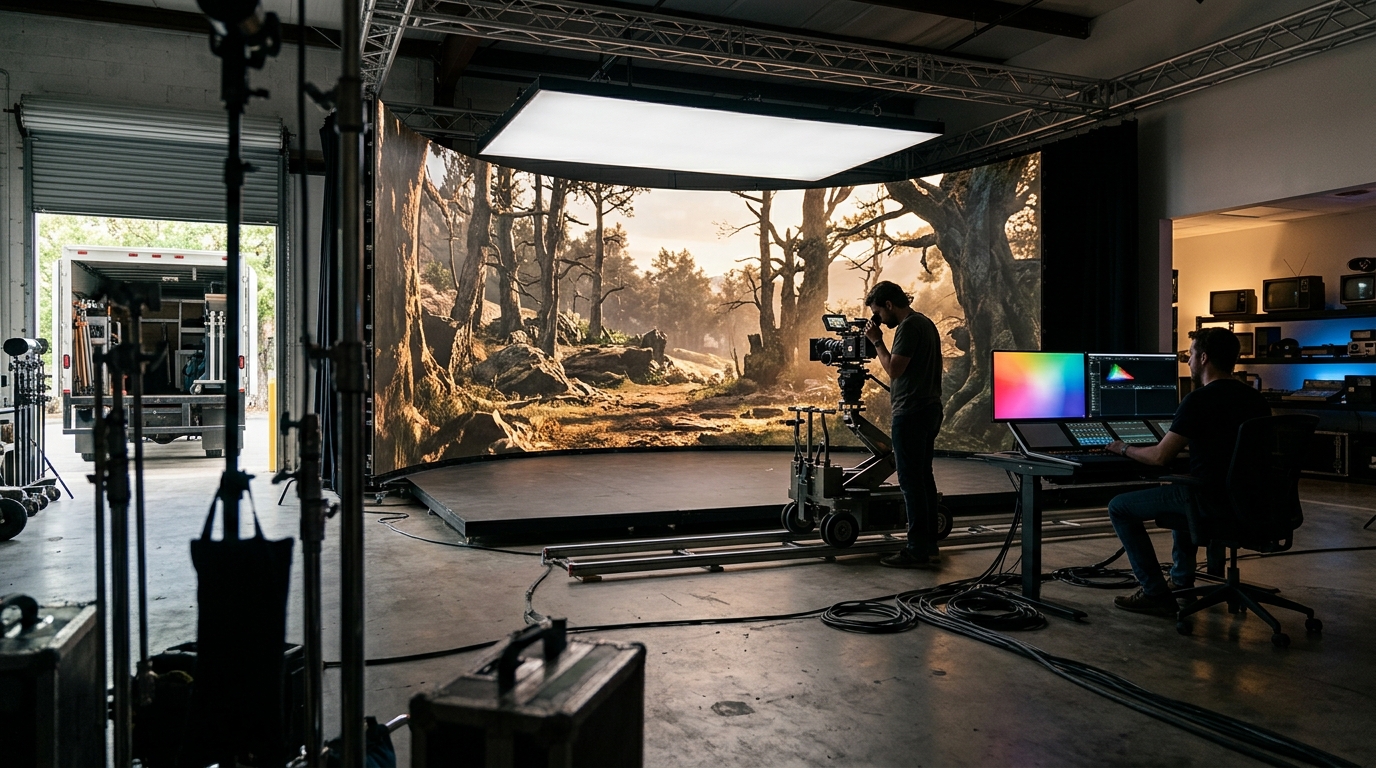
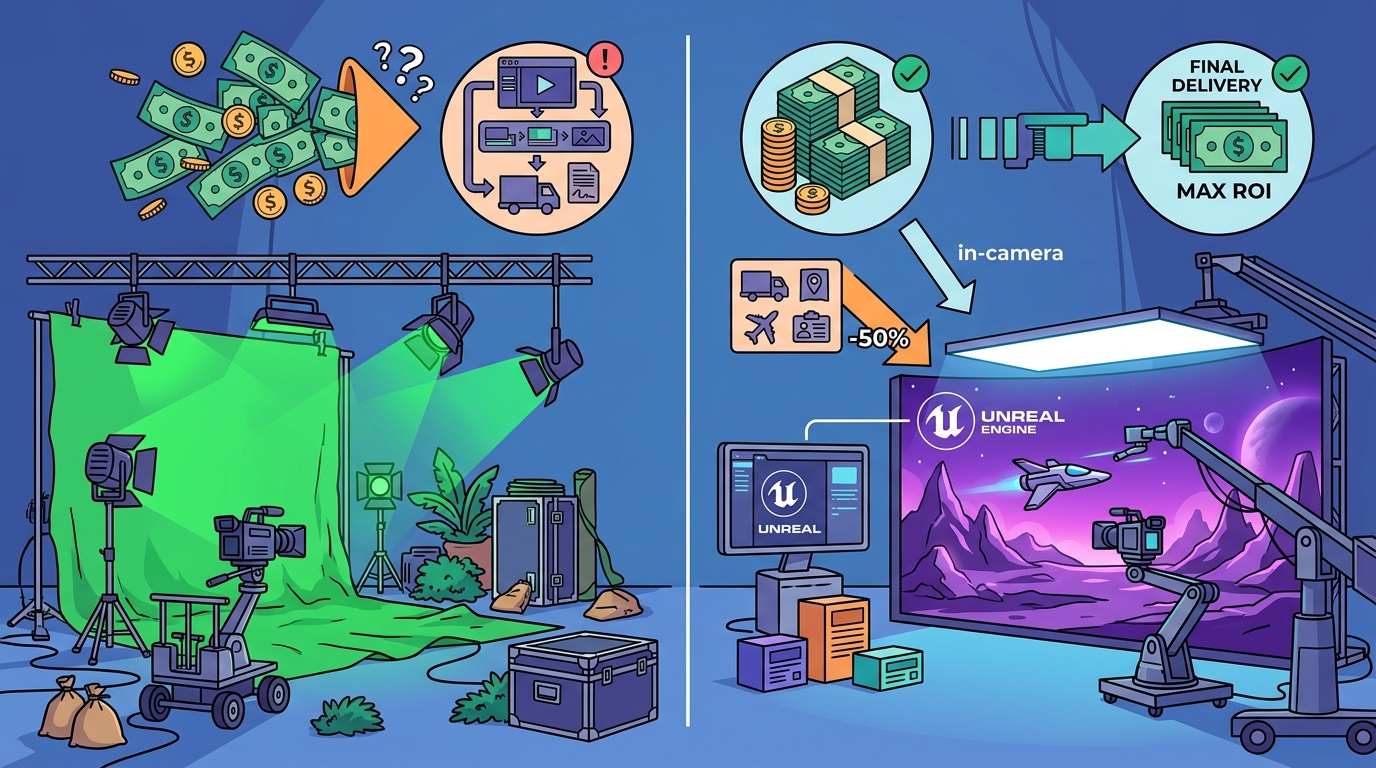
The shift from traditional green screen workflows to LED volume stages represents one of the most significant capital and operational transformations in modern filmmaking. According to recent industry analyses, productions utilizing virtual production techniques can reduce post-production visual effects costs by up to 30 percent while simultaneously cutting location logistics expenses by half. This dramatic shift in economics is driven by the "in-camera" reality of LED volume technology, which eliminates the need for extensive digital compositing later. For production companies, understanding the specific pricing models available is critical to maximizing return on investment. This guide dissects the financial structures of LED volume stages, using 24ATL Studios as a primary case study for high-fidelity Unreal Engine virtual set production.
Defining the LED Volume Stage
To understand the financial implications, we must first establish technical clarity. An LED volume stage is a large-scale immersive environment composed of high-resolution LED panels that display real-time, computer-generated imagery. This technology allows actors and cameras to interact with the background during the actual shoot, rather than in post-production. The core definition of this technology is essential for budgeting accuracy.
Virtual production is the overarching methodology that combines real-time rendering with LED wall technology to create interactive environments. This definition distinguishes it from traditional pre-visualization or static background plates. The second critical term is Unreal Engine, which is a real-time 3D computer graphics engine used to render the dynamic backgrounds seen on the walls. This definition highlights the software dependency that drives the creative and technical workflow. Finally, the car process is a specialized technique where vehicles are mounted on a trailer within the volume, allowing the LED walls to simulate motion and perspective shifts accurately. This definition clarifies why certain scenes require specific hardware configurations within the studio.
Pricing Models Explained
LED volume stage pricing is not a monolithic figure. It varies based on the complexity of the assets, the duration of the shoot, and the technical support required. Understanding these models helps producers allocate budget effectively. At facilities like 24ATL Studios, the pricing structure is designed to cover the high overhead of Unreal Engine technology and the specialized crew required to operate it.
Hourly and Daily Rates
The most common pricing model is a flat hourly or daily rate for the studio space. This rate typically includes the use of the LED volume, the base Unreal Engine environment, and the technical crew. For productions at 24ATL Studios, this model allows for flexibility in scheduling. The cost covers the physical space and the immediate technical infrastructure. Producers must account for the fact that these rates are premium compared to traditional soundstages due to the specialized nature of the equipment.
Asset Development Fees
One of the most significant variables in pricing is the creation of custom Unreal Engine environments. If a production requires a unique world that does not exist in the studio's library, there will be a development fee. This fee covers the work of 3D artists, texture specialists, and lighting technicians. At 24ATL Studios, custom tailored Unreal Engine environments are available to fit specific concepts. This means that while the base rate covers standard assets, bespoke creations require additional capital investment. This model ensures that the studio can maintain high fidelity for each unique project.
Technical Crew and Support
LED volume stages require a specialized crew to operate the cameras, track the lens data, and manage the real-time rendering pipeline. This crew is often included in the daily rate, but additional specialists may be required for complex shots. The presence of owners like Nick, who oversees creative and operational aspects, ensures that the technical execution aligns with the director's vision. This level of oversight is critical for maintaining the quality of the in-camera effects.
Calculating ROI for Film Productions
The primary argument for using LED volume stages is the return on investment. While the upfront daily rate may be higher than a traditional green screen stage, the total cost of production often decreases. This is due to the reduction in post-production costs and location logistics.
Reduction in Post-Production Costs
Traditional green screen workflows require extensive visual effects work after the shoot. This includes rotoscoping, color matching, and lighting integration. With LED volume stages, these elements are captured in-camera. According to industry data, post process costs are mitigated due to the simplicity of VFX in the post processing cycle. This means that the budget allocated for visual effects can be redirected to other areas of production, such as talent or marketing.
Location and Logistics Savings
Traveling to remote locations is expensive. It involves permits, accommodation, catering, and equipment transport. LED volume stages allow producers to simulate these locations without leaving the studio. This is particularly true for the car process, where vehicles can be filmed in a controlled environment. By saving on locations and car process trailers, productions can cut costs significantly. The ability to travel to worlds with the press of a button eliminates the need for physical travel.
Time Efficiency
Time is money in film production. LED volume stages allow for rapid changes in lighting and environment. This speed translates to fewer hours spent on set, which reduces labor costs. The immersive soundstage offers an experience that streamlines the immersion of your production in seconds. This efficiency is a key driver of ROI, as it allows productions to complete shoots faster than traditional methods.
Comparing Production Options
To make an informed decision, it is helpful to compare LED volume stages with other production methods. The table below outlines the key differences in cost, time, and quality.
| Feature | LED Volume Stage | Green Screen | Location Shoot |
|---|---|---|---|
| Post-Production VFX Cost | Low | High | Variable |
| Location Logistics | None | Minimal | High |
| Lighting Control | Real-Time | Manual | Natural/Artificial |
| Actor Performance | Immersive | Imaginative | Authentic |
| Custom Environment Cost | Development Fee | None | Permit/Travel |
As shown in the comparison, LED volume stages offer a unique balance of cost and quality. The ability to customize environments through Unreal Engine technology provides a level of creative freedom that is difficult to achieve with other methods. For productions requiring high-fidelity visuals, the investment in a volume stage is justified by the savings in post-production and logistics.
Key Takeaways
- LED volume stages can reduce post-production VFX costs by up to 30 percent compared to traditional green screen workflows.
- Unreal Engine is the core technology enabling real-time rendering of virtual environments on LED walls.
- 24ATL Studios offers custom tailored Unreal Engine environments to fit specific production concepts.
- The car process allows for realistic vehicle scenes without the need for physical trailers or location permits.
- Owners Nick, Alex, and Matt provide comprehensive oversight, covering creative, financial, and legal aspects of production.
- Background plates and mobile walls are available for creating unique lighting and visual imagery.
- Virtual production streamlines the shooting process, allowing for faster turnaround times and reduced labor costs.
Frequently Asked Questions
What is the primary advantage of using an LED volume stage over a green screen?
The primary advantage is the reduction in post-production costs and time. LED volume stages capture realistic lighting and reflections in-camera, eliminating the need for extensive digital compositing later.
How does Unreal Engine technology impact the production process?
Unreal Engine allows for real-time rendering of dynamic backgrounds. This means that changes to the environment can be made instantly on set, providing immediate feedback to the director and crew.
Are custom environments available for specific film concepts?
Yes, studios like 24ATL Studios offer custom tailored Unreal Engine environments. These are designed to fit the specific concept of the production, ensuring high fidelity and creative alignment.
What is the car process in virtual production?
The car process is a technique where vehicles are mounted on a trailer within the LED volume. This allows the walls to simulate motion and perspective shifts, creating realistic driving scenes without leaving the studio.
How does virtual production affect actor performance?
Virtual production enhances actor performance by providing an immersive environment. Actors can interact with the background in real-time, leading to more authentic and emotionally resonant performances.
What role does the technical crew play in a volume stage shoot?
The technical crew operates the LED walls, tracks camera data, and manages the real-time rendering pipeline. Their expertise is critical for maintaining the quality and accuracy of the in-camera effects.
Can LED volume stages be used for commercials and music videos?
Yes, LED volume stages are highly effective for commercials and music videos. They allow for rapid changes in scenery and lighting, which is ideal for the fast-paced nature of these formats.
Book Your Production
Ready to elevate your next film or commercial with cutting-edge virtual production? 24ATL Studios offers an immersive soundstage and Unreal Engine technology that streamlines your production process. Contact us today to frame your shoot and discover how LED volume stages can maximize your ROI. Visit 24ATL Studios to learn more about our services and schedule a consultation.