
Essential Evaluation Criteria for Virtual Production ROI in Commercial Campaigns
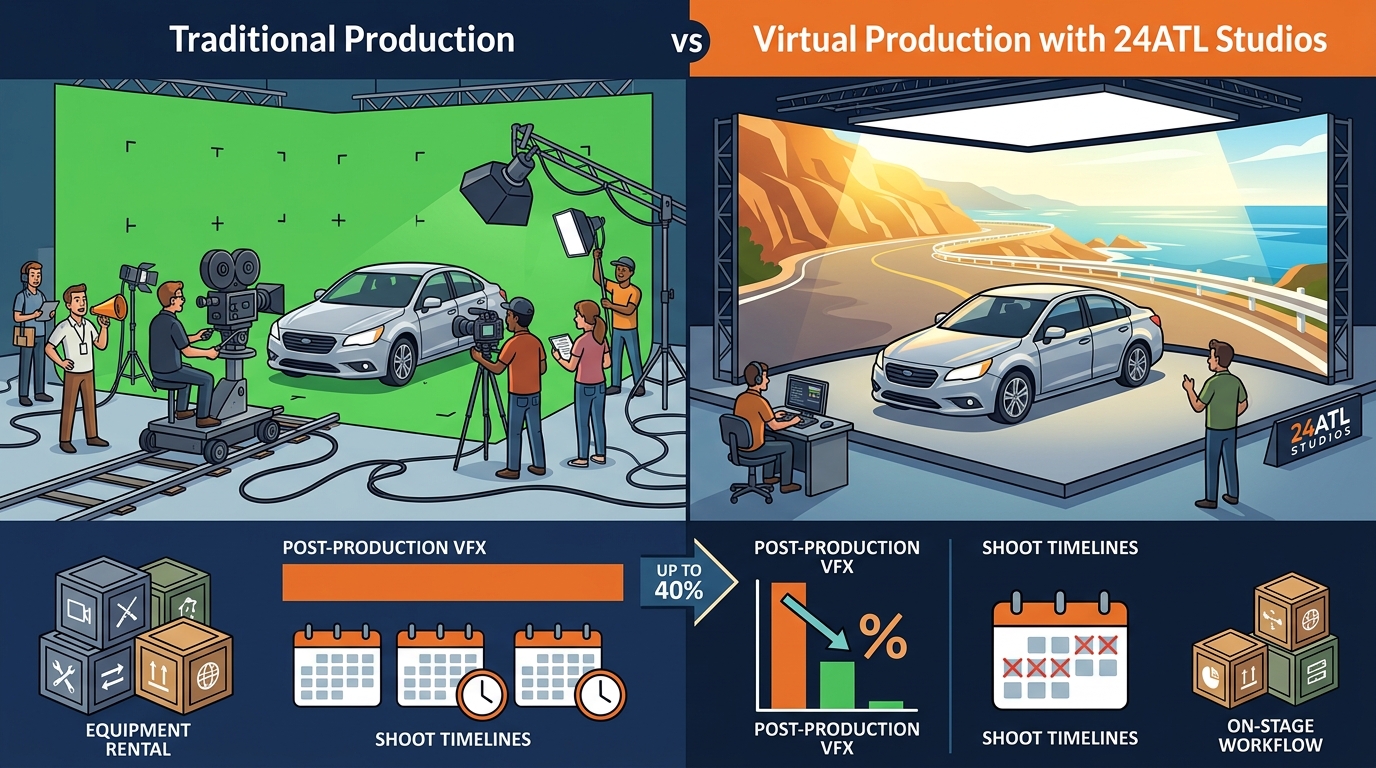
Virtual production is no longer a niche experimental technique but a standard operational pillar for high-end commercial advertising. According to recent industry analyses, LED volume wall technology can reduce post-production visual effects costs by up to 40 percent while simultaneously accelerating shoot timelines. This shift fundamentally alters the traditional budgeting model for commercial campaigns. Producers must now evaluate return on investment through a lens that balances upfront technical rental costs against downstream savings in location logistics, lighting, and digital asset creation. Understanding these dynamics is critical for maximizing the financial efficiency of any brand campaign.
Understanding Virtual Production Mechanics
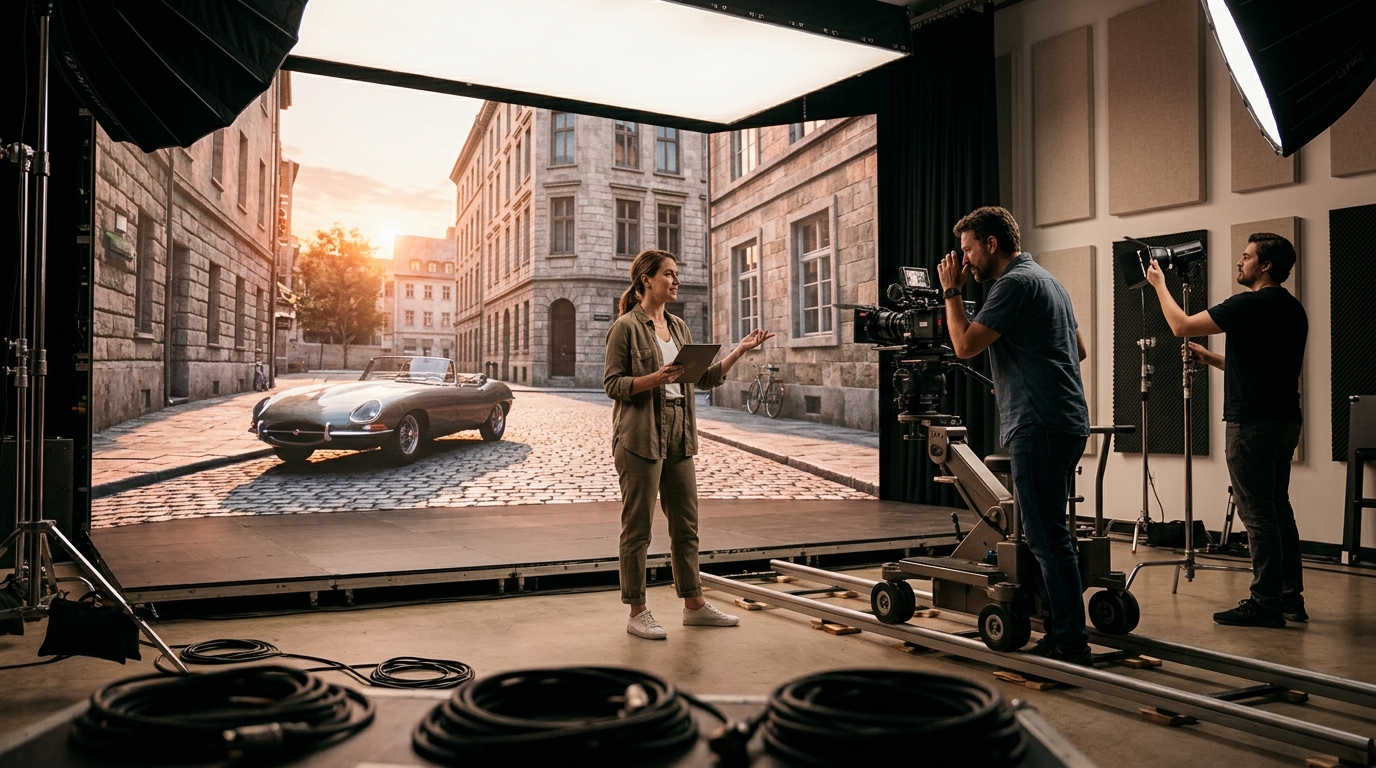
Virtual production relies on the real-time rendering of computer-generated imagery to create immersive environments during filming. This technology eliminates the need for physical sets in many scenarios, allowing directors to capture final-pixel imagery on set. The core component of this workflow is the LED volume wall, which displays dynamic backgrounds that react to camera movement and lighting conditions in real time.
Virtual production is a filmmaking methodology that integrates real-time computer graphics with traditional cinematography to create immersive environments during principal photography. This approach allows creative teams to visualize complex scenes before they are fully built or rendered in post-production. By capturing the lighting and reflections directly on the LED panels, the need for extensive green screen keying is significantly reduced.
For commercial campaigns, this means that brand assets, product placements, and environmental contexts can be adjusted instantly. Directors can see the final composite through the camera lens, which reduces guesswork and ensures that the creative vision is executed with precision. This immediate feedback loop is a primary driver of the technology's adoption in the advertising industry.
Cost Comparison: Traditional vs. Virtual
Evaluating the financial impact of virtual production requires a detailed comparison of line items. Traditional commercial production involves significant costs related to location scouting, permits, travel, and physical set construction. Each of these elements introduces logistical complexity and potential delays that can inflate the budget.
LED volume walls mitigate many of these expenses by providing a controlled studio environment. The ability to change locations instantly means that production teams can shoot scenes set in multiple global cities within a single day. This consolidation of resources leads to substantial savings in crew hours, equipment rentals, and accommodation costs.
However, the upfront cost of renting an LED volume studio is typically higher than a standard soundstage. Producers must weigh this initial investment against the downstream savings. The following table outlines the typical cost distribution differences between traditional and virtual production methods.
| Cost Category | Traditional Production | Virtual Production (LED Volume) |
|---|---|---|
| Location Fees | High (Permits, Travel, Logistics) | Low (Studio Rental Only) |
| Set Construction | High (Materials, Labor, Storage) | Minimal (Digital Asset Creation) |
| Lighting | Complex (Physical Light Placement) | Integrated (LED Panel Emission) |
| Post-Production VFX | High (Compositing, Keying) | Reduced (In-Camera VFX) |
| Schedule Flexibility | Low (Weather Dependent) | High (Controlled Environment) |
Key Metrics for ROI Evaluation
To accurately assess the return on investment for virtual production, commercial producers must track specific performance indicators. These metrics go beyond simple cost savings to include creative efficiency and quality assurance. The primary goal is to determine if the technology enhances the final output while optimizing resource allocation.
One critical metric is the reduction in post-production time. By capturing in-camera visual effects, the amount of footage that requires digital manipulation is drastically reduced. This allows for faster turnaround times, which is often a decisive factor in the fast-paced advertising industry. Faster delivery can lead to earlier campaign launches, providing brands with a competitive advantage.
Another important factor is the accuracy of the final image. Traditional green screen workflows often result in color spill and lighting mismatches that require extensive correction in post. LED volume walls provide accurate lighting and reflections, resulting in a more realistic integration of the subject with the background. This reduces the need for costly color grading and compositing adjustments.
Producers should also evaluate the creative flexibility offered by the technology. The ability to iterate on environments in real time allows for more creative exploration during the shoot. This can lead to better creative outcomes and a more efficient decision-making process. The flexibility to change lighting and background elements instantly can save hours of setup time.
Unreal Engine Advantages in Advertising
The integration of Unreal Engine technology is a cornerstone of modern virtual production. This real-time 3D creation tool allows for the rapid development of high-fidelity digital environments. For commercial campaigns, this means that brand-specific assets can be integrated into the virtual set with precision.
Unreal Engine is a real-time 3D creation tool that powers the dynamic backgrounds and interactive elements of LED volume walls. It enables the seamless rendering of complex scenes, ensuring that the lighting and perspective match the physical camera movement. This synchronization is essential for maintaining the illusion of reality in the final commercial.
The use of Unreal Engine also facilitates the creation of customizable scenes and assets. Production teams can adapt the virtual environment to fit the specific needs of the campaign. This includes adjusting the time of day, weather conditions, and architectural details. The ability to tailor the environment in real time ensures that the final output aligns perfectly with the brand's vision.
Furthermore, the technology supports the use of background plates and unique lighting setups. This allows for the creation of visual imagery that would be difficult or impossible to achieve with traditional methods. The "Mobile Walls" feature, for example, can be used to create dynamic lighting effects that enhance the mood of the commercial.
Operational Efficiency and Timeline Savings
Operational efficiency is a key driver of ROI in virtual production. By consolidating multiple production phases into a single location, teams can streamline their workflow and reduce administrative overhead. This efficiency is particularly valuable for commercial campaigns with tight deadlines.
The reduction in location scouting and travel time is a significant benefit. Traditional productions often require weeks of planning to secure permits and coordinate logistics. Virtual production eliminates much of this complexity by allowing all scenes to be shot in a controlled studio environment. This allows the production team to focus on creative execution rather than logistical management.
Additionally, the ability to shoot multiple angles and variations in a single setup saves valuable time. In traditional production, changing the background often requires resetting the entire set or moving to a new location. With an LED volume wall, the background can be changed instantly, allowing for rapid iteration and experimentation.
The streamlined post-production process further enhances operational efficiency. With in-camera VFX, the amount of footage that requires digital manipulation is reduced. This allows for a faster review process and quicker delivery of the final commercial. The ability to see the final composite on set also reduces the risk of costly reshoots.
Frequently Asked Questions
How does virtual production reduce post-production costs?
Virtual production reduces post-production costs by capturing in-camera visual effects. This minimizes the need for green screen keying and extensive digital compositing, allowing the final image to be closer to the finished product during filming.
Is LED volume wall technology suitable for all types of commercials?
While highly versatile, LED volume walls are particularly effective for commercials requiring complex environments, dynamic lighting, or multiple location changes. They may be less cost-effective for simple product shots that do not require immersive backgrounds.
What role does Unreal Engine play in commercial campaigns?
Unreal Engine powers the real-time rendering of digital environments on the LED walls. It allows for the integration of brand assets, dynamic lighting, and interactive elements that react to camera movement, ensuring a realistic and immersive final output.
Can virtual production accommodate last-minute creative changes?
Yes, one of the primary advantages of virtual production is the ability to make real-time adjustments. Directors can change backgrounds, lighting, and environmental details instantly, allowing for greater creative flexibility during the shoot.
How does virtual production impact the shooting schedule?
Virtual production can significantly compress the shooting schedule by eliminating the need for location scouting, travel, and physical set construction. Scenes that would take days to shoot on location can often be completed in a single day in a studio.
What are the main cost savings associated with LED volume walls?
The main cost savings come from reduced location fees, lower post-production VFX costs, and decreased logistical complexity. By consolidating production into a studio, teams can avoid the high costs associated with travel, permits, and physical set builds.
Is virtual production more expensive than traditional methods?
The upfront rental cost for an LED volume studio is typically higher than a standard soundstage. However, the total production cost is often lower when accounting for savings in location, travel, and post-production. The ROI depends on the specific requirements of the campaign.
Frame Your Shoot
Ready to elevate your commercial campaign with cutting-edge virtual production? Contact 24ATL Studios to discuss your project requirements and explore how our Unreal Engine technology can streamline your workflow. Our team is dedicated to helping you achieve exceptional results while optimizing your budget. Frame your shoot today and discover the future of advertising production.