
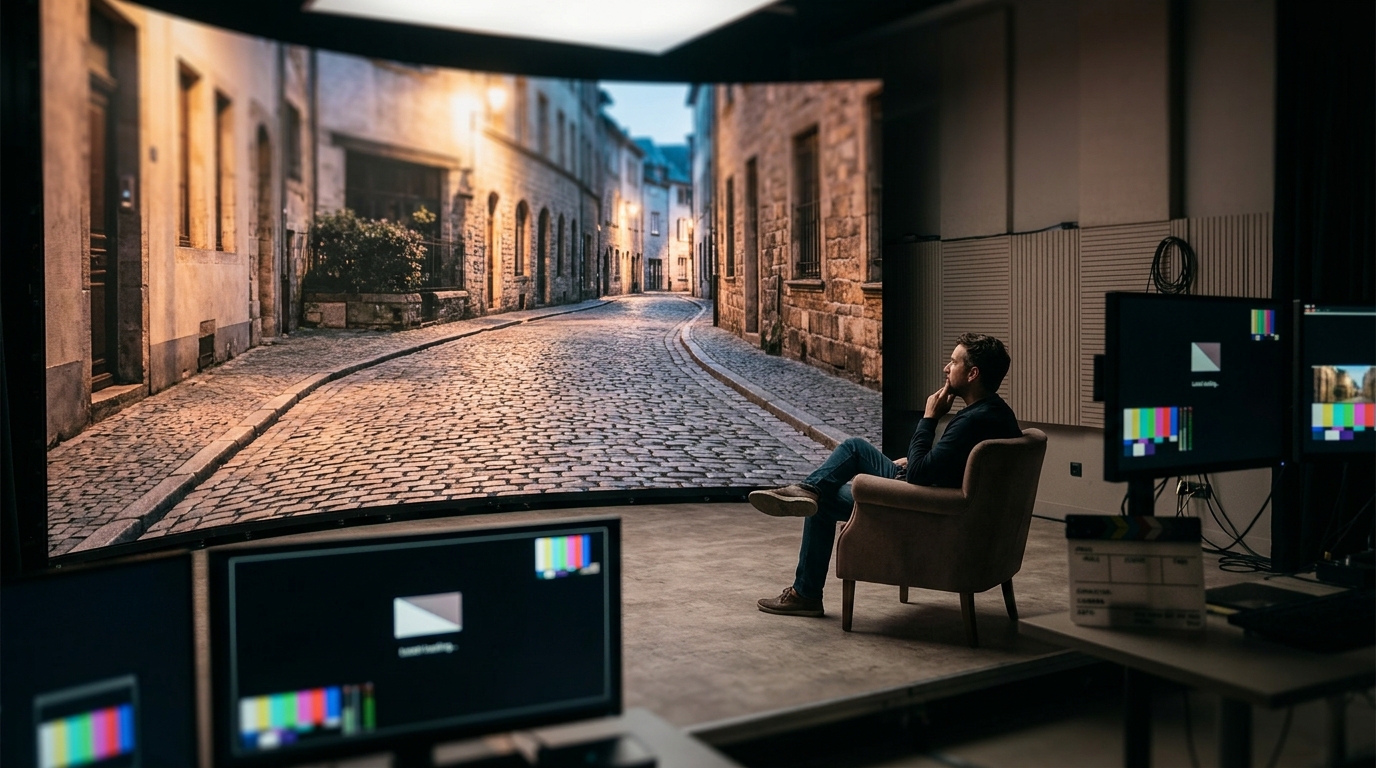
Relocating between different virtual sets during a single shooting day involves coordinating camera tracking, lighting calibration, and asset loading within an LED volume environment. At 24 ATL Studios, this process leverages Unreal Engine technology to transition scenes seamlessly without physical set changes. This approach allows production teams to maintain creative momentum while reducing the logistical burden of traditional location moves.
The Technical Infrastructure of Virtual Set Transitions
Virtual production relies on a synchronized ecosystem of hardware and software. The core component is the LED volume wall, which displays dynamic backgrounds in real-time. A virtual set transition is the process of swapping digital assets and lighting configurations while keeping the physical camera and actors in place. This technology eliminates the need for green screen spill and complex post-production compositing. For additional details, review the Frequently Asked Questions.
Camera Tracking and Calibration Protocols
Accurate camera tracking is the backbone of any virtual set relocation. Camera tracking is the process of determining the precise position and orientation of the physical camera in relation to the virtual environment. When moving between sets, the tracking system must be recalibrated to ensure the new digital background aligns perfectly with the physical camera. Any misalignment results in visual artifacts that compromise the final image. For additional details, review the About.
The calibration process involves capturing reference points within the studio space. Technicians use these points to map the physical volume to the digital twin. This mapping must be precise to the millimeter. In a high-volume production day, this calibration is performed between setups. The speed of this process depends on the complexity of the new set. Simple environments require less time, while detailed architectural scenes may need more rigorous alignment checks.
Lighting and Color Management Workflows
Lighting is a critical factor in the perceived realism of a virtual set. Virtual lighting is the simulation of light sources within a digital environment to match the physical lighting on set. When relocating between sets, the lighting rig must be adjusted to match the new digital background. This ensures that shadows, reflections, and color temperatures are consistent. Mismatched lighting is one of the most common issues in virtual production.
Asset Loading and Pre-Production Planning
Efficient asset loading is crucial for minimizing downtime between sets. Asset loading is the process of transferring digital 3D models, textures, and lighting data into the rendering engine. To speed up this process, production teams prepare all assets in advance. This pre-production planning ensures that the necessary files are ready for immediate use. It reduces the risk of technical delays during the shoot.
Logistical Coordination and Crew Roles
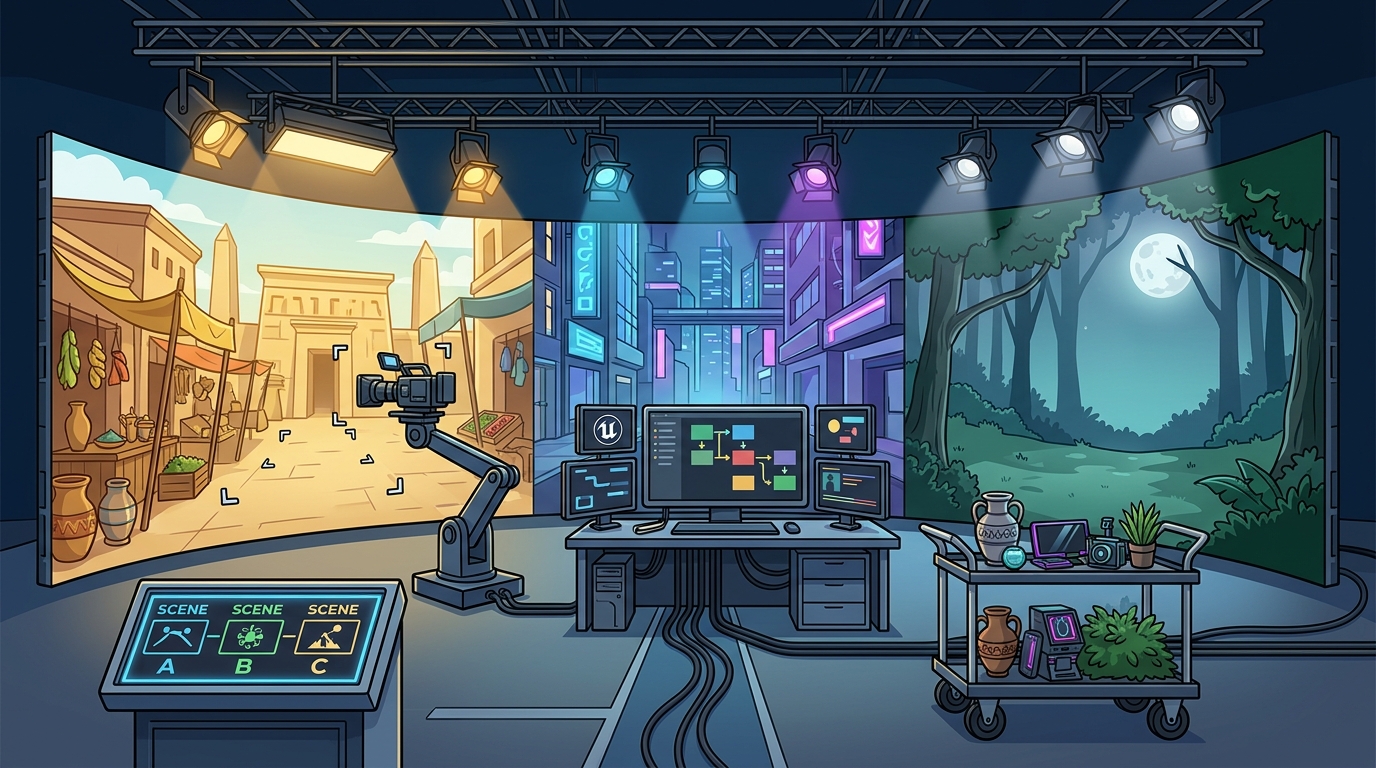
Successful relocation requires clear communication among all crew members. The virtual production coordinator is the key role responsible for managing the transition between sets. This person acts as the bridge between the technical team, the director, and the production office. They ensure that all departments are aligned on the schedule and technical requirements. Clear communication prevents confusion and keeps the day on track.
At 24 ATL Studios, the crew is experienced in managing complex virtual production schedules. They understand the unique challenges of working in an LED volume. This expertise allows them to troubleshoot issues quickly and efficiently. The collaborative environment fosters creativity and innovation. It enables the production team to achieve high-quality results within tight deadlines.
Key Takeaways
- Virtual set transitions rely on real-time rendering and camera tracking technology.
- Accurate calibration is essential to prevent visual artifacts during set changes.
- Lighting must be adjusted to match the new digital background for realism.
- Pre-loading assets reduces downtime and technical delays.
- Clear communication among crew members ensures smooth coordination.
- 24 ATL Studios provides the infrastructure and expertise for efficient virtual production.
Frequently Asked Questions
How long does it take to switch between virtual sets?
The time required depends on the complexity of the new set. Simple transitions can take minutes, while detailed scenes may take longer. Pre-production planning helps minimize this time.
Do actors need to move when changing sets?
No, actors typically remain in the same physical position. The digital background changes around them. This allows for continuous performance without physical relocation.
What is the role of the virtual production coordinator?
The coordinator manages the technical and logistical aspects of set transitions. They ensure that all departments are aligned and that the schedule is maintained.
Can lighting be changed instantly between sets?
Lighting adjustments are made in real-time to match the new background. This process is quick but requires careful calibration to ensure accuracy.
Is post-production still required for virtual sets?
Post-production is significantly reduced. Most compositing work is done in real-time. Only minor touch-ups may be needed in post.
What technology does 24 ATL Studios use?
24 ATL Studios uses Unreal Engine and LED volume walls. This technology allows for real-time rendering and seamless set transitions.
How does this compare to traditional green screen?
Plan Your Virtual Production with 24 ATL Studios
Efficient set relocation is just one aspect of a successful virtual production. 24 ATL Studios provides the technology and expertise to bring your vision to life. Our team is dedicated to helping you achieve your creative goals. Contact 24 ATL Studios to discuss your project and explore the possibilities of virtual production. Learn more: 24ATL Studios LED Volume.