
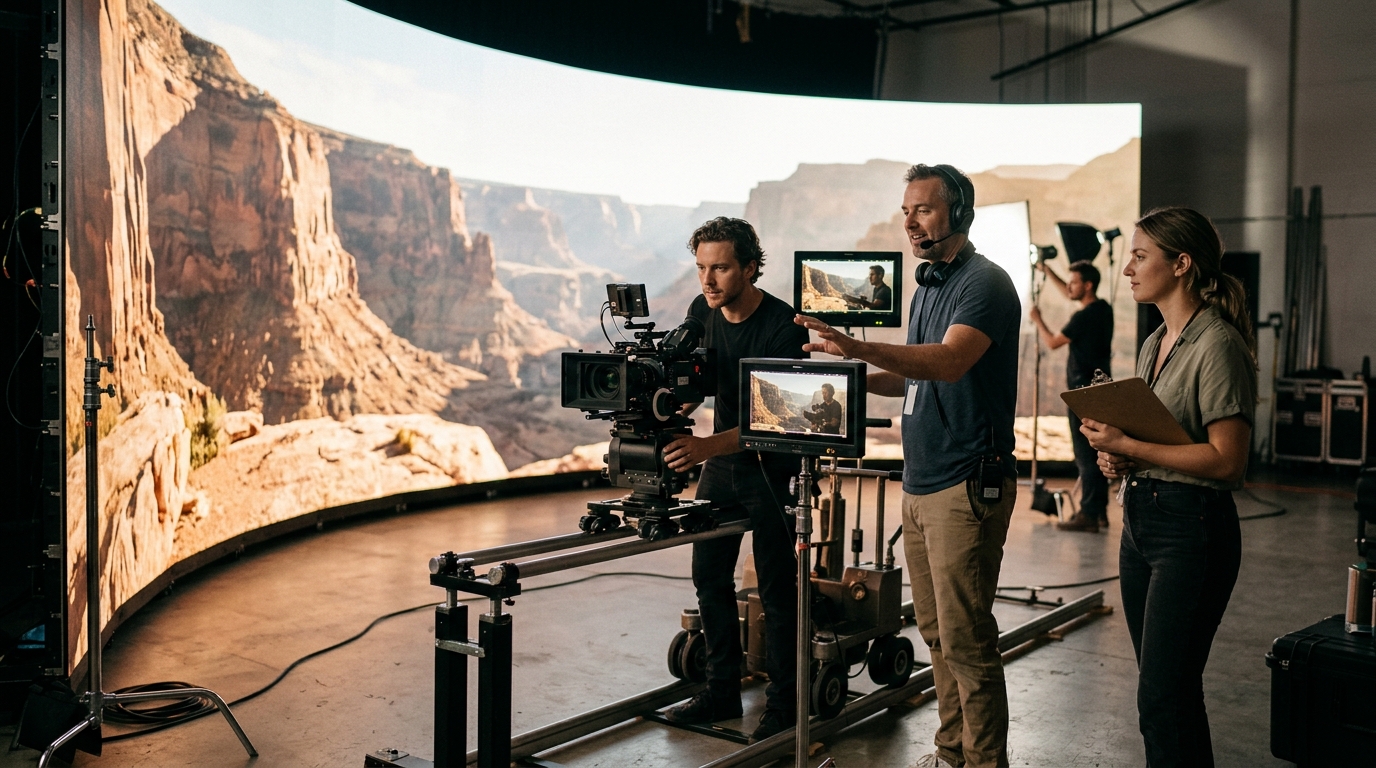
Virtual production is no longer a futuristic concept but a standard operational tool for high-end content creation. According to industry data, LED volume stages can reduce post-production visual effects (VFX) costs by up to 50 percent while significantly accelerating the shooting schedule. This shift is driven by the ability to capture photorealistic environments in-camera, eliminating the need for extensive green screen keying and digital background replacement later. Producers are increasingly adopting this technology to streamline workflows and maintain creative control on set.
Understanding LED Volume Stages
An LED volume stage is a specialized soundstage surrounded by high-resolution LED panels that display dynamic, real-time 3D environments. Unlike traditional sets, which require physical construction and location scouting, a volume stage allows filmmakers to transport their production to any location digitally. This technology relies heavily on Unreal Engine, a real-time 3D creation tool that renders the background environment in sync with the camera's position and orientation.
The core advantage lies in the immediate feedback loop. Directors and cinematographers can see the final composited image on set, rather than waiting for post-production to reveal the result. This immediate visibility allows for faster decision-making and reduces the number of takes required to achieve the desired visual outcome. For producers, this translates directly into saved hours and reduced labor costs.
Eliminating Green Screen Dependencies
Traditional chroma keying requires actors to perform against a flat green or blue background. This process often leads to "green spill," where the color reflects onto the actors' skin and costumes, requiring extensive color correction in post-production. Furthermore, green screens do not provide realistic lighting interactions, making it difficult to match the subject with the background digitally.
LED volume stages solve these problems by providing accurate, dynamic lighting. The light emitted from the LED panels naturally reflects off the actors and props, creating realistic highlights and shadows. This eliminates the need for complex keying processes and reduces the time spent on color grading. According to production efficiency reports, removing green screen workflows can cut post-production time by several weeks for complex scenes.
Real-Time Lighting and Reflections
One of the most significant time-saving aspects of LED volumes is the handling of reflections. In traditional filmmaking, capturing realistic reflections in surfaces like car paint, glass, or metal requires additional lighting setups and careful planning. On an LED volume, the environment displayed on the screens naturally reflects in these surfaces, providing accurate and dynamic reflections that change as the camera moves.
This capability is particularly valuable for car process shots, where the background must move in sync with the vehicle. Instead of using a trailer with a green screen and a separate background plate, producers can drive the car on a track within the volume stage while the environment scrolls realistically behind it. This method reduces the need for multiple camera angles and complex compositing, streamlining the shooting process significantly.
Unreal Engine Integration
The backbone of any LED volume stage is its integration with Unreal Engine. This software allows for the creation of highly detailed, photorealistic 3D environments that can be modified in real-time. Producers can adjust lighting conditions, weather, and time of day instantly, without waiting for natural light changes or rebuilding physical sets.
This flexibility is crucial for maintaining schedule efficiency. If a director wants to change the time of day from sunset to sunrise, it can be done with a few clicks rather than waiting hours for the sun to set or rebuilding the set for a night shoot. This level of control empowers creative teams to experiment freely without incurring additional costs or delays.
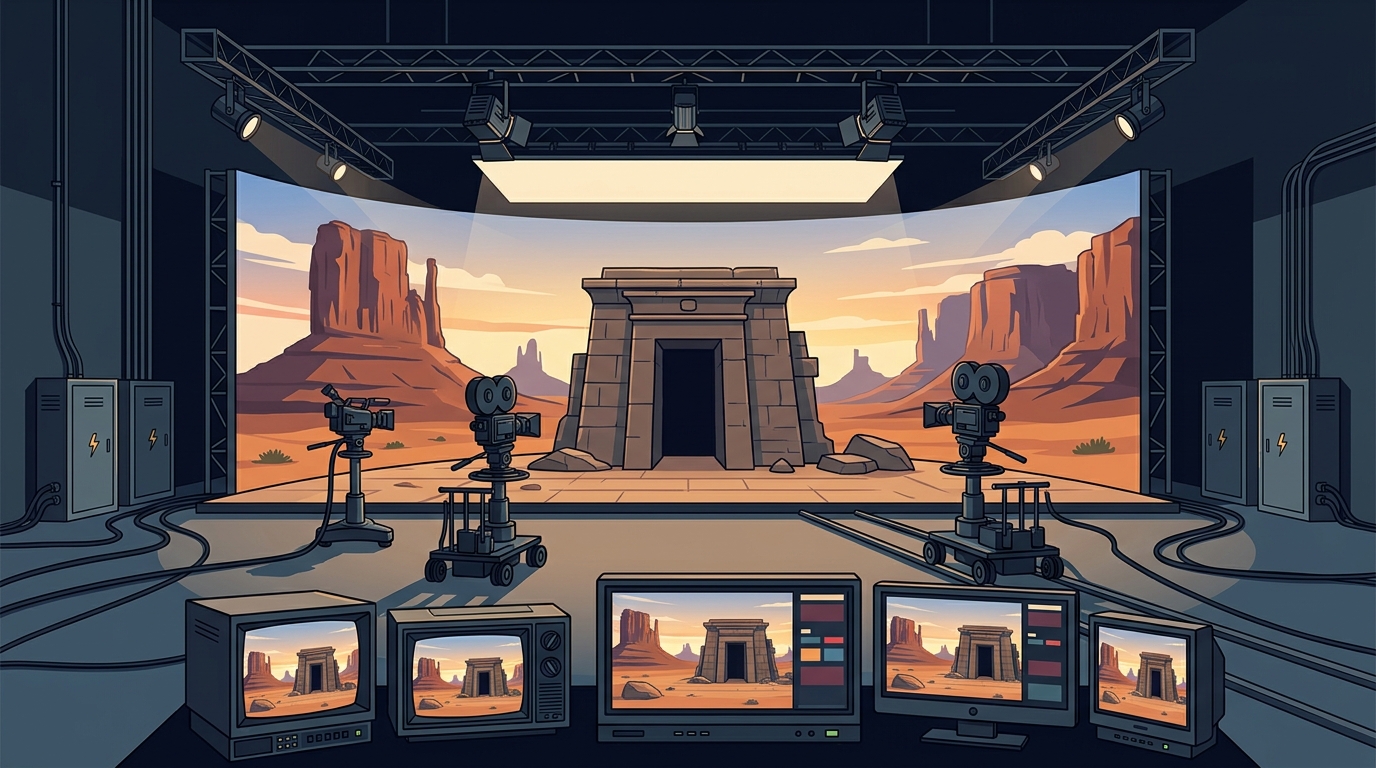
Cost and Time Comparison
While the initial investment in LED volume technology is high, the long-term savings for producers are substantial. The table below outlines the key differences between traditional filming methods and LED volume production.
| Factor | Traditional Filming | LED Volume Stage |
|---|---|---|
| Location Scouting | High Cost and Time | Minimal (Digital Environments) |
| VFX Post-Production | Extensive and Expensive | Reduced by up to 50% |
| Lighting Setup | Complex and Time-Consuming | Dynamic and Real-Time |
| Creative Flexibility | Low (Physical Constraints) | High (Instant Modifications) |
By reducing the need for physical locations and extensive VFX work, producers can allocate resources more efficiently. This allows for higher quality output within tighter budgets and schedules. For more information on how virtual production works, you can explore resources from Unreal Engine or read industry analyses from Variety.
Key Takeaways
- LED volume stages reduce post-production VFX costs by up to 50 percent.
- Real-time rendering eliminates the need for green screen keying and color correction.
- Dynamic lighting provides realistic reflections on actors and props instantly.
- Unreal Engine integration allows for instant changes to environments and lighting.
- Car process shots are streamlined by scrolling backgrounds in sync with vehicle movement.
- Producers save significant time by avoiding location scouting and physical set construction.
- Creative teams gain flexibility to adjust scenes on the fly without additional costs.
Frequently Asked Questions
What is an LED volume stage?
An LED volume stage is a soundstage surrounded by high-resolution LED panels that display real-time 3D environments, allowing filmmakers to capture photorealistic backgrounds in-camera.
How does LED volume save time compared to green screen?
LED volumes eliminate the need for green screen keying and extensive color correction, as the lighting and reflections are captured naturally on set, reducing post-production workload.
Can LED stages be used for car process shots?
Yes, LED stages are ideal for car process shots. The background can scroll in sync with the vehicle's movement, providing realistic motion and reflections without the need for complex compositing.
What role does Unreal Engine play in LED volume production?
Unreal Engine powers the real-time rendering of 3D environments on the LED panels, allowing for dynamic changes to lighting, weather, and scenery during filming.
Is LED volume production more expensive than traditional filming?
While the initial rental cost may be higher, LED volume production often saves money overall by reducing location fees, VFX costs, and shooting days, leading to a lower total budget.
How does LED volume affect actor performance?
Actors can interact with realistic environments and lighting, which can enhance their performance by providing a more immersive and believable context for their scenes.
What types of productions benefit most from LED volumes?
Film, television, commercials, and music videos that require complex environments, realistic lighting, or difficult-to-access locations benefit most from LED volume technology.
Start Your Virtual Production Today
Ready to elevate your next production with cutting-edge virtual technology? Contact 24ATL Studios to learn more about our LED volume stage services and how we can help you save time and budget. Reach out to our team at 24ATL Studios to schedule a consultation and frame your shoot with precision and innovation.