
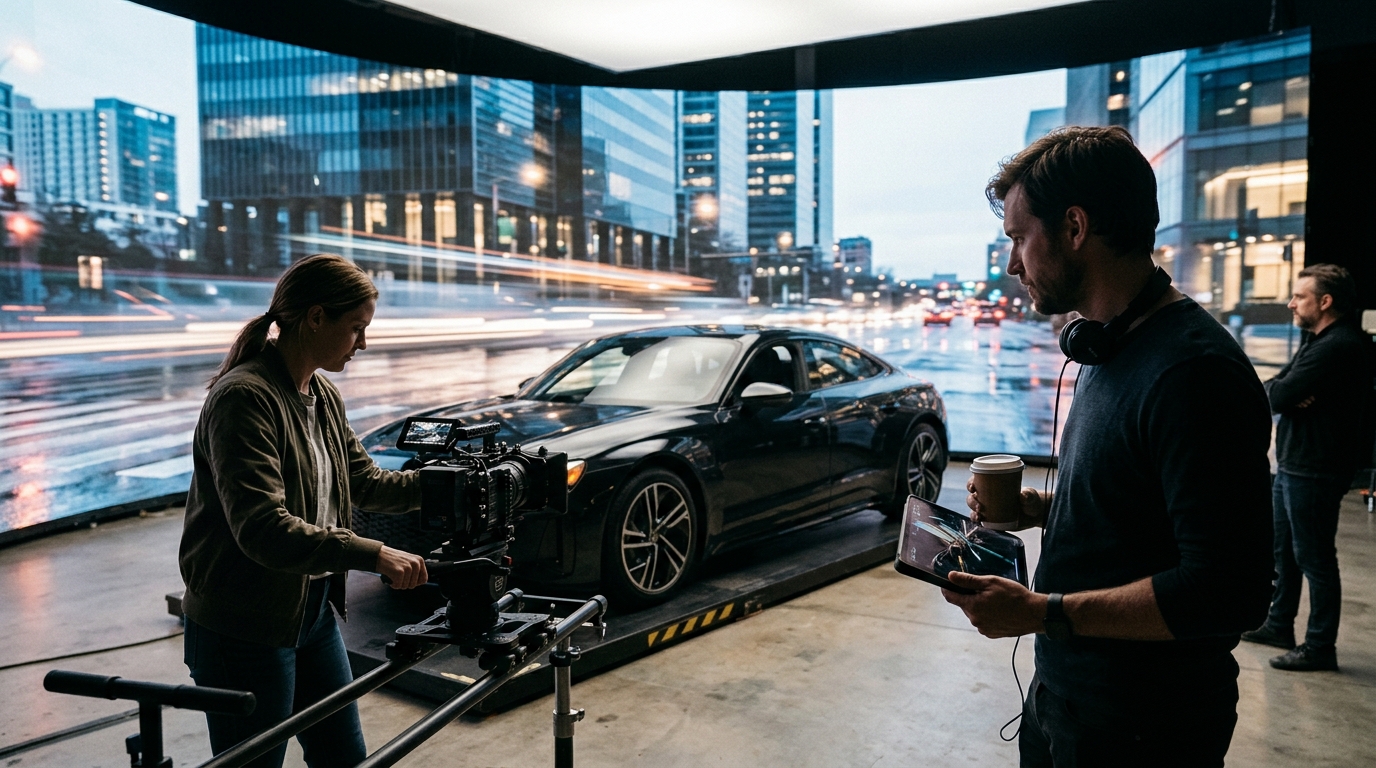
Virtual production technology has fundamentally altered the landscape of automotive cinematography. According to industry data, LED volume walls can reduce post-production visual effects costs by up to 50 percent compared to traditional green screen methods. This shift allows filmmakers to capture photorealistic environments in real time, eliminating the need for extensive digital compositing later. At 24 ATL Studios, this technology is leveraged to create immersive, dynamic backgrounds that react to camera movement, providing a seamless experience for both the audience and the production crew.
Pre-Production Planning and Asset Creation
The foundation of a successful car process shoot lies in meticulous pre-production planning. Unlike traditional location shooting, virtual production requires the creation of digital assets before the camera rolls. At 24 ATL Studios, we utilize Unreal Engine to build fully adaptable scenes and assets that fit your specific creative concept. This process begins with a detailed breakdown of the script and storyboard to identify the required environments.
Our team works closely with directors and cinematographers to design custom Unreal Engine environments. These digital worlds are not static images but dynamic, interactive spaces. For example, if your scene requires a rainy city street, our artists model the wet pavement, reflections, and ambient lighting to ensure realism. This level of detail is critical because the LED walls will display these environments directly to the camera lens, meaning any imperfections will be captured in the final footage.
During this phase, we also prepare background plates or environments for creating visual imagery. These plates serve as the base layer for the LED volume, allowing for unique lighting variations. By finalizing these assets early, we ensure that the production can move swiftly into the studio without technical delays. This proactive approach aligns with our commitment to covering every aspect of your production from pre-production to post-production.
Studio Setup and LED Volume Configuration
Once the digital assets are ready, the physical setup of the LED volume wall begins. 24 ATL Studios features a state-of-the-art immersive soundstage designed specifically for high-fidelity virtual production. The LED volume wall allows for an unparalleled lighting experience, streamlining the immersion of your production in seconds. This technology is the same Unreal Engine technology used on major productions like Disney’s Mandalorian, ensuring industry-standard quality.
The setup process involves calibrating the LED panels to match the color space and dynamic range of the camera sensors. This calibration is crucial for achieving accurate color reproduction and avoiding moiré patterns, which can occur when digital displays are filmed. Our technical team ensures that the pixel pitch and refresh rates are optimized for the specific camera equipment being used. This attention to detail guarantees that the virtual background appears seamless and realistic.
Additionally, the studio is equipped with advanced tracking systems that synchronize the camera’s position with the virtual environment. As the camera moves, the perspective of the background shifts in real time, creating a convincing sense of depth and motion. This synchronization is vital for car process filming, where the relative motion between the vehicle and the background must appear natural. The result is a production environment that feels like traveling to worlds with the press of a button.
Executing the Car Process Sequence
The car process involves filming a stationary vehicle while the background moves to simulate travel. At 24 ATL Studios, this is achieved through a combination of mechanical rigging and digital environment manipulation. The vehicle is secured on a platform that allows for slight movement, mimicking the vibrations and dynamics of a real drive. This physical presence helps actors react naturally to their surroundings, enhancing the authenticity of the performance.
Our custom tailored Unreal Engine environments are at your disposal with fully adaptable scenes. For a car process shot, the digital background is programmed to scroll at a speed that matches the simulated velocity of the vehicle. This creates the illusion of movement without the need for a physical car process trailer. By eliminating the need for such trailers, we help cut production cost in half by saving on locations, car process trailers, green screen spill, and more.
The crew coordinates closely to ensure that the lighting on the vehicle matches the lighting in the virtual environment. This includes adjusting the intensity and direction of studio lights to reflect the sun’s position in the digital sky. The goal is to create a cohesive visual narrative where the boundary between the physical car and the digital world is indistinguishable. This level of integration is what sets virtual production apart from traditional methods.
Lighting and Camera Sync Techniques
Lighting is perhaps the most critical technical aspect of car process filming. In virtual production, the LED walls act as the primary light source for the scene. This means that the lighting on the car and the actors is generated by the virtual environment itself. This technique, known as in-camera VFX, provides realistic reflections and shadows that are difficult to replicate in post-production.
Our team employs precise lighting sync techniques to ensure that the virtual sun and ambient light interact correctly with the physical set. For instance, if the virtual scene depicts a sunset, the LED walls will emit warm, orange hues that reflect off the car’s surface. This real-time lighting feedback allows the cinematographer to adjust exposure and white balance on the spot, ensuring optimal image quality. This immediate feedback loop is a significant advantage over green screen workflows, where lighting decisions are often made retrospectively.
Furthermore, the synchronization between the camera tracking system and the Unreal Engine environment is continuously monitored. Any drift or latency can break the illusion of reality. Our technical directors work tirelessly to maintain this sync, ensuring that the perspective shifts accurately as the camera pans or tracks. This precision is essential for maintaining the integrity of the visual narrative and delivering a high-quality final product.
Post-Production Workflow and VFX Mitigation
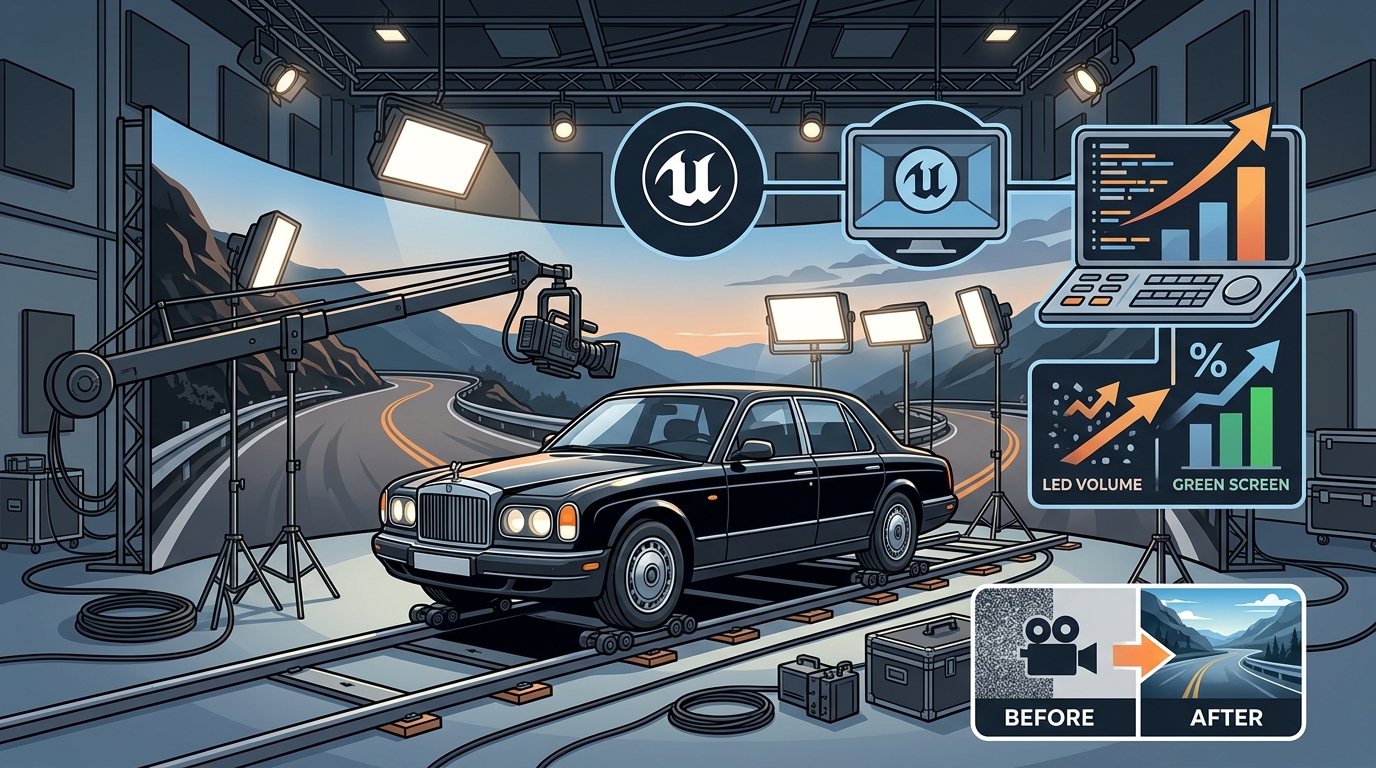
One of the most significant benefits of using an LED volume wall is the reduction in post-production workload. With the nature of LED volume walls, post process costs are mitigated due to the simplicity of VFX in the post processing cycle. Because the background is captured in-camera, there is no need for rotoscoping or keying out green screens. This eliminates the risk of green spill on the actors and vehicles, which can be time-consuming and costly to remove.
The footage captured at 24 ATL Studios is ready for color grading and minor adjustments. The primary focus of post-production shifts from creating the environment to enhancing the visual storytelling. This streamlined workflow allows for faster turnaround times and greater creative flexibility. Directors can make changes to the virtual environment in real time, even during the shoot, without delaying the production schedule.
This efficiency translates to significant cost savings for producers. By reducing the reliance on extensive visual effects teams and post-production facilities, productions can allocate resources to other critical areas. The ability to shoot complex scenes in a controlled studio environment also minimizes the risks associated with location shooting, such as weather delays and logistical challenges. This makes virtual production an increasingly attractive option for high-budget film and TV projects.
Key Takeaways
- 24 ATL Studios utilizes Unreal Engine technology, similar to that used on Disney’s Mandalorian, to create immersive virtual sets.
- The LED volume wall provides real-time lighting and background changes, reducing the need for physical locations and car process trailers.
- Pre-production involves creating custom, adaptable digital assets and background plates to ensure visual fidelity.
- Car process filming at the studio eliminates green screen spill and significantly cuts post-production VFX costs.
- The studio is located in Atlanta, GA, a hub for film and television production, offering strategic access to talent and resources.
- Our team, including owners Nick, Alex, and Matt, oversees creative, financial, and legal aspects to ensure project success.
- Virtual production allows for immediate creative adjustments, providing a more efficient and flexible workflow compared to traditional methods.
Frequently Asked Questions
What is the primary advantage of using an LED volume wall for car process filming?
The primary advantage is the ability to capture photorealistic backgrounds in real time, which eliminates the need for extensive post-production visual effects and green screen keying. This results in significant cost and time savings.
How does 24 ATL Studios handle lighting for virtual environments?
We use the LED walls as the primary light source, projecting the virtual environment’s lighting directly onto the set. This creates realistic reflections and shadows that match the digital scene, ensuring visual consistency.
Can the virtual backgrounds be changed during the shoot?
Yes, our custom tailored Unreal Engine environments are fully adaptable. Directors can modify scenes and assets in real time, allowing for creative adjustments without halting production.
What types of productions are suitable for the car process service?
The car process service is ideal for film, television, commercials, and music videos that require dynamic driving scenes. It is particularly useful for projects that need to simulate travel to diverse or impossible locations.
How does virtual production reduce post-production costs?
By capturing the background in-camera, the need for rotoscoping and keying is removed. This simplifies the post-processing cycle, reducing the hours required by VFX artists and lowering overall production expenses.
Is the studio equipped for high-end camera tracking?
Yes, the studio features advanced tracking systems that synchronize camera movement with the virtual environment. This ensures that perspective shifts are accurate and seamless, maintaining the illusion of reality.
Who oversees the creative and operational aspects of the studio?
Nick, the Owner and Creative Director, oversees the creative and operational aspects of the studio, driving innovation and excellence in the virtual production space.
Contact 24 ATL Studios
Ready to elevate your next production with cutting-edge virtual technology? Contact 24 ATL Studios today to discuss your project requirements and schedule a studio tour. Our team is dedicated to providing exceptional service and innovative solutions for your film and television needs. Frame your shoot with us and experience the future of production.
Contact Us Now to get started.