
Common Virtual Production Mistakes in Commercial Video and How to Avoid Them
Virtual production has fundamentally altered the landscape of commercial video creation, yet many brands still struggle to realize its full potential. According to industry analysis, studios utilizing LED volume walls can reduce post-production VFX costs by up to 30 percent compared to traditional green screen workflows. This significant efficiency gain comes from capturing photorealistic environments in-camera, which streamlines the entire pipeline. However, the technology is complex, and missteps during pre-production or on set can negate these benefits. At 24ATL Studios, we have observed that the most successful campaigns are those that treat virtual production not just as a visual effect, but as a holistic creative process.
Understanding Virtual Production
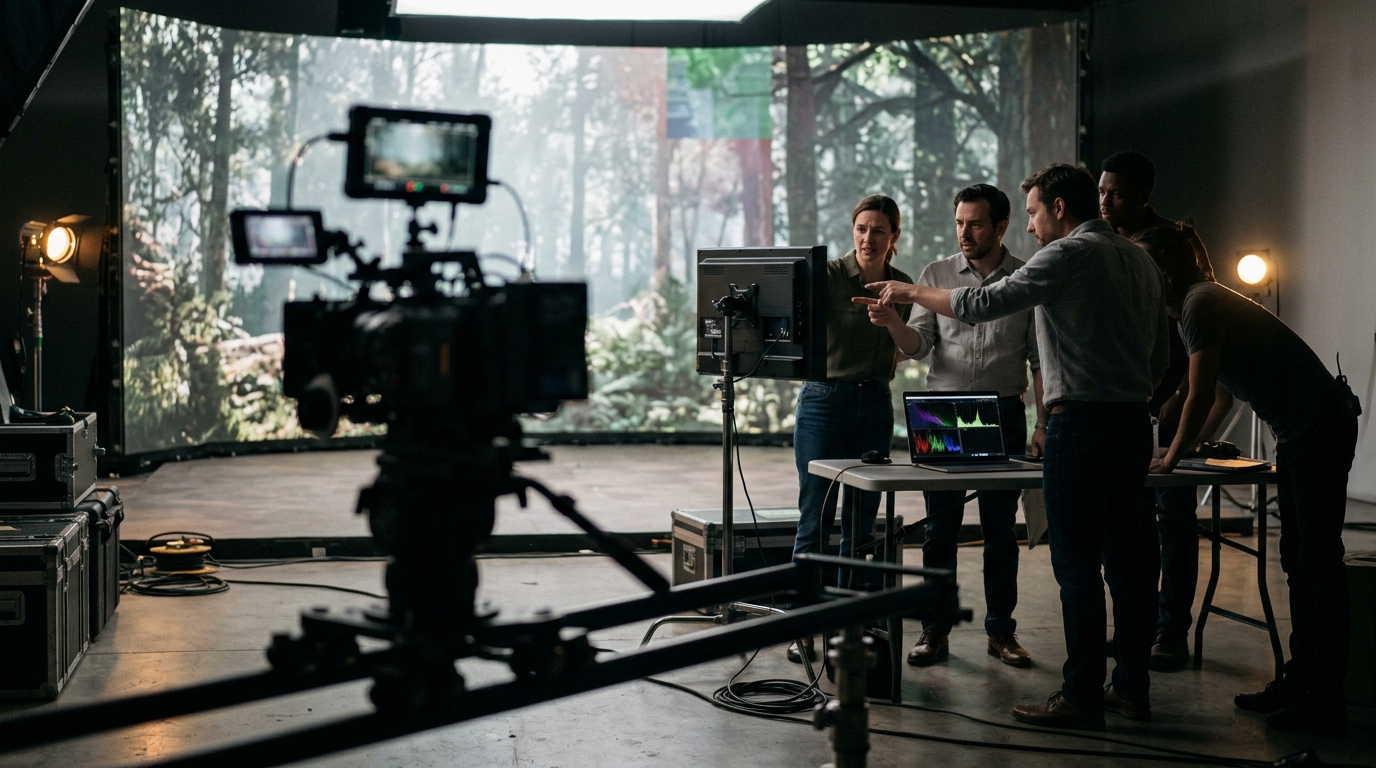
Virtual production is a filmmaking methodology that combines real-time computer graphics with live-action footage. This technique allows directors to see the final visual environment while shooting, rather than waiting for post-production. The core technology relies on LED volume walls and game engines like Unreal Engine to render high-fidelity backgrounds that react to camera movement in real time. This approach eliminates the need for extensive green screen spill correction and allows for natural lighting interactions between the subject and the background.
For commercial video, this means faster turnaround times and higher creative flexibility. Brands can change locations instantly without the logistical nightmare of travel permits or weather delays. The technology used on major film productions, such as Disney’s The Mandalorian, is now accessible for commercial campaigns. This democratization of high-end technology allows smaller budgets to achieve blockbuster visuals. However, the complexity of the tech stack requires specialized knowledge to execute correctly.
Pre-Production Planning Mistakes
The most critical phase of virtual production is pre-production. Many commercial teams fail because they treat virtual sets as an afterthought. A common error is attempting to script a commercial without considering the technical constraints of the LED wall. Directors must plan camera movements that align with the parallax capabilities of the virtual environment. If a camera moves too quickly or too far, the rendered background may not keep up, breaking the illusion of reality.
Another frequent mistake is underestimating the need for detailed asset preparation. Virtual environments are not static images; they are 3D spaces that must be built, textured, and lit before shooting begins. At 24ATL Studios, we emphasize that creative directors must work closely with technical artists during the concept phase. This collaboration ensures that the Unreal Engine environments are optimized for real-time rendering without sacrificing visual quality. Skipping this step often leads to technical bottlenecks on set, causing costly delays.
Asset Readiness
Ensure all 3D assets are optimized for real-time engines before the shoot date. Low-poly models or untextured surfaces will be visible on the LED wall, ruining the immersion. Proper asset management is key to a smooth production workflow.
Camera Tracking Calibration
Camera tracking systems must be calibrated precisely to match the physical camera lens. Mismatched focal lengths or tracking errors can cause the virtual background to drift, creating a disconnect between the actor and their environment.
Lighting and Color Grading Errors
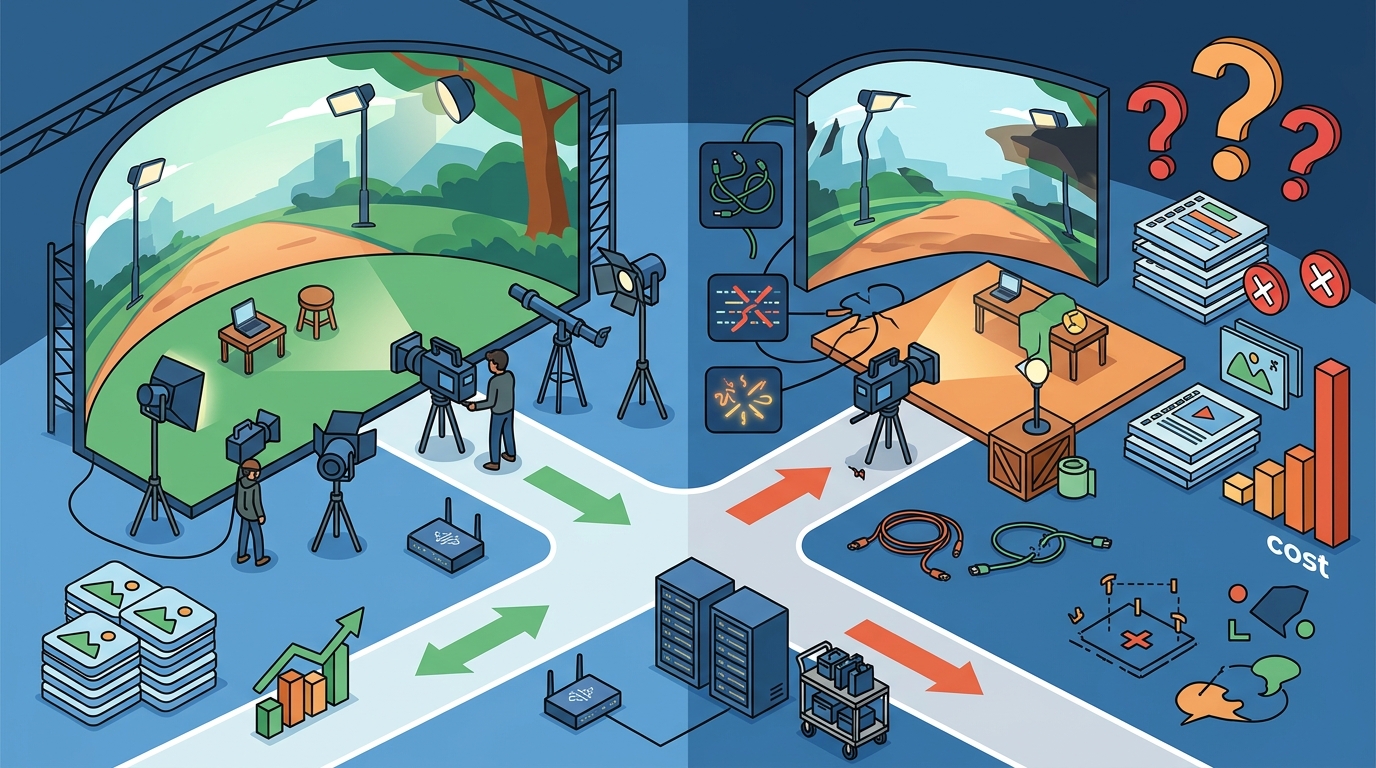
Lighting in a virtual production environment is fundamentally different from traditional lighting. The LED wall itself is a light source, which means it casts dynamic, colored light onto the subjects. A major mistake is ignoring this interaction and lighting the set as if it were a green screen. If the background is a warm sunset, the actors will be bathed in orange light. Failing to account for this can result in color casts that are difficult to correct in post-production.
Color grading is also impacted by the high dynamic range of LED panels. Commercial videos often require specific brand colors to be accurate. If the LED wall is not calibrated correctly, the colors may appear oversaturated or washed out. It is essential to use professional color management tools to ensure that the on-set look matches the final deliverable. This attention to detail preserves brand integrity and reduces the need for extensive color correction later.
LED Brightness Management
Adjusting the brightness of the LED wall is crucial for balancing exposure. Too much brightness can cause blooming on the camera sensor, while too little can introduce noise. Proper exposure settings ensure that the virtual environment enhances the scene rather than distracting from it.
Shadow Integration
Virtual shadows must be rendered in real time to match the physical lighting. If the virtual sun does not align with the key light, the shadows will look artificial. This misalignment breaks the viewer’s suspension of disbelief and highlights the artificial nature of the production.
Unreal Engine Asset Limitations
Unreal Engine is the industry standard for virtual production, but it has limitations that commercial teams often overlook. One common mistake is using assets that are too detailed for real-time rendering. High-polygon models can cause frame rate drops, leading to stuttering visuals on the LED wall. This stuttering is particularly noticeable in commercial video, where smooth motion is essential for a polished look.
Another limitation is the handling of complex materials. Reflective surfaces, such as glass or metal, require specialized rendering techniques to look realistic on an LED wall. If these materials are not properly configured, they may appear flat or distorted. At 24ATL Studios, we utilize custom-tailored Unreal Engine environments to ensure that every asset is optimized for the specific needs of the commercial. This includes adapting scenes and assets to fit the concept while maintaining high visual fidelity.
Optimization Techniques
Use level-of-detail (LOD) models to reduce the polygon count of distant assets. This technique maintains visual quality while improving performance. Proper optimization ensures that the virtual environment runs smoothly on the LED wall.
Material Realism
Test reflective and transparent materials extensively before the shoot. Real-world lighting interactions with these materials are complex and require careful adjustment to look natural on screen. Ignoring this step can lead to unrealistic visuals that detract from the commercial’s message.
Team Communication Gaps
Virtual production requires a multidisciplinary team to work in unison. A common mistake is siloing the creative and technical teams. Directors, cinematographers, and VFX artists must communicate constantly to ensure that the vision is technically feasible. Miscommunication can lead to scenes that look great in the storyboard but are impossible to execute on the LED wall.
At 24ATL Studios, our team structure is designed to facilitate this collaboration. Nick, our Creative Director, oversees the creative aspects, while Alex, our CFO, manages budget integrity. Matt, our Legal Strategy Officer, ensures that all projects are protected and compliant. This integrated approach ensures that every aspect of the production is aligned. Clear communication channels prevent misunderstandings and keep the project on track.
Cross-Departmental Collaboration
Regular meetings between creative and technical teams are essential. These sessions allow for early identification of potential issues and foster a collaborative problem-solving environment. Early collaboration leads to more innovative solutions and a higher quality final product.
Real-Time Feedback Loops
Implement real-time feedback mechanisms on set. This allows the director to see the impact of technical decisions immediately. Quick adjustments can be made to lighting, camera angles, or asset placement, ensuring that the final shot meets the creative vision.
Cost Analysis and Budgeting
While virtual production can reduce post-production costs, the upfront investment is significant. A common mistake is underestimating the cost of asset creation and technical setup. Brands must budget for the development of custom Unreal Engine environments, which can be time-consuming and expensive. However, the long-term savings from reduced location fees, travel costs, and VFX work often outweigh these initial expenses.
Another financial consideration is the efficiency of the shoot. Virtual production allows for rapid iteration, which can save time on set. However, this benefit is only realized if the team is well-prepared. Poor preparation can lead to extended shoot days, increasing rental costs for equipment and talent. At 24ATL Studios, we provide comprehensive pre-production support to ensure that every dollar spent contributes to the final output. Our goal is to maximize the return on investment for every commercial campaign.
ROI Calculation
Calculate the return on investment by comparing traditional production costs with virtual production expenses. Include factors such as location fees, travel, and post-production VFX work. A clear ROI analysis helps justify the investment in virtual production technology.
Budget Allocation
Allocate sufficient budget for technical staff and asset creation. These are critical components of a successful virtual production. Underfunding these areas can lead to technical failures and a lower quality final product.
Key Takeaways
- Virtual production can reduce post-production VFX costs by up to 30 percent when executed correctly.
- Pre-production planning is essential for aligning creative vision with technical constraints.
- Lighting interactions between the LED wall and subjects must be carefully managed to avoid color casts.
- Unreal Engine assets must be optimized for real-time rendering to prevent performance issues.
- Effective team communication between creative and technical departments is crucial for success.
- Proper budget allocation for asset creation and technical staff ensures a high-quality final product.
- 24ATL Studios offers custom-tailored Unreal Engine environments to meet specific commercial needs.
Frequently Asked Questions
What is virtual production?
Virtual production is a filmmaking methodology that combines real-time computer graphics with live-action footage using LED volume walls and game engines like Unreal Engine.
How does virtual production save money?
It saves money by reducing the need for physical locations, travel, and extensive post-production VFX work, allowing for faster turnaround times.
What are the main challenges of virtual production?
Challenges include technical complexity, the need for specialized skills, and the high upfront cost of asset creation and equipment.
Can virtual production be used for commercials?
Yes, virtual production is highly effective for commercials, offering creative flexibility and high visual fidelity.
How important is pre-production in virtual production?
Pre-production is critical, as it ensures that all assets are ready and that the creative vision aligns with technical capabilities.
What role does Unreal Engine play?
Unreal Engine is used to render high-fidelity virtual environments in real time, allowing for dynamic and interactive backgrounds.
How does 24ATL Studios handle virtual production?
24ATL Studios provides custom-tailored Unreal Engine environments, expert technical support, and comprehensive pre-production planning.
What is the LED volume wall?
The LED volume wall is a large, curved screen made of LED panels that displays virtual environments, providing immersive lighting and backgrounds for live-action shoots.
Contact Us
Ready to elevate your commercial video production with virtual technology? Contact 24ATL Studios today to discuss your project. Our team is ready to help you navigate the complexities of virtual production and deliver exceptional results. Frame your shoot with the best in the industry.