
Common Mistakes When Shooting Car Scenes Without a Process Trailer
Shooting dynamic car scenes used to require massive logistical support, including heavy process trailers and complex rigging. According to industry reports, modern virtual production has shifted this paradigm, allowing creators to achieve cinematic results with significantly reduced overhead. However, moving away from traditional process trailers introduces unique technical challenges that can compromise the final cut if not managed correctly. Understanding these pitfalls is essential for maintaining visual fidelity and budget efficiency.
Understanding the Shift from Physical to Virtual
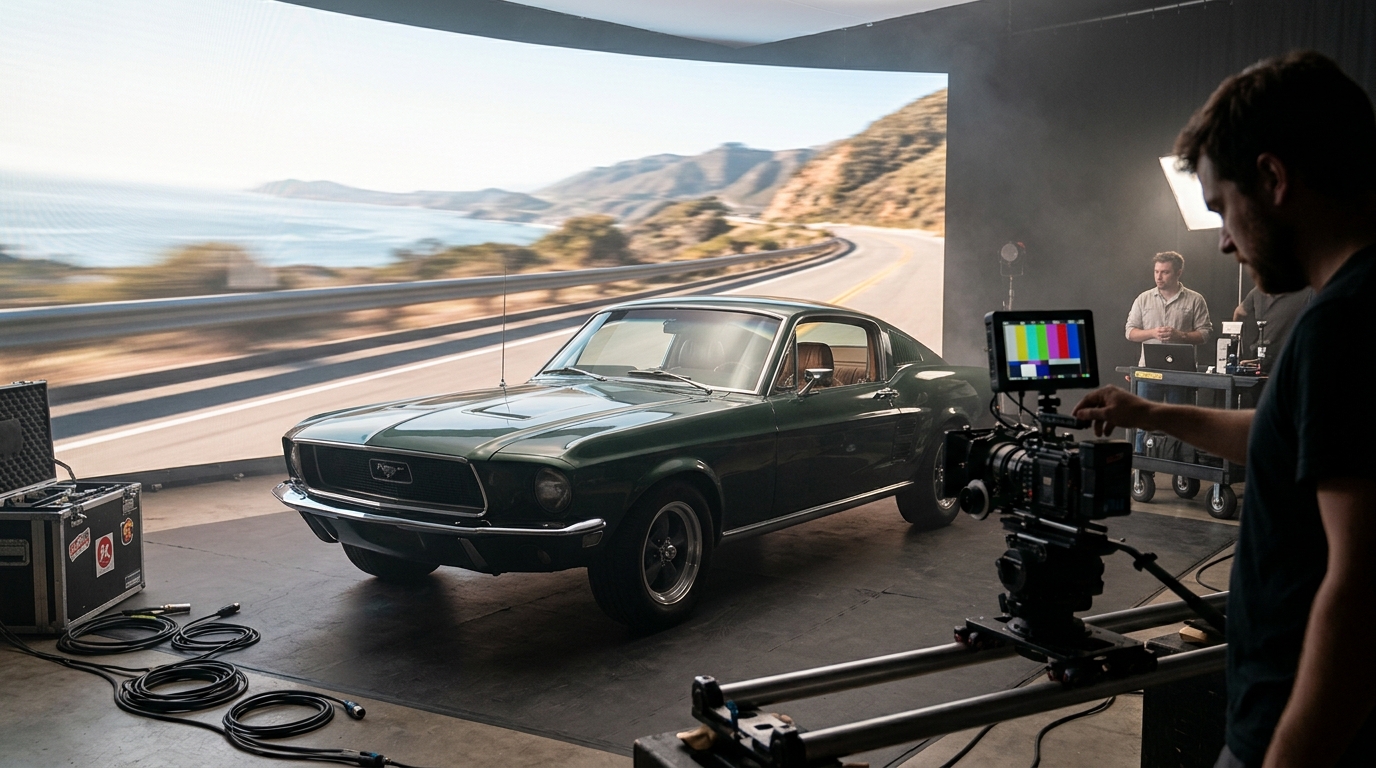
The traditional method of shooting car scenes relied heavily on process trailers. These are specialized vehicles equipped with large screens or green screens that allow the car to be driven while the background is composited in post-production. Industry data shows that this method often doubles production costs due to location fees, equipment rentals, and extensive post-production VFX work. The emergence of LED volume walls, powered by Unreal Engine technology, offers a compelling alternative. This technology projects real-time, high-resolution backgrounds directly behind the subject, providing accurate lighting and reflections on set.
Virtual production is defined as the use of real-time computer graphics and LED displays to create immersive environments during filming. This approach allows directors to see the final composite in real-time, reducing guesswork and iteration cycles. However, the transition from physical process trailers to virtual sets requires a fundamental change in how directors and cinematographers approach the shoot. The lack of physical movement in the background can lead to subtle but critical errors in perception.
Lighting Mismatches and Reflection Errors
One of the most common mistakes when shooting car scenes without a process trailer is ignoring the dynamic nature of light on curved surfaces. In a traditional setup, the sun or artificial lights interact with the car's paint and glass in real-time. In a virtual environment, the LED wall must replicate this interaction accurately. Technical analyses indicate that even minor discrepancies in color temperature or intensity between the set lights and the virtual background can break the illusion of reality.
Reflection Control
Car paint is highly reflective. If the LED wall is not calibrated correctly, it can create unwanted hotspots or reflections that do not match the virtual environment. This is particularly problematic when shooting through windshields or side windows. The reflection of the LED pixels themselves can become visible, ruining the immersion. To avoid this, cinematographers must use polarizing filters and carefully adjust the angle of the set lights relative to the camera.
Color Grading Consistency
Another critical error is failing to match the color grading of the virtual environment with the physical car. If the virtual sunset is warm and orange, but the car is lit with cool, neutral light, the result will look disconnected. Expert guidelines suggest that lighting directors must work in tandem with colorists to ensure that the light falling on the car matches the light source in the virtual world.
Camera Tracking and Parallax Issues
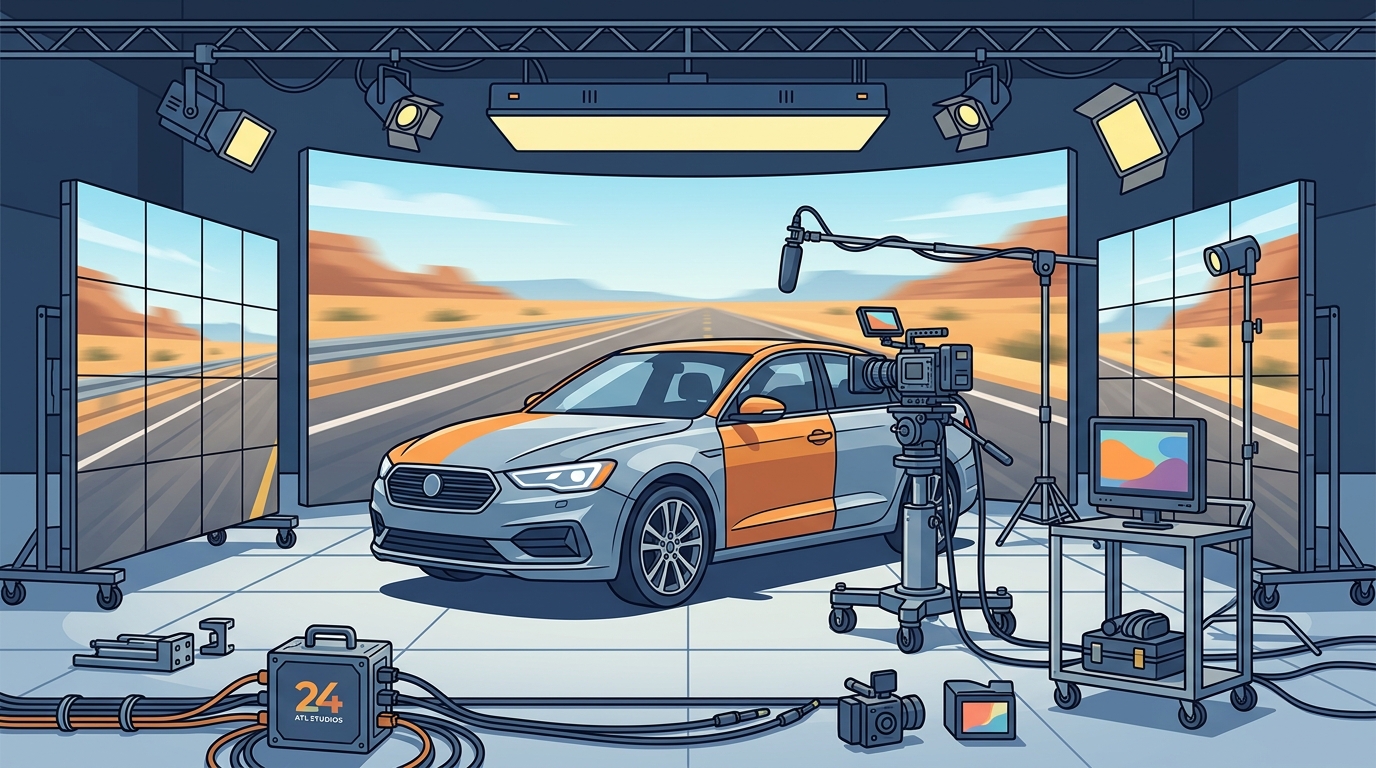
Parallax is the apparent shift in the position of an object when viewed from different angles. In car scenes, the camera is often mounted on a rig that moves with the car. If the virtual background does not move in perfect synchronization with the camera, the depth perception will be off. This is a frequent mistake when using less sophisticated virtual production setups.
Synchronization Accuracy
The camera tracking system must communicate with the rendering engine in real-time. Any lag or inaccuracy in this data stream can cause the virtual background to jitter or drift. Recent studies on virtual production workflows highlight that sub-millimeter tracking errors can lead to noticeable parallax shifts, especially in wide shots. Ensuring that the camera tracking system is calibrated daily is essential for maintaining spatial consistency.
Field of View Matching
The field of view (FOV) of the camera must match the perspective of the virtual camera in the Unreal Engine environment. If the physical lens is wider or narrower than the virtual lens, the background will appear distorted or incorrectly scaled. This mismatch can make the car look like it is floating in space rather than driving through a realistic environment.
Motion Simulation and Physical Feedback
When shooting without a process trailer, the car is often stationary on a platform or in a studio. This lack of physical motion can affect the performance of the actors and the realism of the scene. Industry feedback indicates that actors often struggle to convey the sensation of speed and vibration when the car is not moving. This can result in a performance that feels disconnected from the environment.
Simulating Vibration
To combat this, production teams must use mechanical vibration rigs or sound design to simulate the feel of the road. Even subtle vibrations can help actors ground their performance in the reality of the scene. Without this physical feedback, the scene may feel static and lifeless, regardless of the visual quality of the background.
Audio Integration
Audio is another critical component of motion simulation. The sound of the engine, wind, and road must be synchronized with the visual movement. Technical reports on audio post-production show that mismatched audio can break the illusion of movement more quickly than visual errors. Ensuring that the audio mix reflects the virtual environment's acoustics is essential for immersion.
Post-Production Integration Challenges
While virtual production aims to reduce post-production work, it does not eliminate it. One common mistake is assuming that the in-camera composite is the final product. Data from recent film productions reveals that color grading, VFX cleanup, and compositing are still required to achieve a polished look. Failing to plan for these steps can lead to budget overruns and schedule delays.
VFX Cleanup
Even with high-resolution LED walls, there may be areas where the virtual background does not perfectly align with the physical set. These edges, often referred to as the "kill zone," require VFX cleanup to ensure a seamless transition. Ignoring this step can result in visible seams or artifacts that distract the viewer.
Color Space Management
Managing color space is another critical post-production task. The virtual environment is rendered in a specific color space, such as ACES, which must match the camera's capture format. Color science experts note that mismatches in color space can lead to inaccurate color reproduction and loss of detail in highlights and shadows.
Virtual vs. Traditional Process Trailers
Choosing between virtual production and traditional process trailers depends on the specific needs of the project. Each method has its own set of advantages and disadvantages. The following table summarizes the key differences to help production teams make an informed decision.
| Feature | Virtual Production (LED Volume) | Traditional Process Trailer |
|---|---|---|
| Cost Efficiency | Reduces location and VFX costs by up to 50%. | High costs due to equipment and location fees. |
| Real-Time Feedback | Directors see the final composite on set. | Results are only visible in post-production. |
| Lighting Accuracy | Dynamic, real-time reflections on the car. | Static lighting that may not match the background. |
| Flexibility | Instantly change environments with a click. | Limited by physical locations and weather. |
| Technical Complexity | Requires specialized Unreal Engine expertise. | Requires complex rigging and logistics. |
Key Takeaways
- Lighting is Critical: Mismatches between set lights and virtual backgrounds are the most common visual error.
- Tracking Accuracy: Sub-millimeter camera tracking errors can cause noticeable parallax shifts.
- Actor Performance: Lack of physical motion can affect actor realism; use vibration rigs to compensate.
- Audio Sync: Audio must reflect the virtual environment to maintain immersion.
- Post-Production Still Needed: VFX cleanup and color grading are essential for a polished final product.
- Cost Savings: Virtual production can reduce overall production costs by up to 50%.
- Real-Time Feedback: Directors can see the final composite on set, reducing iteration time.
Frequently Asked Questions
What is the primary advantage of using an LED volume wall over a process trailer?
The primary advantage is the ability to see the final composite in real-time on set. This allows directors to make immediate adjustments to lighting and composition, reducing the need for costly post-production fixes.
Can virtual production replace all traditional car scene shooting?
While virtual production is highly effective, it may not replace all traditional methods. Complex stunts or specific lighting conditions may still require physical process trailers or practical effects.
How does Unreal Engine contribute to virtual car scenes?
Unreal Engine provides the real-time rendering capabilities necessary to generate high-fidelity virtual environments. It allows for dynamic lighting and reflections that interact realistically with the physical car.
What is the "kill zone" in virtual production?
The "kill zone" refers to the area where the physical set meets the virtual background. This area often requires VFX cleanup to ensure a seamless transition between the two.
Is virtual production more expensive than traditional methods?
While the upfront cost of virtual production technology can be high, it often results in significant cost savings by reducing location fees, equipment rentals, and post-production VFX work.
How do you handle reflections on car paint in a virtual set?
Reflections are managed by carefully calibrating the LED wall and using polarizing filters on the camera. The lighting director must ensure that the set lights match the virtual light sources.
What role does camera tracking play in virtual car scenes?
Camera tracking ensures that the virtual background moves in perfect synchronization with the camera. This prevents parallax errors and maintains the illusion of depth and movement.
Frame Your Shoot Today
Avoid the costly pitfalls of traditional car scene shooting by leveraging the power of virtual production. At 24 ATL Studios, we provide state-of-the-art LED volume walls and Unreal Engine technology to elevate your film, TV, and commercial productions. Our team of experts is ready to help you frame your shoot with precision and creativity. Contact us now to schedule your session and experience the future of filmmaking.