
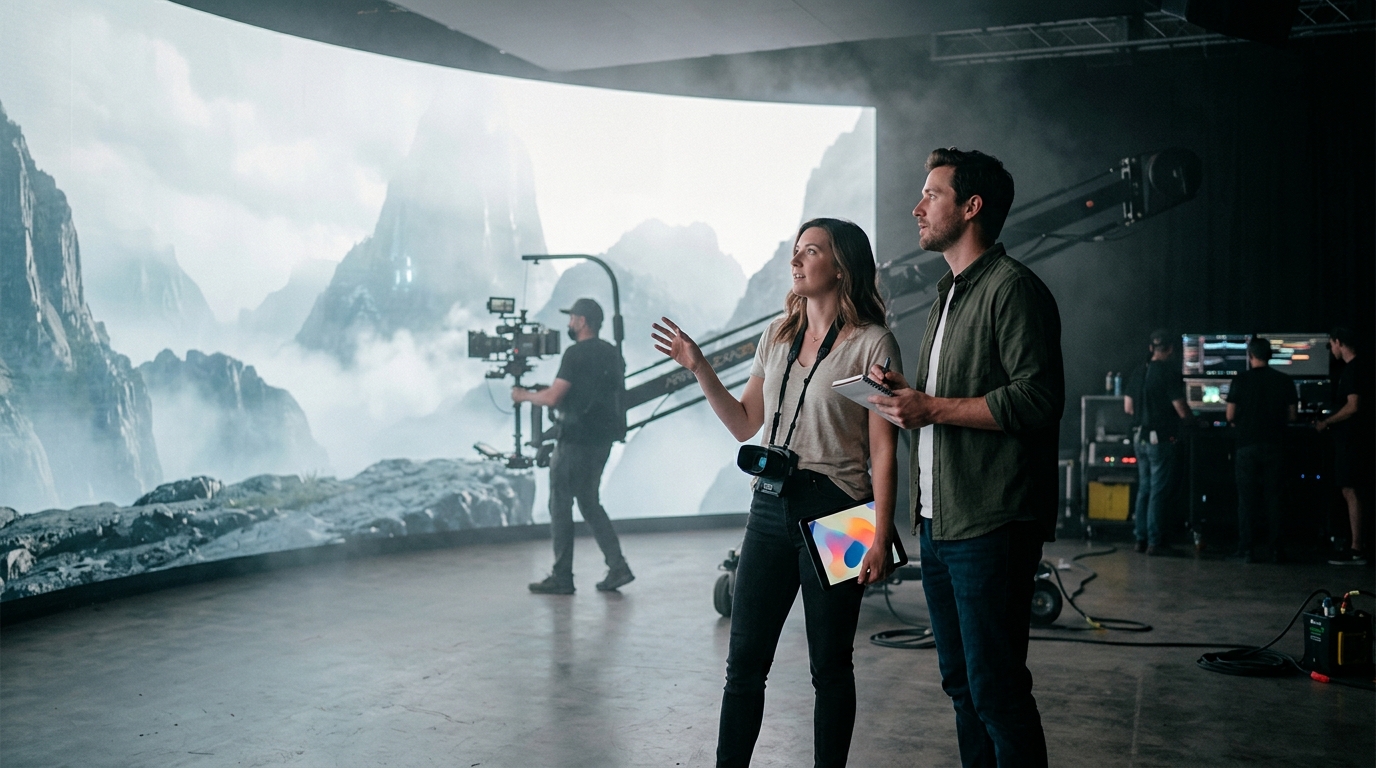
Choosing the right virtual production facility in Atlanta requires evaluating LED wall specifications, Unreal Engine integration, and post-production workflows. 24 ATL Studios provides a specialized environment for filmmakers seeking immersive sets without traditional location costs. This guide details the technical criteria you must verify before booking a stage.
LED Volume Specifications
LED volume technology is a large-scale display system that replaces green screens with real-time rendered environments. When scouting a studio, you must inspect the physical hardware before discussing creative concepts. The quality of the display directly impacts the lighting interaction with your actors and props. For additional details, review the .
Pixel Pitch and Resolution
Pixel pitch measures the distance between LED diodes in millimeters. A lower number indicates higher resolution and finer detail. For close-up shots, a pixel pitch of 2.5mm or lower is standard to prevent visible pixelation. You should ask the facility management for the exact pitch of their primary wall. This metric determines how close your camera can get to the screen without losing image quality. For additional details, review the Customer Experience.
Refresh Rate and Latency
Refresh rate is the number of times per second the display updates its image. High-end virtual production walls operate at 120Hz or higher. This high frequency reduces motion blur and flicker when cameras move quickly. Latency refers to the delay between the camera tracking data and the screen update. Low latency is critical for maintaining the illusion of a real environment. If the lag exceeds 10 milliseconds, actors may notice a disconnect between their movement and the background. For additional details, review the Frequently Asked Questions.
Color Gamut and Brightness
| Specification | Minimum Standard | Recommended for High-End | Impact on Production |
|---|---|---|---|
| Pixel Pitch | 3.0mm | 2.5mm or lower | Detail in close-ups |
| Refresh Rate | 60Hz | 120Hz+ | Motion smoothness |
| Brightness | 800 nits | 1,500+ nits | Lighting integration |
| Latency | 15ms | <10ms | Camera tracking accuracy |
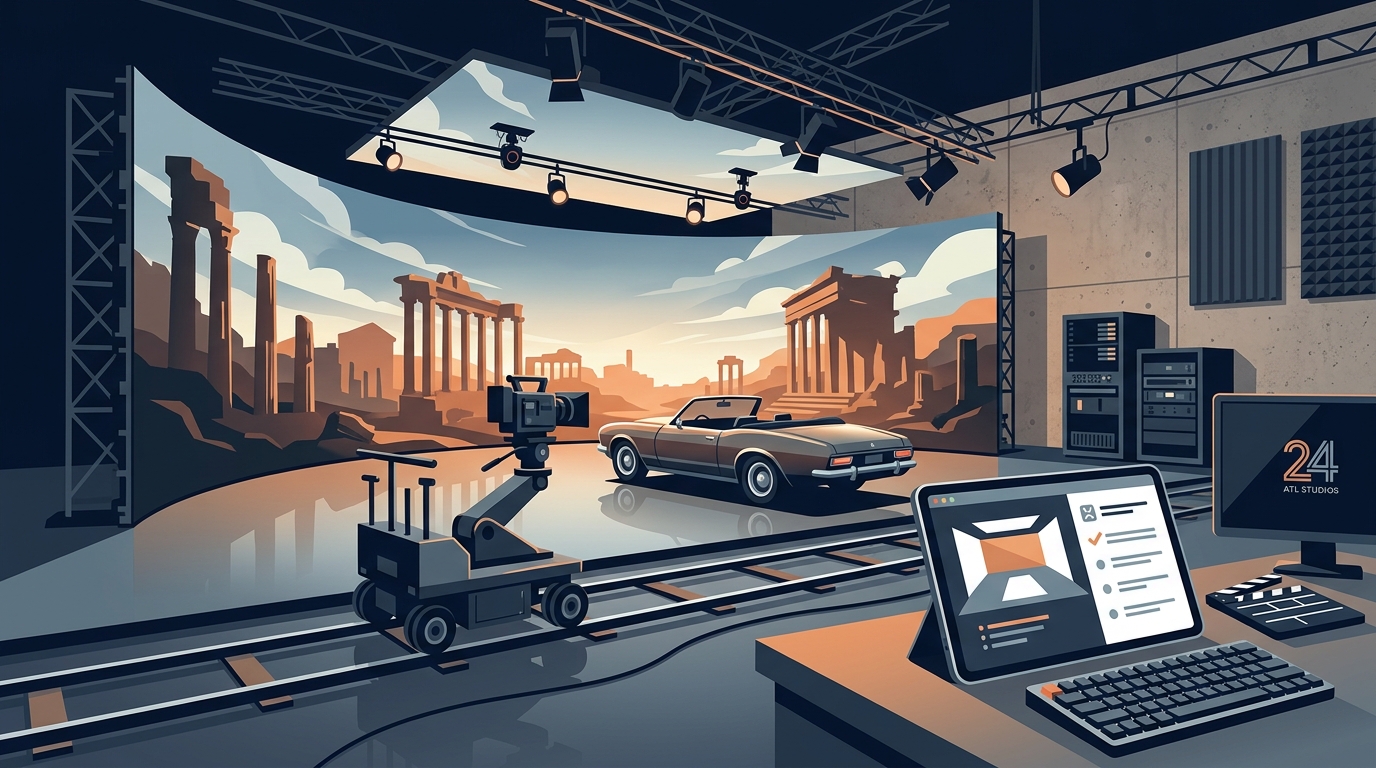
Studio Technical Capabilities
Unreal Engine Integration
Camera Tracking Systems
Post-Production Workflow
Key Takeaways
- Verify the pixel pitch of the LED wall to ensure sufficient resolution for your shot types. For additional details, review the About.
- Confirm the refresh rate and latency to prevent motion artifacts during camera moves.
- Identify the camera tracking system used to ensure accuracy for your specific shots.
- Assess the on-site post-production capabilities to streamline the delivery workflow.
- Consider the total cost of ownership, including lighting and set design, not just stage rental.
- Review the studio's portfolio to see examples of similar projects they have completed.
Frequently Asked Questions
What is the minimum size of an LED volume wall needed for a feature film?
There is no single minimum size, but larger walls provide more immersion. A wall at least 10 meters wide and 5 meters high is common for mid-budget productions. Larger walls allow for wider lenses and more complex camera moves. The size should match the scale of your scenes and the focal lengths you plan to use.
Can I use my own Unreal Engine projects in a rented studio?
How does virtual production affect lighting design?
The LED wall acts as a practical light source. This changes how you light your actors and props. You can use the screen to create specific lighting moods without additional fixtures. This integration reduces the need for complex lighting rigs. It also ensures that the lighting on the actors matches the environment.
What is the difference between a volume stage and a green screen stage?
A volume stage displays a real-time rendered environment on an LED wall. A green screen stage uses a solid green background that is replaced in post. Volume stages provide immediate visual feedback for directors and actors. Green screens require more post-production work to composite the background. Volume stages generally offer a more immersive experience for the cast.
Do I need a dedicated technical artist for a virtual production shoot?
It is highly recommended to have a technical artist on set. This person manages the real-time rendering and camera tracking. They bridge the gap between the creative team and the technical infrastructure. If you do not have one, the studio may provide one. Clarify this role and its cost during the booking process. Learn more: 24ATL Studios LED Volume.