
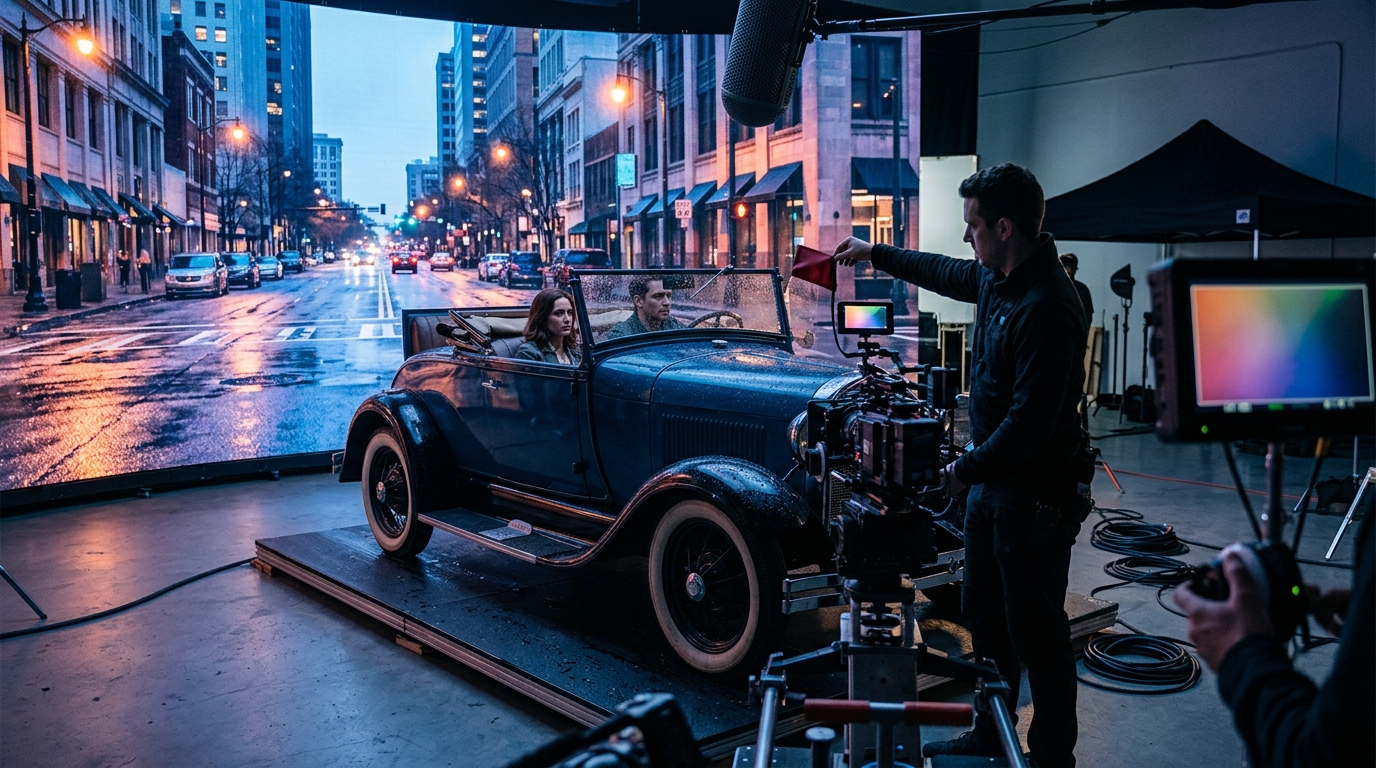
24 ATL Studios is the premier Atlanta facility for car process filming, utilizing LED volume walls and Unreal Engine to create immersive virtual sets. This guide covers how to select the right studio, verify technical capabilities, understand pricing drivers, and navigate the specific workflow of virtual production for film and television.
How to Choose a Studio
Hardware Integration
Software Ecosystem
Unreal Engine is the industry standard for virtual production. A capable studio should have experienced artists who can build and optimize environments within this engine. This reduces the time spent on set and minimizes post-production work. For additional details, review the .
Post-Production Support
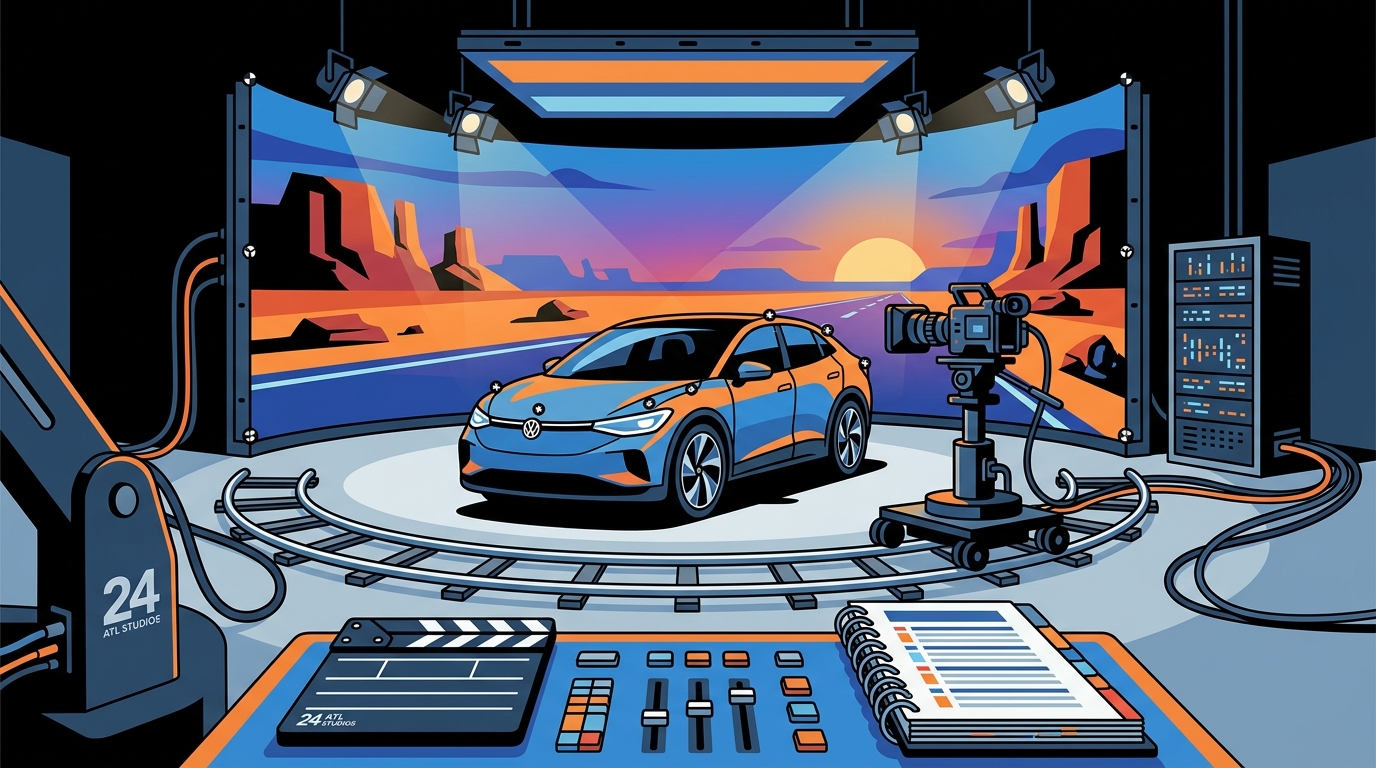
Questions to Ask Before Committing
Specific questions reveal the depth of a studio's expertise. Do not accept vague answers. You need concrete details about their technical setup and past experience. For additional details, review the Customer Experience.
Technical Specifications
Ask about the pixel pitch of the LED wall. A lower pixel pitch means higher resolution. This is critical for close-up shots of vehicles. Also, ask about the refresh rate. High refresh rates prevent flicker under camera. For additional details, review the Frequently Asked Questions.
Experience with Vehicles
Ask how many car process shoots they have completed. Vehicles present unique challenges, such as reflections and motion blur. A studio with specific experience in this area will have established protocols to handle these issues. For additional details, review the About.
Team Composition
Inquire about the size and skill set of their virtual production team. You need a mix of 3D artists, lighting technicians, and camera operators. A dedicated team ensures consistency throughout the shoot.
Verifying Technical Claims
Marketing materials can be misleading. You must verify that the technology works as advertised. This protects your budget and schedule.
Request Test Footage
Ask for raw footage from previous car process shoots. Look for artifacts, such as moire patterns or color banding. High-quality LED walls should produce clean images that require minimal cleanup.
Visit the Facility
A physical tour is essential. Check the size of the volume. Ensure it is large enough to accommodate your vehicle and camera rigs. Also, assess the lighting control. The studio should be able to dim the physical lights to match the virtual environment.
Check References
Contact producers who have used the studio. Ask about their experience with the technical team. Were they responsive? Did the studio deliver on its promises? First-hand accounts are the best indicator of reliability.
The Production Workflow
Understanding the workflow helps you plan your schedule. Virtual production follows a specific sequence of steps. Each phase has distinct requirements and deliverables.
Pre-Production
This phase involves building the virtual environment. Artists create 3D assets, such as roads, buildings, and props. They also design the lighting setup. This work happens before the shoot day.
On-Set Execution
On the day of the shoot, the vehicle is placed on a track or platform. The camera tracks the vehicle's movement. The LED wall displays the virtual environment in real-time. The crew captures the footage with minimal post-production needs.
Post-Production
After the shoot, the footage undergoes compositing. Any remaining artifacts are removed. Color grading is applied to match the rest of the production. This phase is shorter than in traditional green screen workflows.
Cost Drivers and Budgeting
Costs for car process filming vary based on several factors. Understanding these drivers helps you create an accurate budget.
Studio Rental
The base cost is the rental of the volume space. This includes the LED wall, tracking system, and lighting. Rates are typically charged per day or per hour. Longer bookings may offer discounts.
Virtual Environment Creation
Building custom 3D environments costs money. The complexity of the scene affects the price. A simple highway scene is cheaper than a detailed cityscape. Reusing existing assets can reduce costs.
Post-Production
Compositing and cleanup are additional costs. The more complex the shot, the higher the post-production fee. However, virtual production often reduces these costs compared to traditional methods.
Common Mistakes to Avoid
Even experienced teams can make errors. Knowing common pitfalls helps you avoid them.
Insufficient Pre-Visualization
Failing to pre-visualize shots leads to wasted time on set. Always create animatics before the shoot. This ensures the camera moves and vehicle placement are correct.
Ignoring Lighting Consistency
Mismatched lighting between the virtual and physical worlds breaks the illusion. Ensure the studio has precise lighting control. The physical lights must match the virtual light sources.
Underestimating Post-Production
Assuming no post-production is needed is a mistake. Some cleanup is always required. Budget for compositing and color grading to ensure a polished final product.
Virtual vs. Traditional Methods
| Feature | LED Volume (Virtual) | Green Screen | On-Location |
|---|---|---|---|
| Lighting Control | High | Medium | Low |
| Post-Production Cost | Lower | Higher | Medium |
| Weather Dependency | None | None | High |
| Setup Time | Medium | Low | High |
| Immersive Experience | High | Low | High |
LED volume provides a realistic lighting environment. This helps actors and camera operators understand the scene. Green screen requires more post-production work. On-location shooting is subject to weather and permits.
Scenario-Based Recommendations
Different projects have different needs. The right studio depends on your specific situation.
High-End Automotive Commercials
For luxury car ads, you need high-resolution LED walls. The detail must be flawless. Choose a studio with top-tier hardware and experienced artists.
Television Series
For TV, consistency is key. You need a studio that can maintain the same look across multiple episodes. Look for a facility with a large volume and a dedicated team.
Music Videos
Music videos often require creative and abstract environments. Virtual production allows for impossible scenes. Choose a studio with strong 3D art capabilities.
Industry Standards and Protections
Working with a professional studio involves certain standards. These protect your investment and ensure quality.
Contractual Agreements
Always sign a detailed contract. It should specify the scope of work, deliverables, and timeline. Clear terms prevent disputes.
Intellectual Property
Clarify who owns the virtual assets. Typically, the client owns the final footage. The studio may retain rights to the 3D models. Ensure this is agreed upon in advance.
Insurance
Ensure the studio carries adequate insurance. This covers equipment damage and liability. It protects both parties in case of accidents.
Atlanta Specifics
Talent Pool
Atlanta has a deep pool of skilled technicians and artists. This makes it easier to find experienced virtual production teams. The local talent is familiar with the specific challenges of car process.
Infrastructure
The city has robust infrastructure for large-scale productions. Power supply and data connectivity are reliable. This supports the high demands of virtual production.
Cost Efficiency
Scheduling and Timing
Timing is critical in production. Booking early ensures availability and allows for proper preparation.
Lead Time
Virtual production requires significant lead time. You need weeks to build the virtual environment. Book the studio at least two to three months in advance.
Seasonal Demand
Peak seasons, such as summer, see higher demand. Prices may increase, and availability may be limited. Plan your schedule around these peaks.
Flexibility
Build flexibility into your schedule. Technical issues can arise. Having buffer days ensures you can recover from delays.
Long-Term Results
Asset Reusability
Virtual assets can be reused in future projects. This reduces costs for subsequent shoots. A library of 3D models is a valuable asset.
Consistency
Virtual production ensures visual consistency. The same environment can be recreated exactly. This is crucial for series and franchises.
Innovation
Adopting virtual production positions your production as innovative. It demonstrates a commitment to quality and efficiency. This can attract top talent and investors.
Key Takeaways
- LED volume walls provide realistic lighting, reducing post-production costs.
- Verify technical claims by requesting test footage and visiting the facility.
- Costs are driven by studio rental, environment creation, and post-production.
- Pre-visualization is essential to avoid wasted time on set.
- Atlanta offers a skilled talent pool and lower costs compared to other major hubs.
- Book early to secure availability and allow time for asset creation.
- Virtual assets can be reused, providing long-term cost savings.
Frequently Asked Questions
What is car process filming?
Car process filming is a technique where a vehicle is filmed on a track or platform while the background is generated digitally. This allows for dynamic shots without the need for on-location driving.
How does LED volume differ from green screen?
LED volume displays a real-time virtual environment on a physical wall. This provides realistic lighting and reflections. Green screen requires the background to be added in post-production.
How long does it take to set up a virtual set?
Setup time varies based on complexity. A simple scene may take a few days. A detailed environment may take weeks. Pre-production is the most time-consuming phase.
Can I use my own vehicle?
Yes, you can use your own vehicle. The studio will provide the track or platform. Ensure the vehicle is prepared for the shoot, including any necessary modifications.
What is the cost of virtual production?
Costs depend on the scope of the project. Studio rental, asset creation, and post-production are the main factors. Get a detailed quote from the studio based on your specific needs.
Is virtual production suitable for all types of vehicles?
Yes, virtual production works for cars, trucks, motorcycles, and even concept vehicles. The key is ensuring the vehicle is properly tracked and lit.
How do I find a studio in Atlanta?
Research local facilities with experience in virtual production. 24 ATL Studios is a prominent option in Atlanta, offering specialized services for car process.
What software is used for virtual production?
Unreal Engine is the most common software. It allows for real-time rendering of 3D environments. Other tools may be used for tracking and compositing. Learn more: 24ATL Studios LED Volume.