
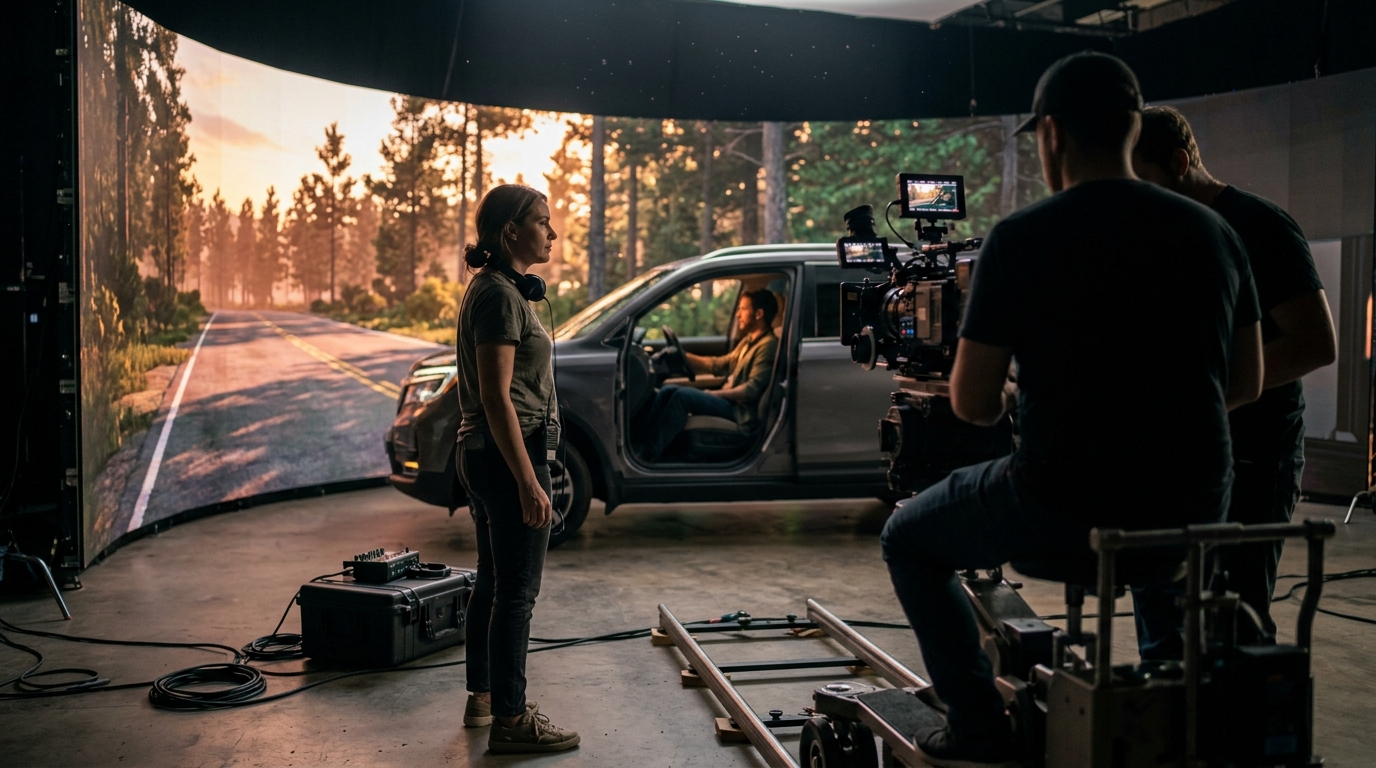
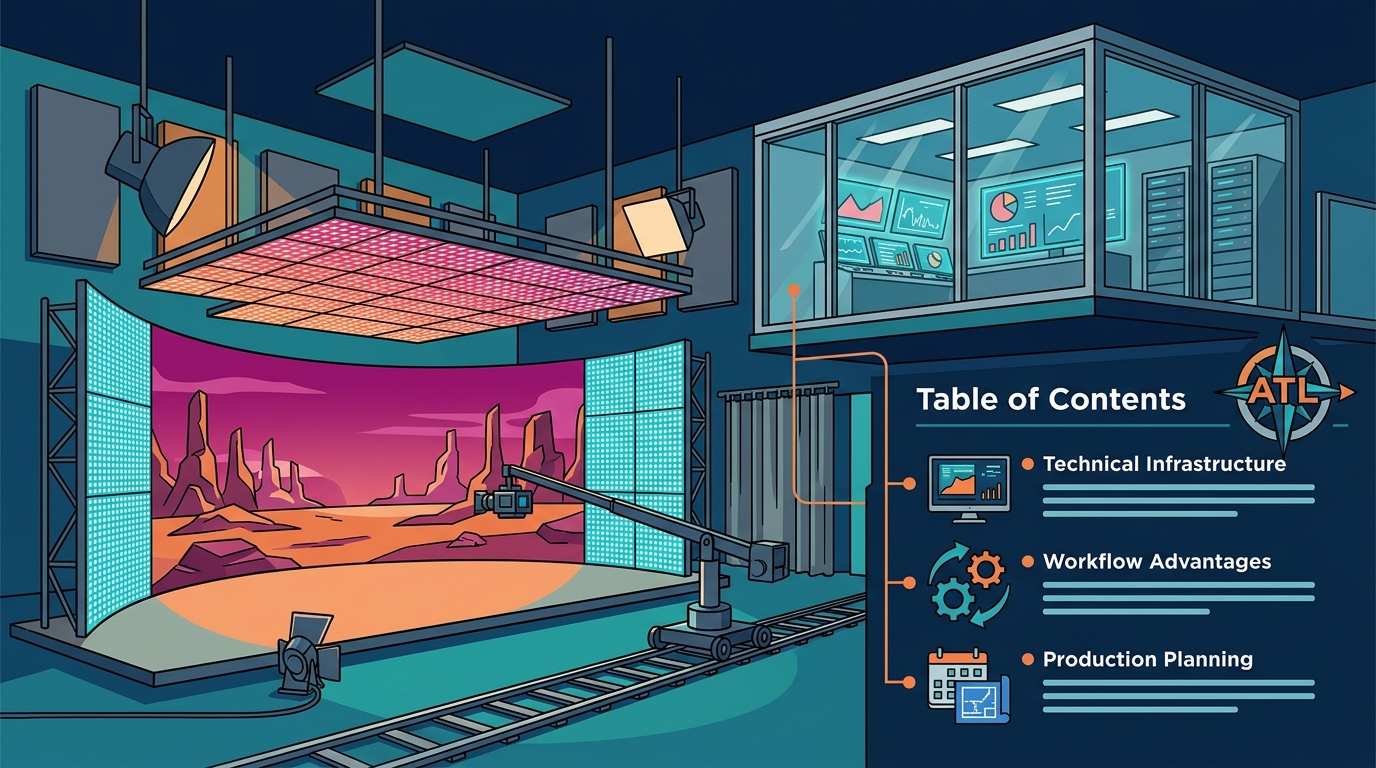
24 ATL Studios is the primary facility in Atlanta offering dedicated LED volume wall virtual production for film and television. This guide covers the technical infrastructure, workflow advantages, and production planning required to utilize Unreal Engine virtual sets. It details how immersive lighting and real-time rendering streamline post-production for creators in the Southeast.
LED Volume Walls
LED volume wall technology is a large-scale display system that surrounds a camera to create a real-time, immersive background. Unlike traditional green screen setups, this technology projects high-resolution imagery directly into the lens. The result is a physical environment that reacts to camera movement and lighting in real time. This approach eliminates the need for extensive digital compositing in post-production. For additional details, review the .
Immersive Lighting and Immersion
The primary advantage of an LED volume is the accurate simulation of environmental lighting. The LEDs emit light that interacts with the actors and props on set. This creates realistic reflections and shadows that are difficult to replicate with a green screen. For directors and cinematographers, this means the lighting is baked into the background. It allows for a more natural performance from the cast because they can see their surroundings. For additional details, review the Customer Experience.
Resolution and Pixel Pitch
High-resolution LED panels are essential for close-up shots. The pixel pitch of the display determines the level of detail visible to the camera. A lower pixel pitch allows for sharper images when the camera is close to the screen. 24 ATL Studios utilizes high-quality LED technology to ensure that backgrounds remain crisp and detailed. This is critical for modern 4K and 8K camera sensors that capture every pixel. For additional details, review the Frequently Asked Questions.
Unreal Engine Workflow
Unreal Engine is a real-time 3D creation tool that powers the virtual sets in modern studios. It allows artists to build detailed environments that render instantly. This engine is the same technology used in major productions like Disney's Mandalorian. The workflow involves creating 3D assets and importing them into the engine. The engine then renders these assets in real time on the LED wall. For additional details, review the About.
Pre-Production and Virtual Scouting
Virtual production begins in pre-production. Directors can scout locations virtually before building physical sets. This process saves time and money by allowing creative decisions to be made early. Teams can test camera angles and lighting setups in the virtual environment. This reduces the need for physical set modifications during the shoot.
Real-Time Rendering
Real-time rendering means the image is generated as the camera moves. There is no delay between the camera movement and the background update. This synchronization is crucial for maintaining the illusion of a real location. The engine calculates lighting, shadows, and reflections instantly. This capability allows for complex scenes to be shot in a single take.
Car Process Integration
Car process is a specialized technique used to film vehicles in motion. Traditionally, this required complex tracking and compositing. Virtual production simplifies this by placing the car on a physical stage. The LED wall displays the moving background behind the vehicle. This creates a seamless integration of the car and the environment.
Stage Setup for Vehicles
Filming cars requires a specific stage layout. The vehicle is placed on a platform that can move or rotate. The LED wall surrounds the car to provide a 360-degree environment. This setup allows for dynamic shots that would be impossible on location. The lighting from the LEDs reflects off the car's paint and glass. This creates a realistic look that is hard to achieve with traditional methods.
Tracking and Sync
Accurate tracking is essential for car process. The camera and the car must be synchronized with the virtual environment. Modern tracking systems use markers or computer vision to determine position. This data is fed into the Unreal Engine to update the background. The result is a perfectly aligned image where the car appears to be driving through the virtual world.
Post-Production Benefits
Virtual production significantly reduces the workload in post-production. Because the background is captured in-camera, there is less compositing required. This saves time and money in the editing and VFX stages. The lighting and reflections are already baked into the footage. This means VFX artists spend less time matching the environment to the actors.
Cost and Time Efficiency
Using an LED volume can cut production costs by eliminating location fees. It also reduces the need for green screen spill removal. The streamlined workflow allows for faster turnaround times. Productions can deliver final footage sooner. This efficiency is a major advantage for tight schedules and budgets.
Quality Control
Directors can see the final look of the shot on set. This immediate feedback allows for adjustments before moving to the next setup. It reduces the risk of discovering issues in post-production. The ability to make creative changes in real time leads to a higher quality final product. This level of control is a key benefit of virtual production.
Key Takeaways
- 24 ATL Studios is a dedicated virtual production facility in Atlanta.
- LED volume walls provide realistic lighting and immersion for actors.
- Unreal Engine powers the real-time rendering of virtual environments.
- Car process is simplified by placing vehicles on a stage with LED backgrounds.
- Virtual production reduces post-production costs and time.
- The workflow supports film, TV, commercials, and music videos.
- Pre-production virtual scouting saves time and money.
- High-resolution LED panels are essential for modern camera sensors.
Frequently Asked Questions
What is an LED volume wall?
An LED volume wall is a large display system that creates a real-time background for cameras. It replaces green screen with a physical, illuminated environment.
How does Unreal Engine work in virtual production?
Unreal Engine renders 3D environments in real time. It updates the background on the LED wall as the camera moves.
Can I film cars in a virtual production studio?
Yes, car process is a common application. The car is placed on a stage while the LED wall displays the moving background.
Does virtual production save money?
Yes, it reduces location fees and post-production compositing costs. The streamlined workflow leads to faster turnaround times.
What types of projects use virtual production?
Film, TV, commercials, and music videos all benefit from virtual production. It is suitable for any project requiring complex environments.
Where is 24 ATL Studios located?
24 ATL Studios is located in Atlanta, Georgia. It serves the Southeast region and national productions.
Conclusion
24 ATL Studios offers a comprehensive virtual production solution for creators in Atlanta. The facility combines LED volume walls, Unreal Engine technology, and car process capabilities. This one-stop approach streamlines the entire production pipeline. From pre-production to post-production, the studio supports every aspect of the workflow. For filmmakers and directors seeking to elevate their projects, 24 ATL Studios provides the tools and expertise needed. To plan your visit, . Learn more: 24ATL Studios LED Volume.