
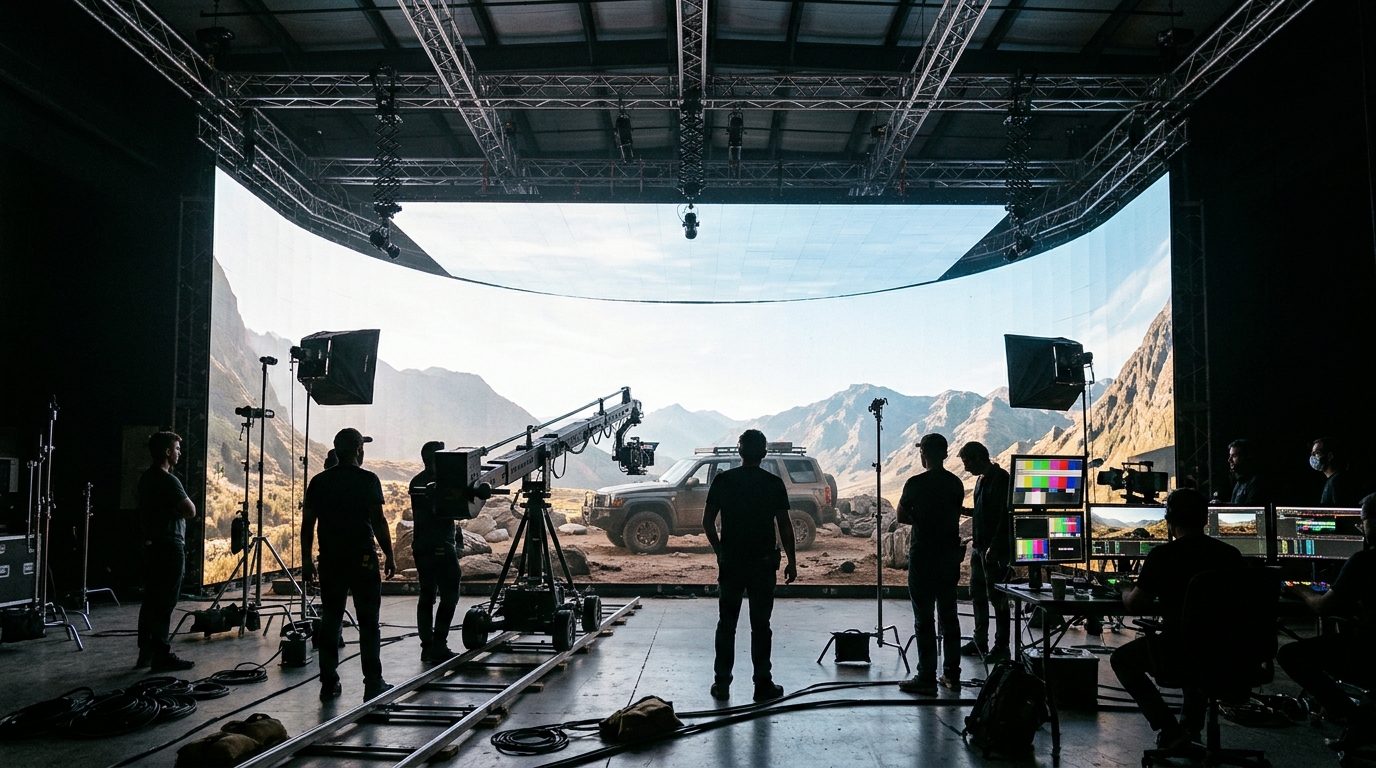
Choosing the right virtual production facility requires looking beyond marketing claims to the physical hardware that defines your shoot. LED volume specifications determine how realistic your background appears and how much post-production work remains. This guide outlines the seven critical technical metrics you must verify when comparing Atlanta-based virtual production studios for your next project.
1. Pixel Pitch and Resolution Density
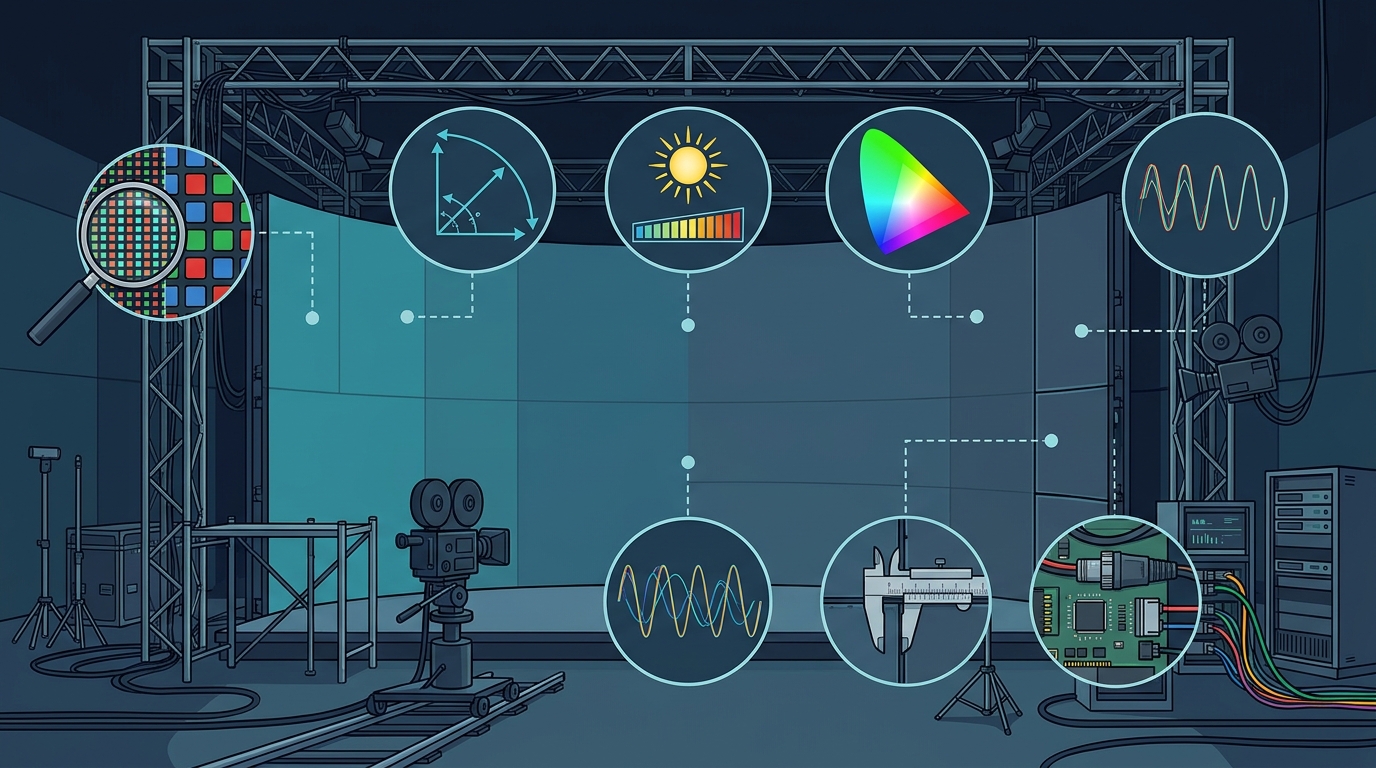
Pixel pitch dictates the minimum camera distance required for a seamless image. A smaller pixel pitch, measured in millimeters, allows cameras to move closer to the screen without revealing the grid of individual LEDs. For close-up shots or tight framing, you need a high-resolution panel that eliminates moiré patterns. Verify the exact pitch of the wall you will use, as larger pitches are suitable for wide shots but may degrade in close proximity.
2. Screen Dimensions and Aspect Ratio
Physical size determines the field of view and immersion level for your talent. The width and height of the LED wall define how much of the environment is visible at once. A larger surface area reduces the need for digital compositing in post-production. Ensure the aspect ratio of the volume matches your camera sensor and lens choices to avoid black bars or awkward cropping during the shoot.
3. Brightness and Luminance Range
Peak brightness must match the lighting conditions of your virtual environment. If your scene depicts a bright daylight exterior, the LED wall must output sufficient nits to compete with practical lights on set. Insufficient brightness causes the background to look dim or washed out. Ask for the peak and sustained luminance ratings to ensure the display can handle high-contrast scenes without clipping highlights.
4. Color Gamut and Accuracy
Color gamut coverage ensures the virtual background matches the live-action elements. A wide color gamut, often measured in DCI-P3 or Rec. 2020 standards, allows for vibrant and accurate color reproduction. Mismatched color spaces between the LED wall and your camera sensor can result in color shifts that are difficult to correct in color grading. Confirm the studio's calibration process and the specific color standards their hardware supports.
5. Refresh Rate and Latency
High refresh rates and low latency prevent motion artifacts and camera tracking errors. The display must update instantly as the camera moves to maintain the illusion of a real environment. Low latency is critical for camera tracking systems to sync the virtual background with the physical camera position. A lag between camera movement and screen update breaks the immersion and creates a distracting parallax effect for the audience.
6. Camera Tracking Integration
7. Rendering Engine Compatibility
Compatibility with industry-standard engines like Unreal Engine streamlines pre-production. The studio's infrastructure must support the software your team uses to build virtual sets. Seamless integration between the rendering engine and the LED display ensures that lighting and reflections are calculated in real-time. 24ATL Studios specializes in Unreal Engine virtual set production, ensuring that your digital assets translate directly to the LED volume without compatibility issues.
Choosing the Right Studio
When comparing these seven specifications, prioritize the metrics that align with your specific shot list and camera package. A studio with a massive screen is less useful if the pixel pitch is too large for your close-ups. Focus on the balance between resolution, brightness, and tracking accuracy to ensure a seamless virtual production experience.
Frequently Asked Questions
What is the ideal pixel pitch for a virtual production LED wall?
The ideal pixel pitch depends on your camera distance. For close-ups, a pitch of 2.5mm or smaller is recommended. For wide shots, a pitch of 4mm to 6mm is often sufficient and more cost-effective.
How does LED brightness affect camera exposure?
LED brightness must be high enough to match the practical lighting on set. If the wall is too dim, you must underexpose the background or overexpose the talent, leading to a mismatched look that is hard to fix in post.
Do I need a dedicated camera tracking system?
Yes, a dedicated tracking system is essential for high-end virtual production. It ensures that the virtual background moves in perfect sync with the physical camera, maintaining the illusion of a real environment.
Can any camera be used with an LED volume?
Most modern digital cameras can be used, but you must account for the pixel pitch and refresh rate. High-resolution cameras may reveal the LED grid if the pixel pitch is too large, so matching the camera sensor to the display resolution is critical.
What is the role of the rendering engine in LED volume production?
The rendering engine, such as Unreal Engine, calculates the virtual environment in real-time. It processes camera tracking data and renders the background that is displayed on the LED wall, ensuring that lighting and reflections are accurate. Learn more: 24ATL Studios LED Volume.