
How to Choose the Right Virtual Production Studio for Your Needs
Virtual production is reshaping film, television, and commercial content creation. With the global virtual production market valued at USD 2.84 billion in 2025 and growing at over 20% annually, more producers than ever are seeking LED volume stages and real-time rendering workflows. But not every studio is the right fit for every project. Choosing the wrong facility can blow your budget, derail your schedule, and compromise your creative vision. This guide walks you through the critical factors to evaluate so you book with confidence.
What Is Virtual Production?
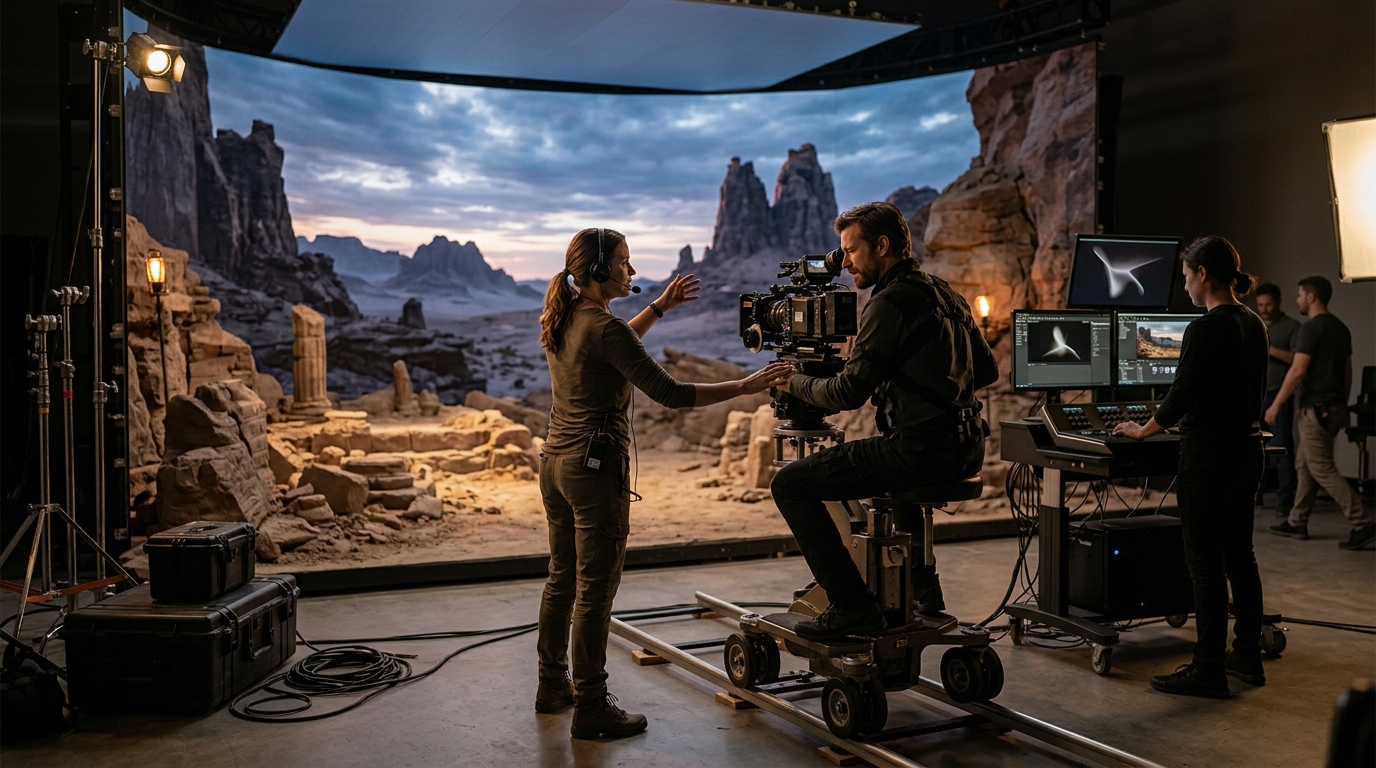
Virtual production is a filmmaking approach that combines real-time computer-generated imagery with live-action shooting, typically using LED volume walls powered by engines like Unreal Engine. Instead of replacing backgrounds in post-production, filmmakers see and capture final-pixel environments on set.
An LED volume wall is a large, curved array of high-resolution LED panels that displays photorealistic digital environments in real time. The camera captures both the actor and the background simultaneously, producing natural lighting, reflections, and parallax movement that green screens cannot replicate.
This technology gained mainstream recognition through productions like The Mandalorian and has since expanded to commercials, music videos, and independent films. Studios like 24 ATL Studios in Atlanta now offer this capability at accessible price points.
Step 1: Define Your Project Scope First
Before touring any facility, clarify your production requirements. A branded content shoot for social media has very different needs than a period-piece television episode.
Questions to Answer
- What is your content type: film, TV, commercial, music video, or digital content?
- How many shoot days do you need?
- What environments will you create (urban, fantasy, period-accurate interiors)?
- Do you need practical props, 24-frame playback devices, or vehicle access?
The more specific your brief, the better a studio can assess fit and provide accurate estimates. Studios that encourage detailed pre-production planning, rather than rushing you onto the stage, tend to deliver stronger results.
Step 2: Evaluate LED Wall and Technical Specs
Not all LED volumes are equal. The technical specifications of the wall directly affect your final image quality.
Key Specs to Compare
| Specification | What It Means | What to Look For |
|---|---|---|
| Pixel Pitch | Distance between LEDs; determines resolution | 2.3 mm or lower for high-quality capture |
| Refresh Rate | How often the display updates per second | 3,840 Hz or higher to avoid moire patterns |
| Wall Size | Physical dimensions of the LED volume | Match to your widest planned shot |
| Rendering Engine | Software generating virtual environments | Unreal Engine is the current industry standard |
| Camera Tracking | System syncing camera movement to virtual scene | Mo-Sys, Stype, or equivalent precision tracking |
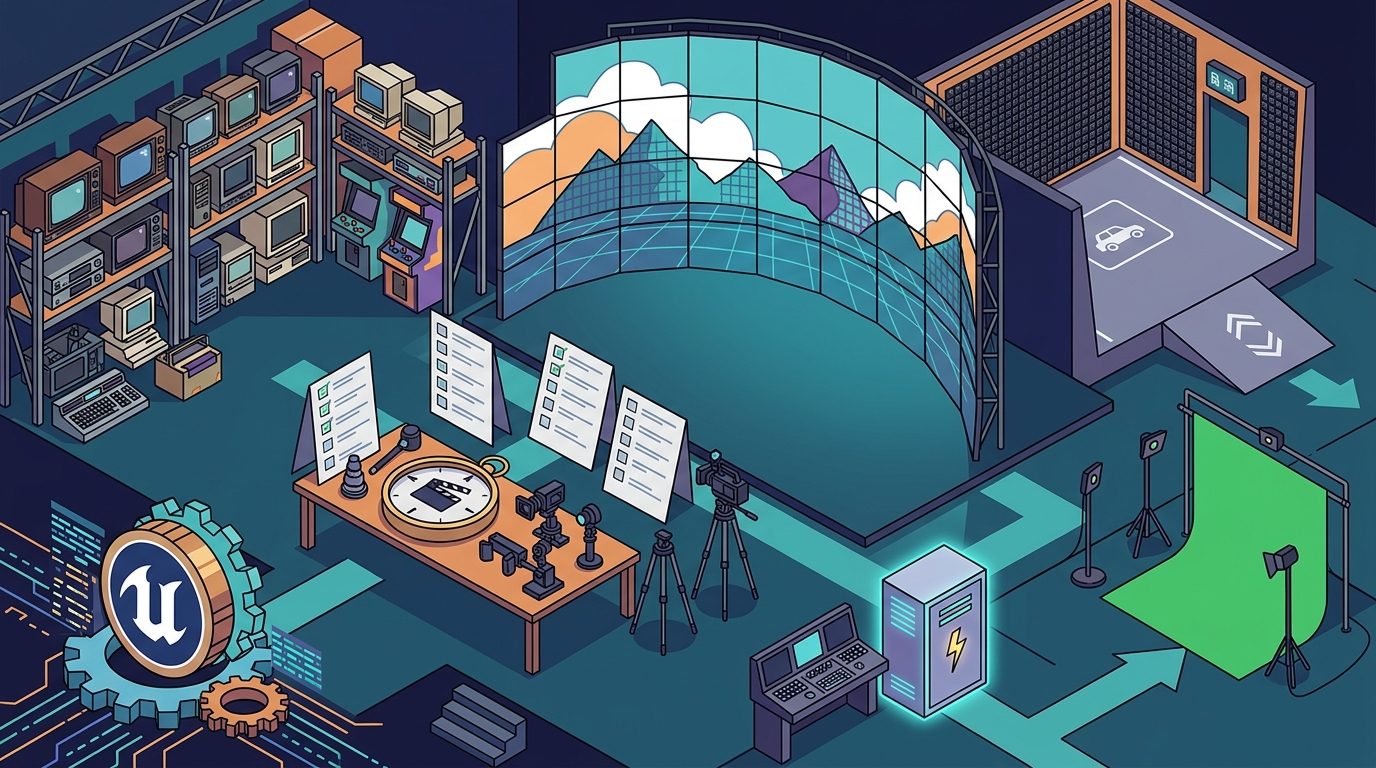
A studio like 24 ATL Studios operates a 30-foot-wide LED volume wall powered by Unreal Engine, along with two mobile LED walls for flexible setups. Ask every prospective studio for their exact wall dimensions, pixel pitch, and tracking system before booking.
Step 3: Assess Integrated Services and Workflow
The best virtual production studios function as complete production hubs, not just LED wall rentals. An integrated workflow is a production pipeline where pre-production, shooting, and post-production happen under one roof, reducing logistics and vendor coordination.
Services That Save Time and Money
- Pre-production offices for planning and creative development
- On-site post-production suites for immediate editorial review
- Prop inventory with camera-ready, period-accurate equipment
- Soundstage with drive-on access for vehicle shoots and large set builds
- Hard cyc wall for clean commercial and product shots
24 ATL Studios, for example, offers an extensive prop rental inventory spanning the 1950s through the 2020s, including working CRT televisions, vintage computers, and arcade machines optimized for 24-frame video playback. This eliminates the need to source props from multiple vendors and ensures screen accuracy for period pieces.
Step 4: Check Crew Expertise and Support
Virtual production demands specialized technical knowledge. A beautiful LED wall means nothing if nobody on set knows how to calibrate it, build Unreal Engine environments, or troubleshoot tracking issues mid-shoot.
When evaluating a studio, ask about dedicated Unreal Engine supervisors, LED technicians, and 24-frame playback specialists. Studios with in-house technical teams, like 24 ATL Studios' dedicated Unreal Engine supervisor and production crew, can adapt in real time when creative direction shifts on set.
Also verify the studio's production credits. Teams that have supported major network and streaming productions bring a level of problem-solving experience that newer facilities may lack.
Step 5: Compare Pricing Models
Virtual production pricing varies widely. Some studios charge flat day rates; others offer hourly tiers based on crew size and complexity.
What to Clarify Before Signing
- Is the Unreal Engine operator included or billed separately?
- Are there after-hours or weekend premiums?
- What does the base rate include (lighting, grip, playback)?
- Are full-day discounts available?
- Can you book hourly for smaller projects?
Studios with transparent, flexible pricing remove financial guesswork. Hourly rates for smaller crews (starting around $100/hour at some facilities) make virtual production accessible to independent filmmakers and content creators, not just major studios.
What to Look for: Studio Feature Comparison
| Feature | Must-Have | Nice-to-Have |
|---|---|---|
| LED Volume Wall | Yes, with Unreal Engine | Mobile LED walls for flexibility |
| Camera Tracking | Precision system included | Multiple tracking options |
| In-House Crew | UE supervisor, LED tech | Full production team on staff |
| Post-Production | Basic edit suite | Full color grading and finishing |
| Props and Playback | Access to basic props | Extensive functional inventory with 24-frame playback |
| Soundstage | Adequate square footage | Drive-on access, soundproofing |
| Flexible Booking | Day rates | Hourly rates for small crews |
Key Takeaways
- Define your project scope and content type before evaluating any studio.
- Prioritize LED wall specs: pixel pitch under 2.3 mm and refresh rates above 3,840 Hz deliver the best image quality.
- Choose studios with integrated workflows covering pre-production, shooting, post-production, and props under one roof.
- Verify in-house technical crew expertise, especially Unreal Engine operators and playback specialists.
- Compare pricing transparency: ask what is included and whether hourly or discounted day rates are available.
- Check production credits to confirm the studio has real-world experience on professional-grade projects.
- Location matters: studios in major production hubs like Atlanta offer strong crew pools and tax incentives.
Frequently Asked Questions
What is a virtual production studio?
A virtual production studio is a facility equipped with LED volume walls and real-time rendering technology that allows filmmakers to capture digital environments in-camera during live-action shooting, rather than adding them in post-production.
How much does it cost to rent a virtual production studio?
Costs vary by market and studio size. Some mid-sized facilities like 24 ATL Studios offer rates starting around $100/hour for small crews, scaling to $300-$600/hour for larger productions. Full-day bookings often come with discounts.
What is an LED volume wall?
An LED volume wall is a curved, high-resolution LED display system that surrounds a film set and renders photorealistic digital environments in real time using engines like Unreal Engine. It replaces traditional green screens by allowing cameras to capture final imagery on set.
Do I need my own Unreal Engine team to use a virtual production studio?
Not necessarily. Many studios provide in-house Unreal Engine supervisors and technical crews as part of their rental packages. Always confirm what technical support is included before booking.
What is 24-frame video playback?
24-frame video playback is a specialized technique where on-screen content displayed on props like televisions and monitors is synchronized to the camera's 24-frames-per-second capture rate, eliminating flicker and scan lines for authentic in-camera results.
Why does pixel pitch matter for LED walls?
Pixel pitch determines image sharpness and the minimum distance the camera can be from the wall. A lower pixel pitch (2.3 mm or less) allows closer camera placement and produces crisper backgrounds, which is critical for tight shots and detail work.
Is virtual production only for big-budget films?
No. As LED wall costs decrease and more mid-sized studios enter the market, virtual production is accessible for commercials, music videos, branded content, and independent films. Studios with hourly booking options further lower the entry barrier.
What should I ask during a studio tour?
Ask about LED wall specifications, included crew and equipment, Unreal Engine version and asset libraries, camera tracking systems, on-site amenities (green rooms, offices, post-production), and cancellation or overage policies.
Ready to Book Your Virtual Production?
Choosing the right studio comes down to matching your creative needs with the right technology, team, and workflow. If you are planning a production in the Atlanta market, 24 ATL Studios offers Mandalorian-level LED volume technology, integrated prop rentals, and flexible pricing designed for productions of every scale. Contact the team at (404) 578-6271 or email Nick@24ATL.com to discuss your project and schedule a walkthrough.