
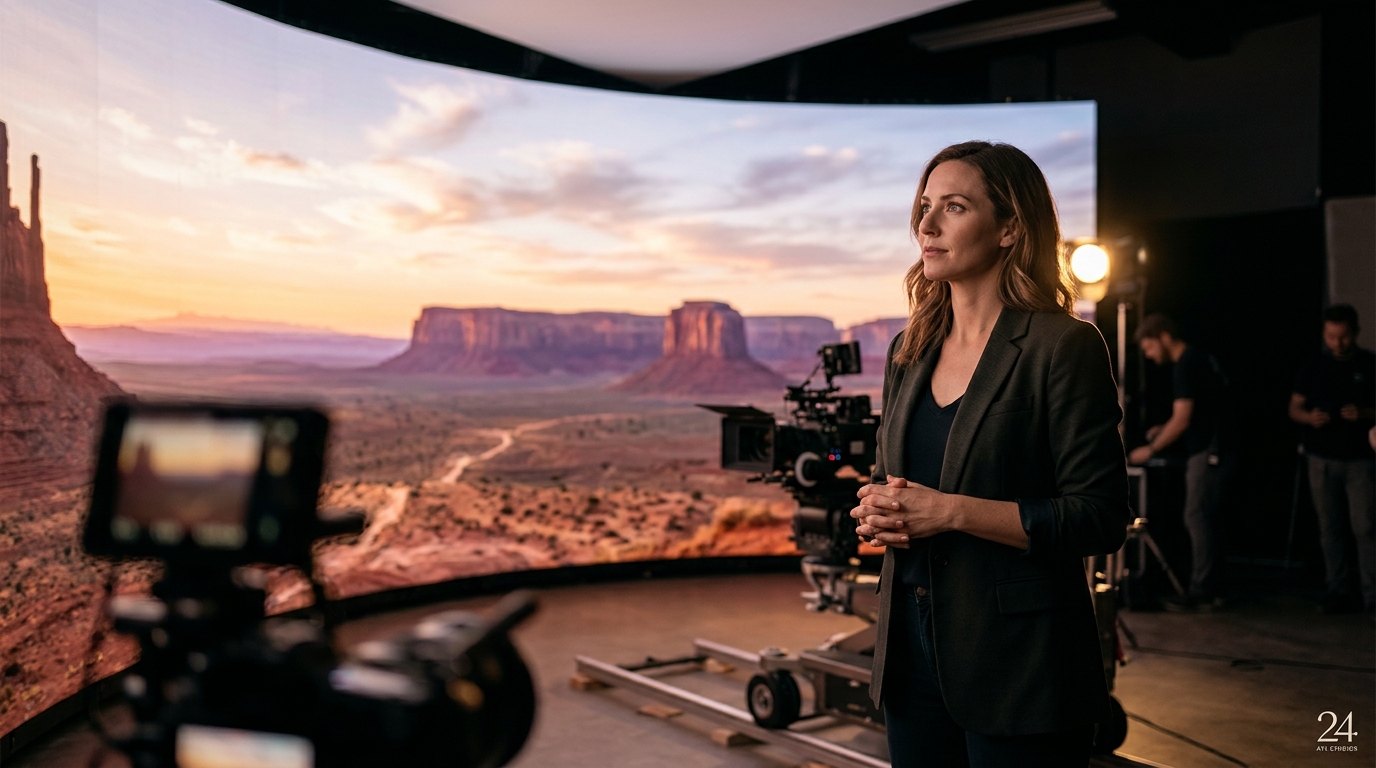
LED volume stages are the premier filming choice in Atlanta today because they eliminate the need for extensive post-production compositing while providing real-time lighting and environmental immersion. By replacing traditional green screen workflows with high-resolution LED walls, productions can achieve photorealistic results on set. This technology streamlines the creative process, allowing directors and cinematographers to make immediate adjustments to the background environment. For studios like 24 ATL Studios, this shift represents a fundamental upgrade in production efficiency and visual fidelity.
Real-Time Lighting and Environmental Immersion
Traditional green screen setups require complex lighting rigs to simulate the environment, often resulting in mismatched shadows and reflections. LED volume stages solve this by emitting light directly from the background, ensuring that the environment interacts physically with the actors and props. This real-time lighting integration is a critical advantage for achieving photorealistic results. When the background changes, the lighting on the set changes instantly, removing the guesswork from the cinematography process.
The Physics of Light Interaction
Light from an LED wall behaves like natural light, creating accurate reflections on metallic surfaces and realistic shadows on the floor. This physical interaction is impossible to replicate perfectly with a green screen, which requires extensive digital compositing in post-production. The result is a more authentic visual experience that reduces the burden on visual effects artists. Productions can focus on performance and composition rather than fixing lighting errors later.
Dynamic Environment Changes
Directors can alter the time of day, weather conditions, or location with a single command. This flexibility allows for rapid testing of different creative concepts without the cost of moving to a new physical location. The ability to travel to different worlds with the press of a button is a defining feature of modern virtual production. It empowers creative teams to explore narrative possibilities that were previously too expensive or logistically difficult to realize.
Reducing Post-Production Costs and Complexity
One of the most significant financial benefits of LED volume stages is the reduction in post-production expenses. Traditional virtual production workflows often require thousands of hours of compositing to blend the green screen background with the live action footage. LED volume stages mitigate these costs by capturing the final image on camera. The background is already integrated with the foreground, meaning the visual effects team spends less time on basic compositing tasks.
Eliminating Green Screen Spill
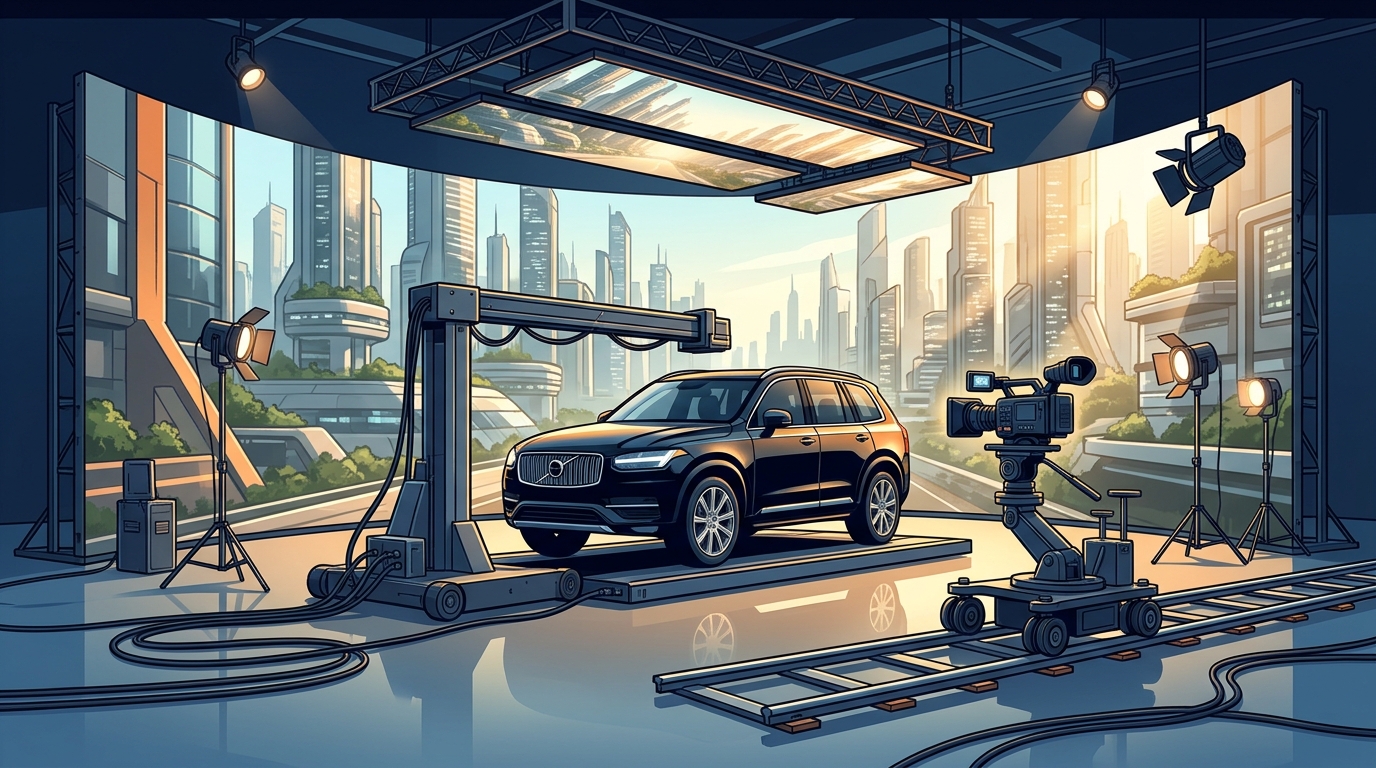
Green screen spill, where the green color reflects onto actors or props, is a common issue in traditional filming. This problem requires additional time and resources to correct in post-production. LED volume stages eliminate green screen spill entirely, as there is no green screen to reflect. This simplification of the post-production pipeline leads to faster turnaround times and lower overall project costs. Studios can deliver high-quality content more efficiently, which is a major advantage in the competitive Atlanta market.
Streamlined Workflow
The streamlined workflow of LED volume stages allows for a more predictable production schedule. With fewer post-production hurdles, projects can be completed faster, freeing up resources for other creative endeavors. This efficiency is particularly valuable for commercial and music video productions, where tight deadlines are common. By cutting production costs in half, as noted by 24 ATL Studios, producers can allocate more budget to talent and creative development.
Creative Flexibility and Narrative Possibilities
LED volume stages offer unparalleled creative flexibility, allowing filmmakers to break the boundaries of physical location. Directors can place actors in environments that do not exist, such as futuristic cities or alien landscapes, without the need for elaborate set construction. This capability is a game-changer for science fiction and fantasy genres, which traditionally require massive budgets for set design. The immersive nature of the technology allows for a deeper connection between the actor and the environment, enhancing performance quality.
Immersive Actor Experience
Actors benefit from the immersive environment provided by LED volume stages. Seeing the background in real-time helps them react more naturally to their surroundings, leading to more authentic performances. This is a significant improvement over green screen, where actors often have to imagine the environment. The psychological impact of being surrounded by a realistic background can elevate the emotional depth of a scene. This aspect of the technology is often overlooked but is crucial for high-quality storytelling.
Adapting to Creative Changes
Creative changes are inevitable in any production, and LED volume stages make these changes manageable. If a director decides to change the background at the last minute, the LED wall can be updated instantly. This adaptability saves time and money, as there is no need to rebuild sets or reshoot scenes. The technology supports a more iterative creative process, allowing for continuous refinement of the visual narrative. This flexibility is a key reason why LED volume stages are becoming the standard for high-end productions.
Atlanta's Virtual Production Ecosystem
Atlanta has emerged as a leading hub for virtual production, driven by its robust film industry and access to cutting-edge technology. The city's infrastructure supports the high power and data requirements of LED volume stages, making it an ideal location for this type of production. Studios in Atlanta are at the forefront of adopting Unreal Engine technology, which powers many LED volume systems. This ecosystem provides producers with a wide range of options for virtual production, from small-scale setups to large-scale immersive stages.
Access to Skilled Talent
The Atlanta film industry has a deep pool of skilled talent, including virtual production technicians, Unreal Engine developers, and visual effects artists. This talent pool is essential for operating LED volume stages effectively, as the technology requires specialized knowledge to set up and maintain. Studios like 24 ATL Studios employ dedicated virtual technicians who ensure the technology runs smoothly. The availability of this expertise in Atlanta makes it easier for productions to find the right team for their virtual production needs.
Industry Growth and Investment
The growth of the virtual production industry in Atlanta is supported by significant investment in infrastructure and technology. This investment has led to the development of state-of-the-art facilities that can accommodate a wide range of production types. The city's commitment to innovation ensures that it remains a competitive destination for filmmakers looking to use LED volume stages. This growth trajectory is likely to continue, further solidifying Atlanta's position as a leader in virtual production.
Technical Advantages of Unreal Engine Integration
Unreal Engine is the software backbone of many LED volume stages, providing the real-time rendering capabilities that make the technology possible. This integration allows for the creation of highly detailed and interactive environments that respond to camera movement and lighting changes. The use of Unreal Engine in virtual production is a testament to the power of real-time graphics technology. It enables filmmakers to achieve a level of visual fidelity that was previously only possible in post-production.
Real-Time Rendering Capabilities
Real-time rendering is a key feature of Unreal Engine, allowing the background to be updated instantly as the camera moves. This capability is essential for maintaining the illusion of a real environment, as any lag or delay can break the immersion. The high frame rates and low latency of Unreal Engine ensure that the LED wall displays a smooth and responsive image. This technical advantage is a major reason why Unreal Engine is the preferred software for LED volume stages.
Asset Creation and Management
Unreal Engine provides a robust set of tools for creating and managing digital assets, including 3D models, textures, and animations. These tools allow artists to build detailed environments that can be used in LED volume stages. The ability to create and modify assets in real-time is a significant advantage for virtual production, as it allows for rapid iteration and refinement. This aspect of the technology is crucial for achieving the high level of detail required for photorealistic results.
Key Takeaways
- LED volume stages provide real-time lighting integration, eliminating the need for complex post-production compositing.
- The technology reduces post-production costs by capturing the final image on camera, streamlining the workflow.
- LED volume stages offer unparalleled creative flexibility, allowing for dynamic environment changes and immersive actor experiences.
- Atlanta's robust film industry and access to skilled talent make it an ideal location for virtual production.
- Unreal Engine integration provides the real-time rendering capabilities necessary for high-fidelity LED volume stages.
- The elimination of green screen spill and the ability to adapt to creative changes make LED volume stages a cost-effective solution.
- Studios like 24 ATL Studios are at the forefront of adopting this technology, offering a one-stop solution for production needs.
Frequently Asked Questions
What is an LED volume stage?
An LED volume stage is a filming environment that uses high-resolution LED walls to display real-time digital backgrounds, replacing traditional green screen setups.
How does LED volume technology reduce post-production costs?
LED volume technology reduces post-production costs by capturing the final image on camera, eliminating the need for extensive compositing to blend the background with the live action footage.
Why is Atlanta a good location for LED volume filming?
What software is commonly used for LED volume stages?
Unreal Engine is commonly used for LED volume stages, providing the real-time rendering capabilities necessary for creating interactive and photorealistic environments.
Can LED volume stages be used for all types of productions?
Yes, LED volume stages can be used for a wide range of productions, including film, TV, commercials, and music videos, offering flexibility and efficiency for various creative needs.
How does LED volume technology benefit actors?
LED volume technology benefits actors by providing an immersive environment that allows them to react naturally to their surroundings, leading to more authentic performances.
What are the main advantages of using Unreal Engine in virtual production?
The main advantages of using Unreal Engine in virtual production include real-time rendering, low latency, and robust tools for creating and managing digital assets, all of which contribute to high-fidelity results.
Conclusion
LED volume stages represent the future of filming in Atlanta, offering a combination of cost efficiency, creative flexibility, and technical superiority. By eliminating the need for extensive post-production and providing real-time lighting and environmental immersion, this technology is transforming the way stories are told. For producers and directors looking to elevate their productions, LED volume stages are the best choice for achieving photorealistic results in 2026. To explore how this technology can benefit your next project, consider partnering with 24 ATL Studios, a leader in virtual production in Atlanta.