
Step-by-Step Guide to Implementing Virtual Production in Commercial Shoots
Virtual production is rapidly becoming the standard for high-end commercial advertising, with industry reports indicating that adoption rates for LED volume stages have surged by over 40% in the last three years. This shift is driven by the need for real-time visual effects and the ability to eliminate costly location logistics. According to recent market analysis, productions utilizing Unreal Engine technology can reduce post-production timelines by up to 30%, making it an essential tool for modern agencies. This guide outlines the precise steps to integrate this technology into your next commercial project.
Understanding Virtual Production Basics
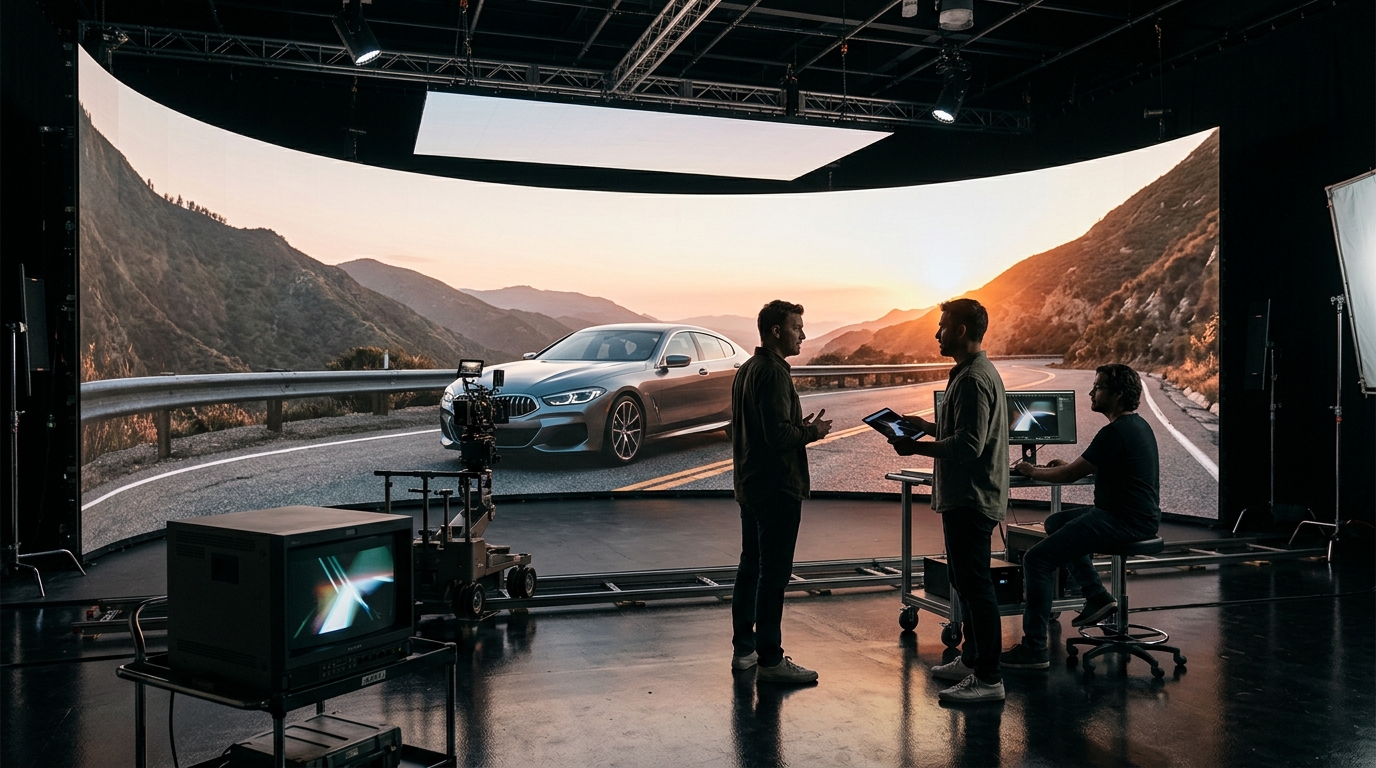
Virtual production is a filmmaking technique that combines physical sets with digital environments in real time. This method allows directors and cinematographers to see the final composite image during the shoot, rather than waiting for post-production. The core technology relies on LED volume walls that display dynamic backgrounds, providing accurate lighting and reflections on the subjects.
Unlike traditional green screen workflows, virtual production eliminates green spill and reduces the need for extensive keying in post. This results in a more immersive experience for actors and a more accurate representation of the final product for the client. The technology is powered by game engines like Unreal Engine, which render high-fidelity graphics at high frame rates.
For commercial shoots, this means faster decision-making and the ability to iterate on creative concepts instantly. Directors can change the time of day, weather, or location with a single click, allowing for greater creative freedom without the logistical nightmares of physical location changes.
Pre-Production Planning and Asset Creation
Successful virtual production begins long before the camera rolls. The pre-production phase is critical for ensuring that all digital assets are ready for real-time rendering. This stage involves creating 3D models, textures, and environments that will populate the LED walls.
First, you must define the creative vision and storyboard the sequence. Work closely with your virtual production supervisor to determine which elements will be digital and which will be practical. This collaboration ensures that the digital assets meet the technical requirements of the LED volume.
Next, develop the Unreal Engine environment. This involves building the 3D scenes, optimizing them for real-time performance, and setting up the camera tracking systems. The assets must be high-resolution and detailed enough to withstand close-up shots without showing pixelation or low-quality textures.
At 24 ATL Studios, we provide custom-tailored Unreal Engine environments that are fully adaptable to your concept. Our team works with you to create background plates or unique lighting scenarios that fit your brand's aesthetic. This level of customization ensures that your commercial stands out with a unique visual identity.
Selecting the Right LED Volume Studio
Choosing the right studio is crucial for the success of your virtual production. Look for a facility that offers a large LED volume wall, high-performance rendering hardware, and experienced technical staff. The studio should also have a strong understanding of commercial advertising requirements.
Consider the size of the LED volume. A larger wall allows for more flexibility in camera movement and lens choice. It also provides a more immersive experience for the talent and the crew. Additionally, check if the studio offers additional services such as car process trailers or event space integration.
24 ATL Studios in Atlanta, GA, offers a state-of-the-art LED volume wall studio equipped with Unreal Engine technology. Our facility is designed to elevate every frame, providing an unparalleled lighting experience. We also offer car process capabilities, which are essential for automotive commercials.
When evaluating studios, ask about their post-production support. A good virtual production studio should mitigate post-process costs by delivering a near-final composite on set. This reduces the burden on your VFX team and accelerates the delivery timeline.
On-Set Execution and Lighting
On the day of the shoot, the focus shifts to execution. The camera tracking system must be calibrated to ensure that the digital background moves in sync with the camera. This synchronization is critical for maintaining the illusion of reality.
Lighting the subject is another key consideration. The LED walls provide natural-looking light that interacts with the subject in real time. This eliminates the need for complex lighting setups that mimic the digital environment. However, additional practical lights may be needed to enhance the mood or highlight specific details.
Directors and cinematographers should work closely with the virtual production team to adjust the digital environment in real time. This allows for immediate feedback and creative adjustments. For example, you can change the lighting to match the time of day or adjust the background to better complement the product.
Our team at 24 ATL Studios oversees the creative and operational aspects of the shoot, ensuring that every frame is optimized. We use the same Unreal Engine technology used on major productions like Disney’s Mandalorian to deliver high-quality results.
Post-Production Efficiency and VFX
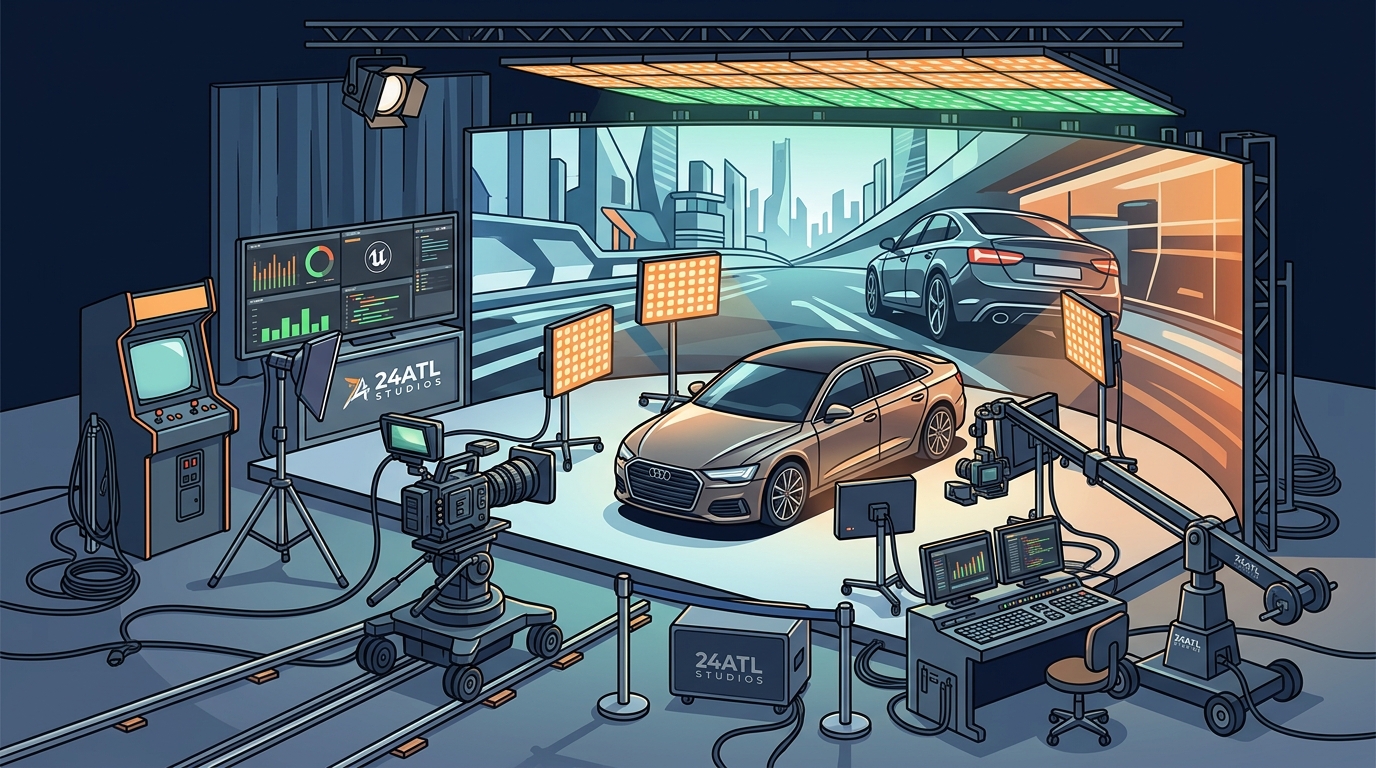
One of the biggest advantages of virtual production is the reduction in post-production work. Because the VFX are captured in-camera, the need for extensive compositing is minimized. This results in significant cost savings and faster turnaround times.
However, post-production is not entirely eliminated. Color grading, minor retouching, and final output preparation are still required. The goal is to deliver a near-final product that requires minimal additional work.
By mitigating post-process costs, virtual production allows agencies to allocate more budget to other areas of the campaign. This efficiency is particularly valuable for commercials with tight deadlines and complex creative requirements.
Cost-Benefit Analysis for Commercials
While virtual production may have a higher upfront cost than traditional methods, the long-term benefits often outweigh the initial investment. Here is a comparison of the two approaches:
| Factor | Traditional Green Screen | LED Volume Virtual Production |
|---|---|---|
| Location Costs | High (Travel, Permits) | Low (Studio Based) |
| Post-Production Time | Extended (Weeks/Months) | Reduced (Days/Weeks) |
| Creative Flexibility | Limited (Post-Only) | High (Real-Time) |
| Lighting Accuracy | Simulated | Real-Time Physical |
| Overall Budget Impact | Unpredictable | Predictable & Optimized |
According to industry data, productions can cut costs in half by saving on locations, car process trailers, and green screen spill. This makes virtual production a financially viable option for many commercial projects.
Key Takeaways
- Virtual production uses Unreal Engine to render real-time backgrounds on LED walls.
- Pre-production asset creation is critical for high-fidelity results.
- 24 ATL Studios offers custom Unreal Engine environments tailored to your concept.
- On-set lighting is provided by the LED walls, reducing setup complexity.
- Post-production costs are mitigated due to in-camera VFX capture.
- Car process capabilities are available for automotive commercials.
- Real-time creative adjustments allow for greater directorial control.
Frequently Asked Questions
What is virtual production?
Virtual production is a filmmaking technique that combines physical sets with digital environments in real time using LED volume walls and game engines like Unreal Engine.
How does virtual production save money?
It reduces costs by eliminating location fees, minimizing post-production VFX work, and streamlining the shooting process through real-time visualization.
Can virtual production be used for car commercials?
Yes, many studios offer specialized car process trailers and LED volume setups designed specifically for automotive advertising.
What is the role of the Unreal Engine in virtual production?
Unreal Engine renders the high-fidelity 3D environments in real time, allowing them to be displayed on the LED walls and interact with the physical lighting.
Is virtual production suitable for all types of commercials?
It is highly effective for commercials requiring complex environments, multiple locations, or specific lighting conditions that are difficult to achieve practically.
How long does pre-production take for a virtual shoot?
Pre-production typically involves asset creation and environment building, which can take several weeks depending on the complexity of the digital scenes.
What are the benefits of using an LED volume wall?
LED volume walls provide accurate lighting and reflections, enhance actor immersion, and allow for real-time creative changes on set.
Frame Your Shoot
Ready to elevate your next commercial with virtual production? Contact 24 ATL Studios to discuss your project and explore our custom Unreal Engine environments. Our team is ready to help you frame your shoot with precision and creativity.
Frame Your Shoot Now