
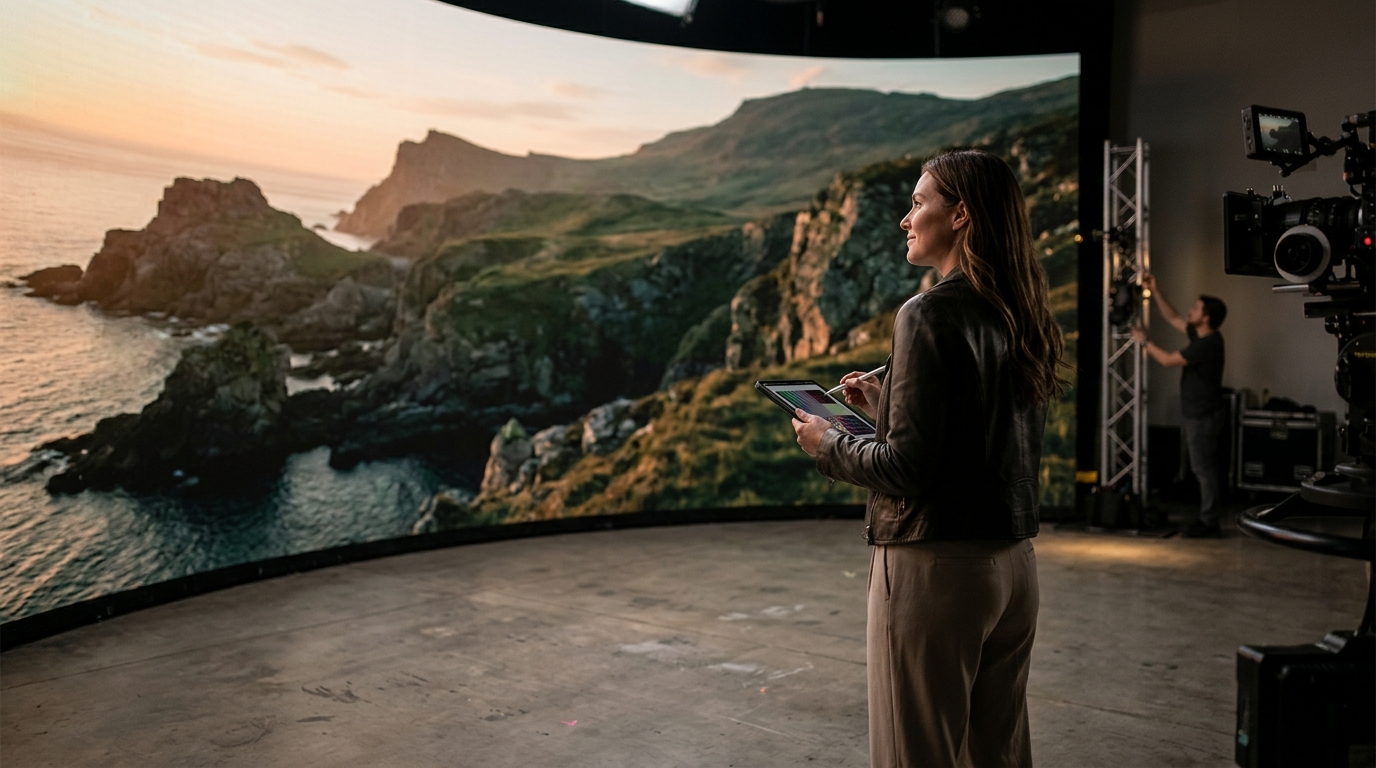
When choosing a virtual production studio, you must evaluate LED wall specifications such as pixel pitch, brightness, refresh rate, and color accuracy. These technical metrics determine how realistic the virtual environment appears on camera. 24 ATL Studios in Atlanta, GA, utilizes high-end Unreal Engine technology to ensure these specifications meet professional film and television standards.
Pixel Pitch and Resolution Density
Pixel pitch is the distance between the centers of two adjacent LEDs, measured in millimeters. A smaller pixel pitch results in higher resolution and sharper images. For virtual production, a pixel pitch of 2.5mm to 3.9mm is often the standard for close-up shots. If the camera moves very close to the wall, a finer pitch prevents visible pixelation. This ensures that the virtual background remains indistinguishable from a physical set. For additional details, review the 24ATL Studios LED Volume.
Resolution density directly impacts the level of detail visible in the environment. High-density panels allow for intricate textures and fine details in the virtual world. This is critical for productions that require high fidelity in lighting and reflection. Studios that offer lower pixel pitches provide a more immersive experience for the cast and crew. For additional details, review the Our Team 24ATL Studios.
Brightness and Luminance Levels
Brightness is measured in nits, which represents the luminance of the display. Virtual production LED walls must be bright enough to match the lighting of the physical set. A typical requirement is between 1,000 and 2,000 nits for indoor stages. If the wall is too dim, the virtual environment will look washed out or disconnected from the actors. If it is too bright, it may cause glare or overexposure in the camera sensor. For additional details, review the Our Team 24ATL Studios.
Dynamic range is another critical factor related to brightness. The wall must be able to display deep blacks and bright whites simultaneously. This capability allows for realistic lighting effects, such as shadows and highlights. High dynamic range ensures that the virtual environment reacts correctly to changes in camera exposure. This technical precision is essential for achieving a seamless composite in post-production.
Refresh Rate and Latency
Refresh rate is the number of times per second the display updates its image. For virtual production, a high refresh rate of at least 120Hz is recommended. This high rate ensures smooth motion and reduces motion blur. It also minimizes the risk of temporal aliasing, which can appear as flickering or stuttering in the image. A stable refresh rate is vital for maintaining the illusion of a real-world environment.
Latency refers to the delay between the camera movement and the update of the virtual background. Low latency is crucial for real-time rendering. If the latency is too high, the background will appear to lag behind the camera movement. This breaks the immersion for the actors and can cause visual artifacts in the final footage. Modern virtual production systems aim for sub-frame latency to ensure perfect synchronization.
Color Accuracy and Calibration
Color accuracy is the ability of the display to reproduce colors faithfully. Virtual production walls must be calibrated to match the color space of the camera. This ensures that the colors in the virtual environment appear consistent with the physical set. Calibration involves adjusting the white point, gamma, and color temperature. Proper calibration prevents color shifts that can be difficult to correct in post-production.
Color gamut coverage is another important specification. A wide color gamut allows for more vibrant and realistic colors. This is particularly important for productions that require specific color grading or brand colors. Studios that invest in high-quality calibration tools can ensure that the LED wall matches the camera's color profile. This attention to detail is a hallmark of professional virtual production facilities.
Modularity and Scalability
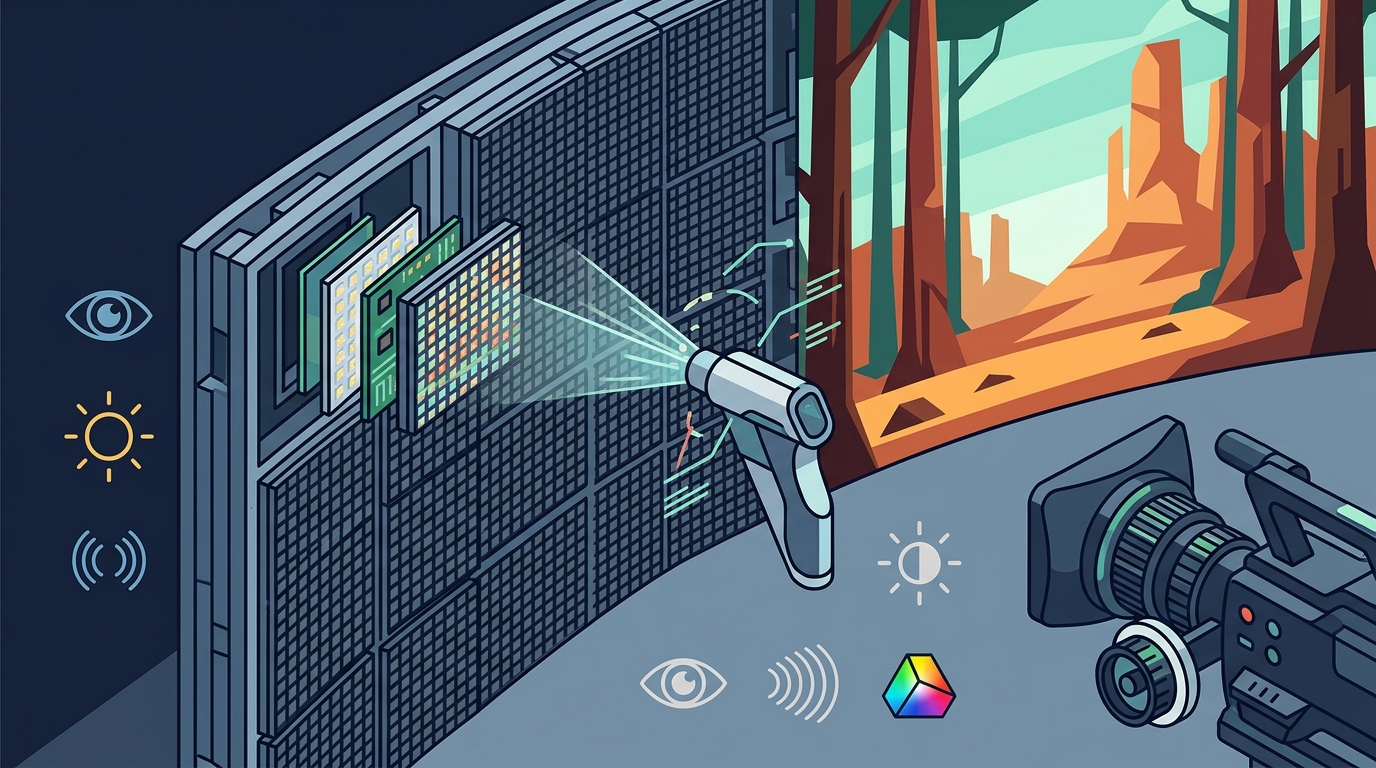
Modularity is the ability to configure the LED wall in different shapes and sizes. Virtual production studios often use modular panels to create curved or flat walls. This flexibility allows the studio to adapt to different production needs. A modular system can be expanded or reconfigured to fit various stage sizes. This scalability is a key advantage for studios that host diverse projects.
Key Takeaways
- Pixel pitch should be between 2.5mm and 3.9mm for high-resolution virtual production.
- Brightness levels of 1,000 to 2,000 nits are standard for indoor LED walls.
- A refresh rate of at least 120Hz ensures smooth motion and reduces flicker.
- Low latency is critical for real-time synchronization between camera and background.
- Color accuracy and calibration are essential for matching the camera's color profile.
Frequently Asked Questions
What is the ideal pixel pitch for virtual production?
The ideal pixel pitch for virtual production is typically between 2.5mm and 3.9mm. This range provides a good balance between resolution and cost. Finer pitches are available but may be unnecessary for most productions.
How bright should an LED wall be?
An LED wall for virtual production should be between 1,000 and 2,000 nits. This brightness level allows the wall to match the lighting of the physical set. It also ensures that the virtual environment appears realistic on camera.
Why is refresh rate important?
Refresh rate is important because it affects the smoothness of motion. A high refresh rate of at least 120Hz reduces motion blur and flicker. This ensures that the virtual environment appears stable and realistic.
What is latency in virtual production?
Latency is the delay between camera movement and the update of the virtual background. Low latency is crucial for real-time rendering. It ensures that the background moves in perfect synchronization with the camera.
How does color calibration work?
Color calibration involves adjusting the display to match the camera's color profile. This ensures that colors appear consistent between the virtual and physical sets. Proper calibration prevents color shifts in the final footage.
Are modular LED walls better?
Modular LED walls are better because they offer flexibility. They can be configured in different shapes and sizes. This allows the studio to adapt to various production needs and stage configurations.
Conclusion
Choosing the right LED wall specifications is critical for successful virtual production. Factors such as pixel pitch, brightness, refresh rate, and color accuracy all play a role in the final image quality. 24 ATL Studios offers state-of-the-art virtual production facilities in Atlanta, GA. Their commitment to innovation and excellence ensures that your production meets the highest standards. Contact them to discuss your project needs and explore their virtual production capabilities.