
Common Mistakes When Scheduling Multiple Location Shoots and How to Avoid Them
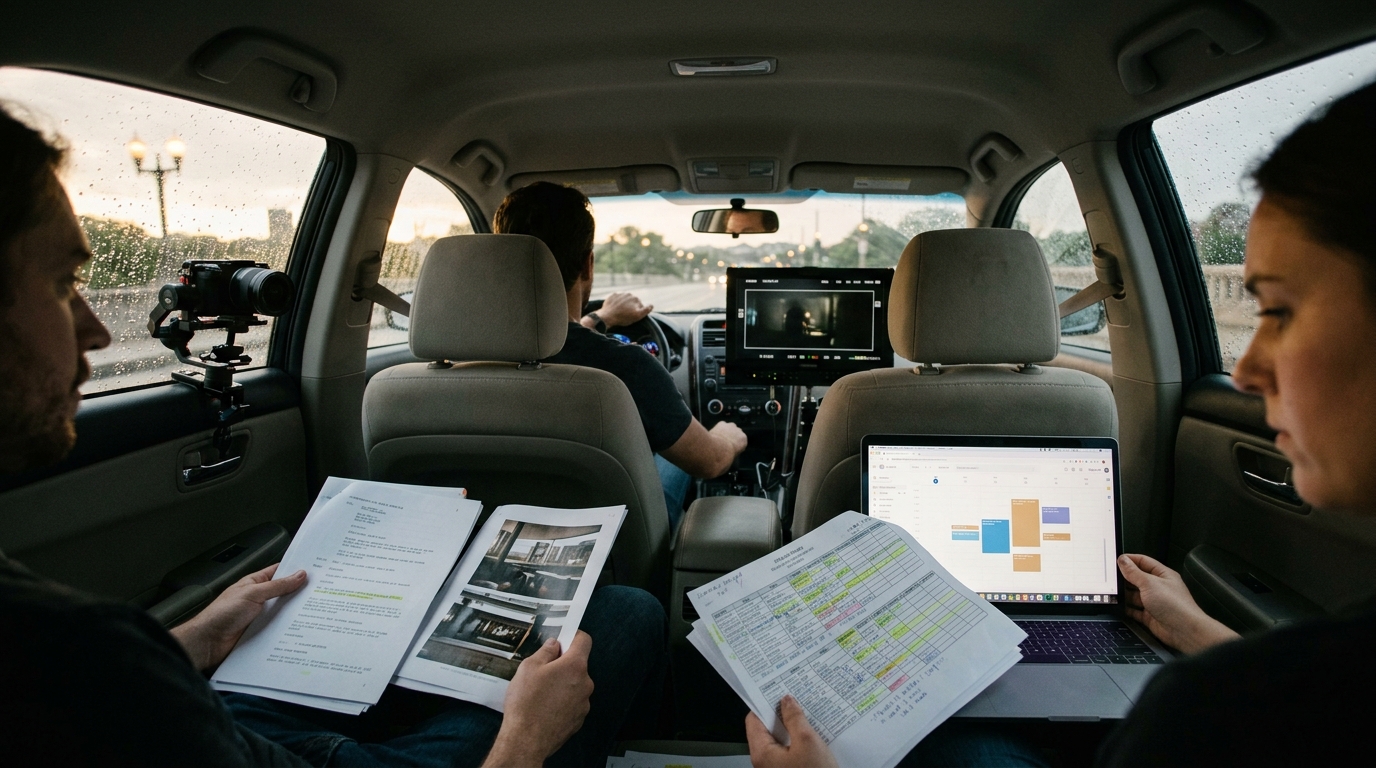
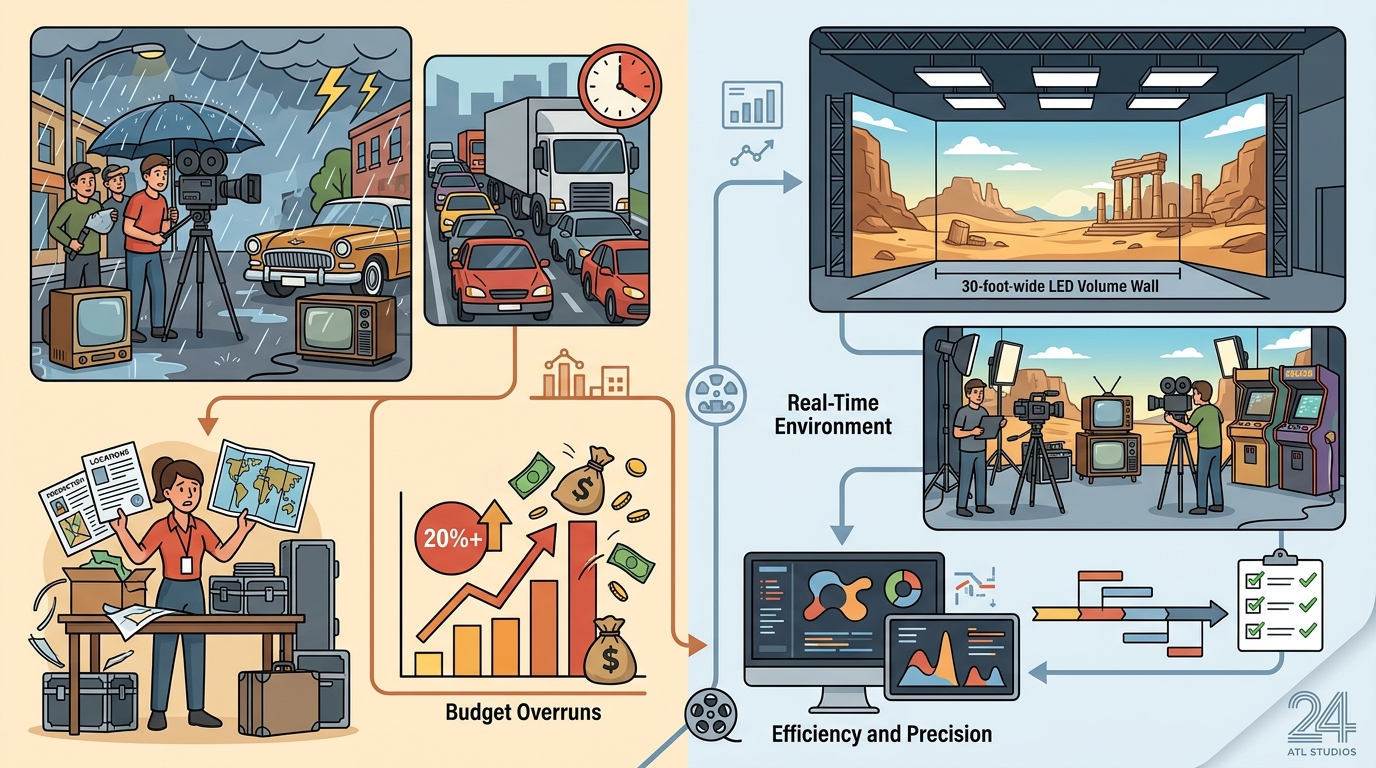
Planning a production across multiple sites is one of the most high-stakes challenges in modern filmmaking. According to industry data, productions that fail to account for environmental variables and logistical bottlenecks often experience budget overruns exceeding 20% due to wasted crew hours and equipment rental extensions. This statistic highlights why traditional location scouting is no longer sufficient for complex shoots. The industry is shifting toward integrated virtual production methods to mitigate these risks. At 24ATL Studios, we understand that every second on set counts, and the margin for error in multi-location scheduling is virtually non-existent. This guide details the critical pitfalls directors and producers face when coordinating dispersed shoots and provides actionable strategies to maintain control over your timeline and budget.
Understanding the Logistical Bottlenecks
The primary mistake in multi-location scheduling is underestimating the physical movement of personnel and gear. When you split a shoot across three or more distinct sites, you are not just managing time; you are managing transportation, load-in times, and permit renewals. Each transition point introduces a variable that can derail the entire day. For instance, moving a heavy camera rig from a studio to an exterior location requires precise coordination with local authorities and traffic control.
Many producers assume that parallel shooting teams can solve this problem. However, this approach often leads to fragmented communication and inconsistent visual continuity. When teams are separated, the director loses the ability to make real-time creative adjustments. This fragmentation is where the budget bleeds. According to recent production efficiency reports, uncoordinated multi-site shoots can increase daily costs by up to 35% due to idle time and redundant equipment rentals. To avoid this, you must treat the schedule as a single, interconnected ecosystem rather than a series of isolated events.
Another common oversight is the failure to account for "golden hour" windows across different geographic coordinates. If your locations are spread across a wide area, the sun will hit each site at a different time. Missing these narrow lighting windows can force a reshoot or require expensive artificial lighting setups that were not in the initial budget. Producers must map out the sun path for every location to ensure continuity and maximize natural light efficiency.
Lighting and Environmental Inconsistencies
Lighting consistency is the silent killer of multi-location shoots. When you move from an interior studio to an exterior street, the color temperature, intensity, and direction of light change drastically. If you do not meticulously plan your lighting ratios for each site, the final edit will look disjointed. This is particularly true when shooting scenes that are meant to feel continuous in time. Viewers will subconsciously notice when the shadows shift unexpectedly between cuts.
Environmental factors such as wind, ambient noise, and weather patterns also vary significantly between locations. A location that is quiet and calm in the morning may become noisy by afternoon due to traffic or construction. Producers often make the mistake of scheduling critical dialogue scenes during peak noise hours. This results in costly ADR (Automated Dialogue Replacement) sessions later in post-production. According to industry standards, ADR can add thousands of dollars to a project for every minute of dialogue that needs replacement. To avoid this, always scout locations at the same time of day you plan to shoot.
Furthermore, the physical constraints of each location must be evaluated for equipment access. A beautiful exterior location might be inaccessible for a large lighting truck or a crane. This forces you to use smaller, less powerful equipment, which compromises the visual quality. Understanding the physical limitations of each site before the shoot day is essential for maintaining the desired aesthetic. This is where detailed technical scouts become invaluable.
Crew Fatigue and Scheduling Errors
Crew fatigue is a major risk when scheduling multiple locations in a short period. Long commute times between sites eat into rest periods, leading to decreased productivity and safety hazards. A tired crew is more likely to make mistakes, whether it is a focus puller missing the mark or a grip dropping equipment. This is not just a moral issue; it is a financial one. Downtime caused by fatigue can halt production for hours.
Scheduling errors often stem from a lack of buffer time. Producers frequently pack the schedule too tightly, leaving no room for unexpected delays. When a location permit is delayed or a piece of equipment fails, the entire day can collapse. It is crucial to build in 15-20% buffer time for each location transition. This buffer allows for problem-solving without impacting the overall production timeline. Without these buffers, the schedule becomes fragile and prone to failure.
Communication breakdowns between location managers and the production office are another common error. When information is not shared in real-time, decisions are made based on outdated data. For example, a location manager might report that a site is ready, but the crew arrives to find that power is not yet connected. Implementing a centralized communication platform can help mitigate these errors. Everyone involved must have access to the same live schedule and status updates.
The Virtual Production Alternative
To overcome the limitations of multi-location scheduling, many productions are turning to virtual production technologies. Virtual production allows you to shoot complex environments in a controlled studio setting. This eliminates the need for physical travel and reduces the dependency on weather and lighting conditions. At 24ATL Studios, we utilize Unreal Engine technology to create immersive LED volume walls that provide real-time, high-fidelity backgrounds.
One of the primary advantages of virtual production is the ability to change locations instantly. You can shoot a scene in a forest, then immediately switch to a cityscape without moving a single piece of equipment. This drastically reduces the time spent on location changes and allows for more creative flexibility. According to recent case studies on virtual production adoption, studios using LED volume walls can cut production costs by half compared to traditional multi-location shoots. This is due to the reduction in travel, accommodation, and location rental fees.
Another significant benefit is the consistency of lighting. In a virtual production environment, the lighting is generated by the LED walls and matches the virtual environment perfectly. This ensures that every shot has the same lighting quality, regardless of the time of day or weather conditions outside. This consistency simplifies the editing process and reduces the need for color correction in post-production. The result is a more efficient workflow and a higher quality final product.
Virtual production also enhances the performance of actors. By providing a realistic visual environment on set, actors can react to their surroundings in real-time. This leads to more authentic performances and reduces the need for extensive green screen acting. The technology allows for immediate feedback, enabling directors to make adjustments on the fly. This immediacy is something that traditional location shooting cannot match.
Comparing Traditional vs. Virtual Workflows
Understanding the differences between traditional and virtual workflows is essential for making informed production decisions. The table below summarizes the key distinctions between these two approaches.
| Factor | Traditional Multi-Location Shoot | Virtual Production (LED Volume) |
|---|---|---|
| Location Costs | High (permits, rentals, travel) | Low (studio rental only) |
| Lighting Control | Dependent on weather/time | Full real-time control |
| Post-Production VFX | Extensive and costly | Minimal (in-camera VFX) |
| Schedule Flexibility | Rigid and prone to delays | Highly adaptable |
| Crew Fatigue | High due to commutes | Low (controlled environment) |
As shown in the comparison, virtual production offers significant advantages in terms of cost and efficiency. However, it requires a different skill set and technical infrastructure. Productions must be prepared to invest in the right technology and talent to leverage these benefits effectively. The shift towards virtual production is not just a trend; it is a fundamental change in how content is created.
Key Takeaways for Producers
- Buffer Time is Essential: Always include 15-20% buffer time in your schedule for each location transition to account for unexpected delays.
- Lighting Consistency: Map out sun paths for all locations to ensure visual continuity and maximize natural light efficiency.
- Crew Fatigue Management: Limit commute times between locations to prevent crew fatigue and maintain safety standards.
- Virtual Production Benefits: Consider using LED volume walls to reduce costs by up to 50% and eliminate weather dependencies.
- Real-Time Communication: Use centralized platforms to ensure all teams have access to live schedule updates and status reports.
- Environmental Scouting: Scout locations at the same time of day you plan to shoot to assess noise and lighting conditions accurately.
- Post-Production Savings: In-camera VFX through virtual production can significantly reduce post-production VFX costs and timelines.
Frequently Asked Questions
How does virtual production reduce costs for multi-location shoots?
Virtual production reduces costs by eliminating the need for physical travel, location rentals, and extensive post-production VFX. By shooting in a controlled studio environment, productions can save on accommodation, transportation, and permit fees. Additionally, the ability to change backgrounds instantly reduces the time spent on set, leading to lower crew and equipment rental costs.
What is the biggest mistake producers make when scheduling multiple locations?
The biggest mistake is underestimating the logistical bottlenecks associated with moving crew and equipment between sites. This includes failing to account for commute times, load-in periods, and permit delays. These oversights can lead to significant budget overruns and schedule disruptions.
Can virtual production replace all traditional location shoots?
While virtual production can replace many traditional location shoots, it is not suitable for every project. Certain scenes may require specific physical textures or interactions that are difficult to replicate virtually. However, for many narrative and commercial projects, virtual production offers a more efficient and cost-effective alternative.
How does lighting consistency affect the final edit?
Lighting consistency is crucial for maintaining visual continuity in the final edit. Inconsistent lighting can make scenes look disjointed and unprofessional, breaking the viewer's immersion. By ensuring consistent lighting across all shots, producers can create a more cohesive and polished final product.
What technology is used in LED volume walls?
LED volume walls typically use Unreal Engine technology to render real-time, high-fidelity 3D environments. This technology allows for dynamic lighting and camera tracking, ensuring that the virtual background matches the physical camera movement perfectly. This creates a seamless and immersive experience for both the cast and crew.
How can I mitigate crew fatigue during a multi-location shoot?
To mitigate crew fatigue, producers should limit commute times between locations and provide adequate rest periods. Using a centralized communication platform can also help streamline logistics and reduce unnecessary travel. Additionally, considering virtual production can significantly reduce the physical demands on the crew.
What are the benefits of in-camera VFX?
In-camera VFX provides immediate visual feedback, allowing directors and actors to see the final environment on set. This enhances performance and reduces the need for extensive post-production work. It also ensures that lighting and shadows match the virtual environment, resulting in a more realistic final image.
Frame Your Shoot
Stop letting logistical nightmares dictate your production budget. The era of chaotic multi-location scheduling is ending. By adopting virtual production technologies, you gain control over your timeline, lighting, and costs. 24ATL Studios is ready to help you elevate every frame with our state-of-the-art Unreal Engine LED volume walls. Contact us today to schedule your virtual production session and experience the future of filmmaking.