
Essential Technical Specifications for LED Volume Stage Efficiency
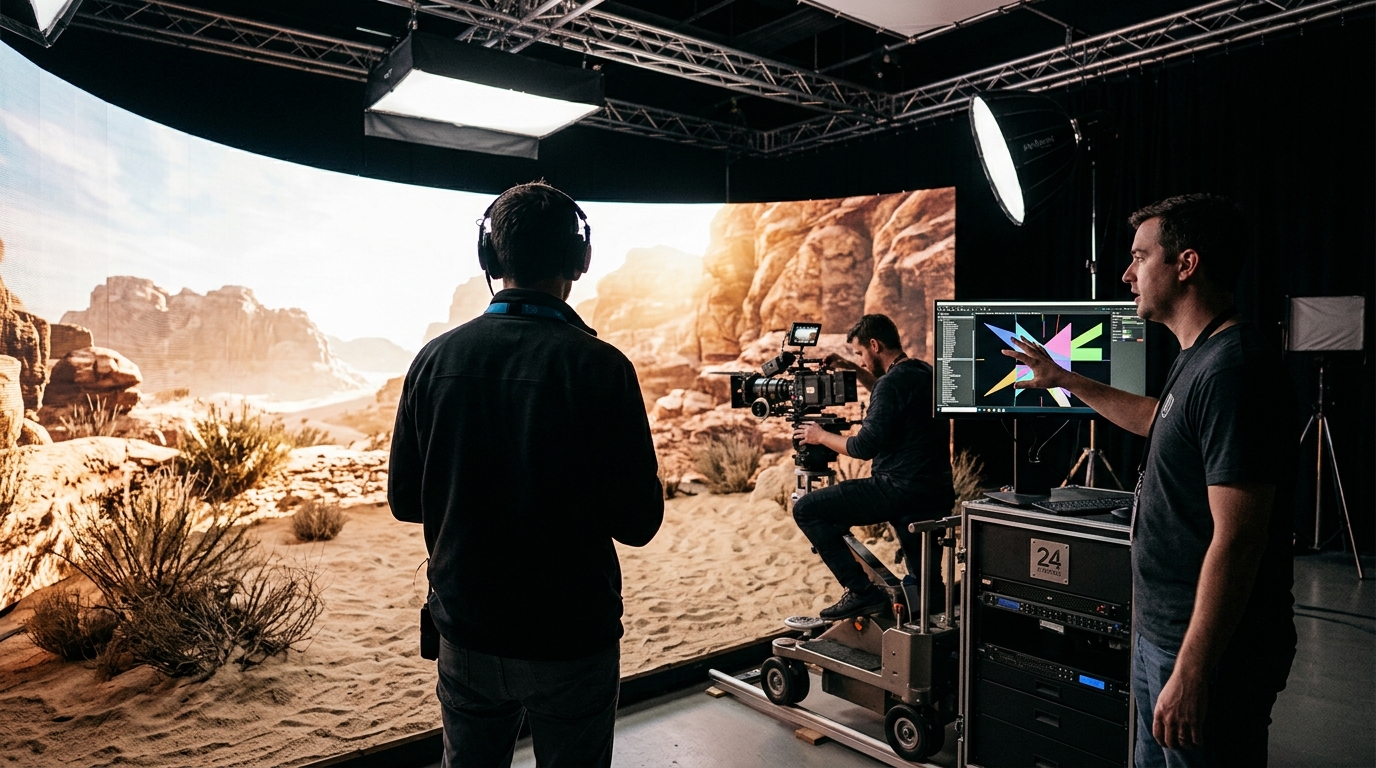
Modern virtual production has fundamentally altered the economics of film and television. According to industry data from the Motion Picture Association, the adoption of LED volume stages has reduced post-production VFX costs by an average of 30 percent for major studio productions. This shift is not merely a trend but a structural change in how visual content is created. The efficiency of these stages relies entirely on the precise synchronization of hardware and software. At 24 ATL Studios, we leverage Unreal Engine technology to deliver immersive environments that rival the production value of Disney’s Mandalorian. Understanding the technical backbone of these stages is critical for producers aiming to maximize budget integrity and creative output.
LED Hardware Specifications and Pixel Pitch
The foundation of any high-efficiency LED volume stage is the physical display technology. Pixel pitch, measured in millimeters, determines the resolution of the image projected onto the set. A smaller pixel pitch results in a sharper image, which is crucial when cameras are positioned close to the wall. For professional film and television production, a pixel pitch between 1.2mm and 2.5mm is generally considered the industry standard. This density ensures that the human eye cannot distinguish individual pixels, creating a seamless illusion of depth.
At 24 ATL Studios, our custom-tailored Unreal Engine environments are designed to work seamlessly with high-density LED arrays. The technical specification of the LED wall directly impacts the lighting quality on the actors. High-brightness LEDs are required to compete with natural sunlight or studio lighting rigs. If the brightness is insufficient, the camera must increase its ISO, introducing noise into the footage. Therefore, the nits (brightness) specification of the LED panels is a critical metric for technical directors. Our volume wall LEDs allow for an unparalleled lighting experience that streamlines the immersion of your production in seconds.
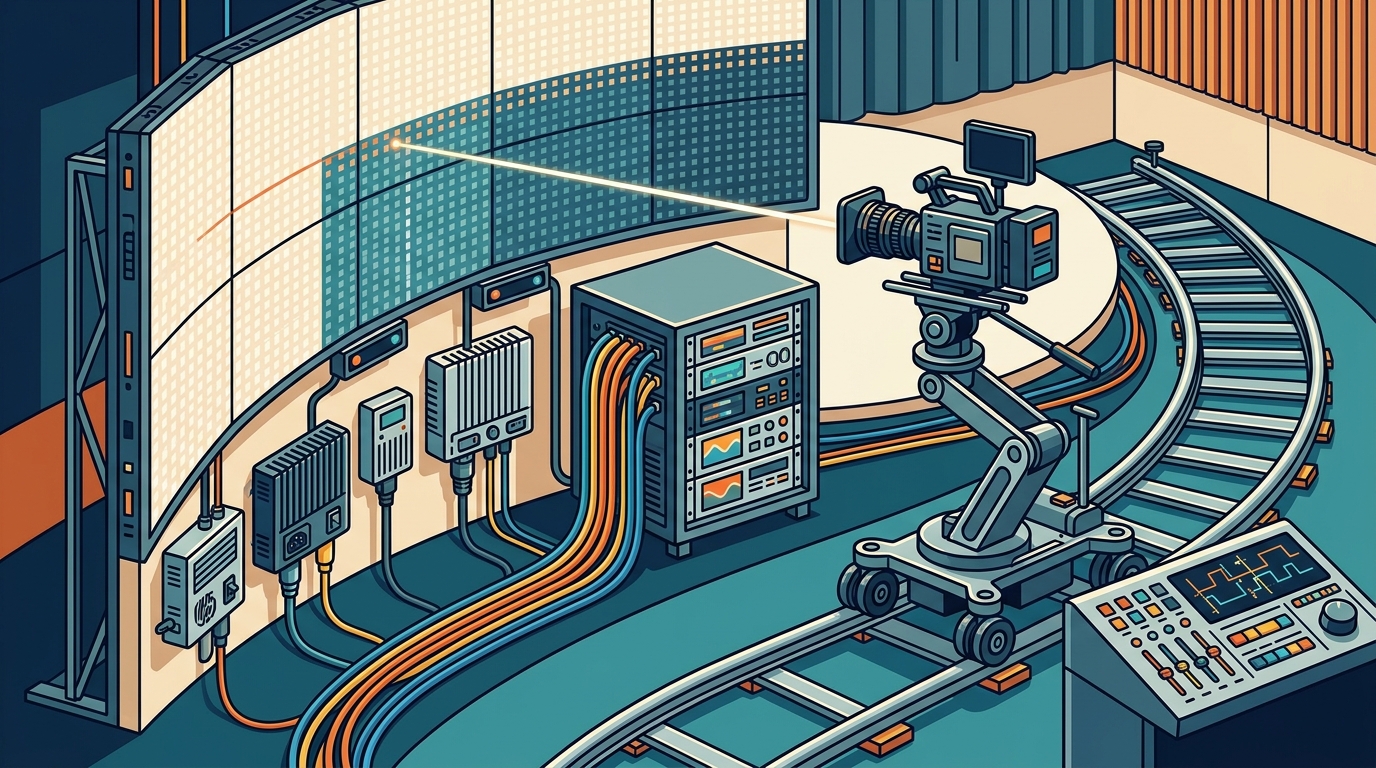
Another vital hardware component is the refresh rate. Standard displays often operate at 60Hz, but high-end production stages require refresh rates of 3840Hz or higher. This high refresh rate prevents moiré patterns and flickering when captured by high-frame-rate cameras. The synchronization between the camera’s position and the LED wall’s rendering is managed through a tracking system. This system ensures that the perspective on the screen matches the camera’s viewpoint in real time. Without this precise hardware alignment, the illusion of a physical location breaks down.
Unreal Engine Integration and Latency
Unreal Engine is the software backbone of modern virtual production. It provides the real-time 3D rendering capabilities necessary to drive the LED walls. The engine must process complex scenes, including dynamic lighting, reflections, and particle effects, without dropping frames. Latency, or the delay between camera movement and the corresponding change on the screen, must be kept below 20 milliseconds. Any higher latency can cause motion sickness for the crew and break the actor’s immersion.
Our custom tailored Unreal Engine environment are at your disposal with fully adaptable scenes and assets to fit your concept. This adaptability allows directors to change locations instantly. For example, a scene can transition from a forest to a city street with a single command. This capability eliminates the need for physical location scouting and travel. According to a 2024 report by the Virtual Production Alliance, productions using real-time engines save an average of 40 percent in pre-production time. The ability to visualize the final shot during filming reduces the need for costly reshoots.
The integration of Unreal Engine also allows for interactive lighting. The light emitted from the LED walls naturally illuminates the actors and the set. This is known as in-camera VFX. It means that the lighting changes dynamically as the camera moves. This is a significant advantage over traditional green screen setups, where lighting is static and often fails to match the virtual environment. The technical specification of the engine’s rendering pipeline must be optimized for the specific hardware of the LED wall. This optimization ensures that the color space and gamma correction are accurate.
Lighting Accuracy and Color Gamut
Color accuracy is paramount in virtual production. The LED walls must reproduce colors faithfully to ensure that the footage matches the director’s vision. The color gamut, or the range of colors the display can produce, should cover at least 95 percent of the DCI-P3 standard. This standard is widely used in digital cinema. If the color gamut is too narrow, the footage will appear washed out or unnatural. This can lead to extensive color grading in post-production, which defeats the purpose of in-camera VFX.
Background plates or environments are also available for creating visual imagery and unique lighting via our “Mobile Walls”. These mobile walls provide flexibility for smaller productions or specific lighting requirements. They allow for the creation of unique lighting setups that would be difficult to achieve with traditional lights. The technical specification of the LED panels includes their ability to maintain color consistency across the entire wall. Hotspots or color variations can ruin a shot. Therefore, rigorous calibration is required before every production.
Reflectivity is another key factor. The LED walls must be treated to minimize reflections that could interfere with the camera lens. Anti-reflective coatings are often applied to the surface of the panels. This treatment ensures that the light is directed towards the set rather than back towards the camera. The technical team must also consider the ambient light in the studio. Controlling the studio environment is essential for maintaining the integrity of the LED wall’s output. Our immersive soundstage offers an experience like no other, allowing you to travel to worlds with the press of a button.
The Car Process and Mobile Walls
One of the most significant advantages of LED volume stages is the car process. Traditionally, filming moving vehicles required a large trailer with green screens and complex lighting rigs. This setup was expensive and time-consuming. With an LED volume stage, the car can remain stationary while the background moves. This technique, known as the car process, allows for realistic driving scenes without the safety risks of real roads.
Cut production cost in half by saving on locations, car process trailers, green screen spill and more. The technical specifications for the car process include the synchronization of the car’s movement with the background. This synchronization is achieved through the camera tracking system. The background must move at the same speed and direction as the perceived motion of the car. This creates a convincing illusion of movement. The LED walls provide dynamic lighting that changes as the car moves through different environments.
The car process is not limited to vehicles. It can also be used for other moving objects or even for simulating camera movement. This flexibility makes the LED volume stage a versatile tool for any production. Our team oversees the creative and operational aspects of the studio, driving innovation and excellence in the virtual production space. By utilizing the car process, producers can achieve high-end visual effects on a fraction of the traditional budget.
Cost Efficiency and Production Workflow
The primary driver for adopting LED volume stages is cost efficiency. While the initial investment in technology is high, the operational savings are substantial. Productions can eliminate the costs associated with location permits, travel, and accommodation. Additionally, the reduction in post-production VFX work leads to significant savings. According to data from the Visual Effects Society, productions using LED volumes report a 50 percent reduction in post-production timelines. This acceleration allows for faster delivery of content to audiences.
From pre production to post production we cover every aspect of your production. The streamlined workflow reduces the number of days required for filming. Fewer shooting days mean lower costs for crew, equipment rental, and facility usage. The ability to make creative changes on the fly also reduces the risk of costly errors. Directors can see the final composite in real time, allowing for immediate adjustments to lighting, camera angles, or background elements. This immediate feedback loop enhances the creative process and ensures that the vision is realized accurately.
Furthermore, the environmental impact of virtual production is lower. By reducing travel and physical set construction, the carbon footprint of a production is significantly reduced. This aligns with the growing industry focus on sustainability. Our commitment to innovation ensures that we stay ahead of the curve in delivering efficient, high-quality virtual production services. We manage capital oversight and risk control across every project, protecting budget integrity and ensuring stable, predictable execution.
Key Takeaways
- LED pixel pitch between 1.2mm and 2.5mm is the industry standard for high-resolution virtual production.
- Unreal Engine integration enables real-time rendering with latency below 20 milliseconds for seamless immersion.
- High refresh rates of 3840Hz or higher prevent moiré patterns and flickering in camera footage.
- The car process allows for realistic driving scenes without the need for physical trailers or road closures.
- Productions using LED volumes report an average of 30 percent reduction in post-production VFX costs.
- Color gamut coverage of at least 95 percent DCI-P3 ensures accurate in-camera visual effects.
- 24 ATL Studios provides custom Unreal Engine environments adaptable to any creative concept.
Frequently Asked Questions
What is an LED Volume Stage?
An LED Volume Stage is a large, curved LED display wall that surrounds a film set. It displays real-time 3D environments rendered by Unreal Engine, providing dynamic lighting and immersive backgrounds for actors and cameras.
How does the car process work on an LED stage?
The car process involves placing a vehicle on a stationary platform within the LED volume. The background on the walls moves in synchronization with the camera to create the illusion of the car driving through different environments.
What is the role of Unreal Engine in virtual production?
Unreal Engine is the real-time 3D computer graphics software used to render the virtual environments. It allows for instant changes to lighting, weather, and scenery, which are displayed on the LED walls in real time.
Can LED stages replace green screens entirely?
While LED stages offer significant advantages, they may not replace green screens in every scenario. However, they are superior for scenes requiring realistic lighting and reflections. They also reduce post-production work significantly.
What are the benefits of using a volume stage for commercials?
Volume stages allow for rapid changes in location, reducing shooting time and costs. They provide high-quality visuals that are ready for broadcast, minimizing the need for additional visual effects work.
How does 24 ATL Studios ensure technical excellence?
Our team, including our Creative Director and CFO, oversees every aspect of the production. We use state-of-the-art hardware and software to ensure precise synchronization and high-quality output.
Is virtual production environmentally friendly?
Yes, virtual production reduces the need for travel and physical set construction, lowering the carbon footprint of a production. It also minimizes waste associated with traditional set building.
Frame Your Shoot
Ready to elevate your production with cutting-edge virtual technology? Contact 24 ATL Studios today to discuss your project requirements. Our team is ready to help you frame your shoot with precision and creativity. Visit our Frame Your Shoot page to get started. You can also reach out directly to our Creative Director, Nick, at Nick@24atl.com or call him at 407.446.8970. Experience the future of film and television production with us.