
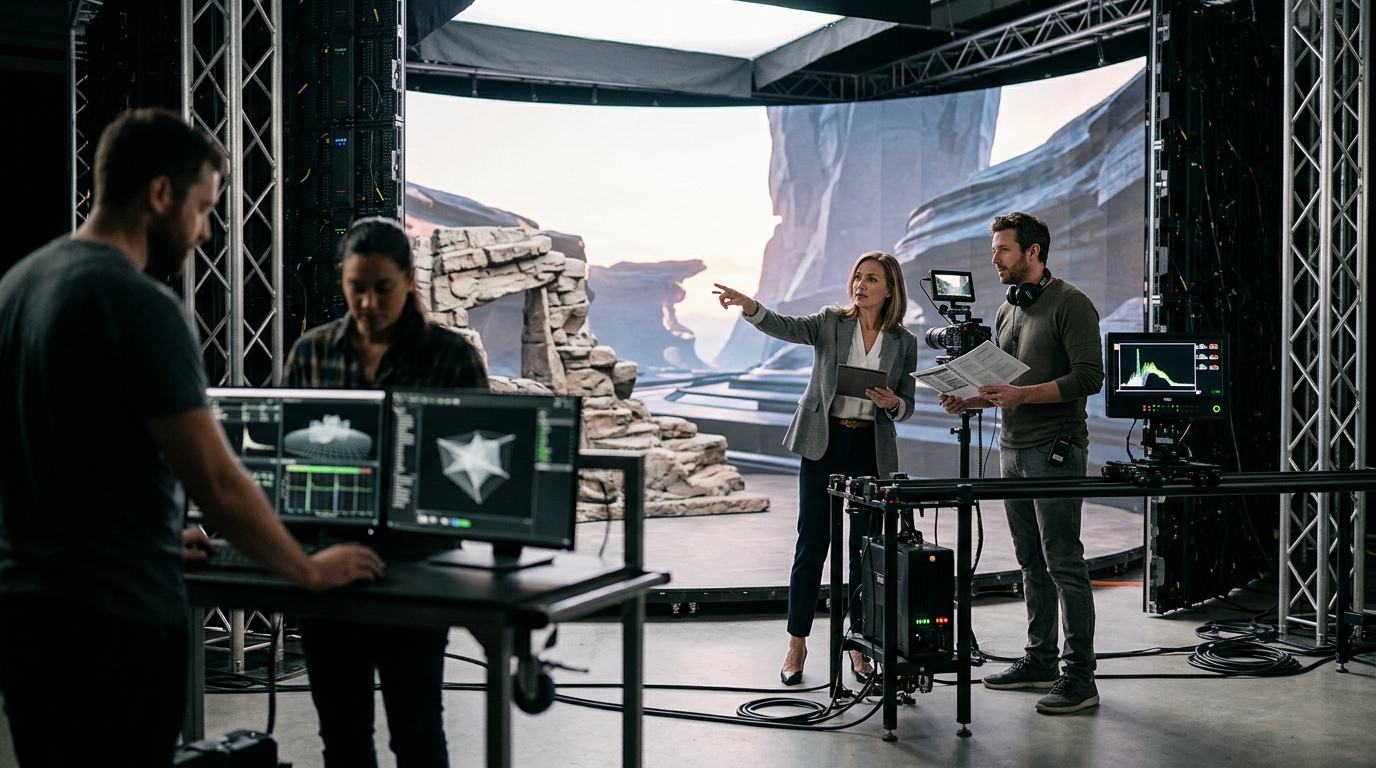
Virtual production has fundamentally altered the landscape of modern filmmaking by merging physical sets with digital environments in real time. According to industry reports on the growth of LED volume technology, productions utilizing these studios can reduce post-production visual effects costs by up to 30 percent while accelerating shooting schedules. This shift is not merely a trend but a structural evolution in how content is created, driven by the demand for immersive storytelling and budget efficiency. For directors and producers, understanding the intricacies of planning within an LED volume studio is essential to leveraging its full potential.
Understanding LED Volume Technology
An LED volume studio consists of a large, curved wall of high-resolution LED panels that serve as the background for a scene. This technology allows actors and cameras to interact with dynamic, photorealistic environments in real time. The term LED volume is defined as a physical space enclosed by LED panels that display computer-generated imagery to create an immersive environment for filming.
Unlike traditional green screen setups, which require extensive post-production work to replace backgrounds and match lighting, LED volumes provide accurate lighting reflections on actors and props. This immediate feedback loop allows the director to see the final composite on set. The technology relies on Unreal Engine, which is defined as a real-time 3D creation tool that powers the dynamic backgrounds and lighting calculations for the LED walls.
For productions based in Atlanta, Georgia, access to such facilities offers a significant logistical advantage. Atlanta has become a hub for film and television production, offering a robust infrastructure for both traditional and virtual shoots. By utilizing a local LED volume studio, productions can minimize travel costs and leverage local talent and crew expertise.
The Pre-Production Workflow
Effective planning for a virtual production begins long before the cameras roll. The pre-production phase is critical for ensuring that the digital assets align with the creative vision. This stage involves close collaboration between the director, production designer, and the virtual production team.
The first step is concept development. Artists create initial sketches and mood boards to define the look and feel of the digital environments. These concepts are then translated into 3D models within the Unreal Engine. It is vital to optimize these models for real-time rendering to maintain high frame rates and prevent latency issues during filming.
Another crucial aspect of pre-production is camera tracking. The studio must calibrate the camera tracking system to ensure that the perspective of the LED walls matches the camera's movement precisely. Any misalignment can break the illusion of reality and require costly corrections in post. At 24ATL Studios, the team oversees these technical preparations to ensure seamless integration between the physical camera and the digital world.
Unreal Engine Integration
The heart of any LED volume studio is its Unreal Engine setup. This software allows for the creation of complex, interactive environments that respond to camera movement and lighting changes in real time. The engine enables virtual set production, which is defined as the process of creating and rendering digital environments that are displayed on LED walls during filming.
One of the most powerful features of Unreal Engine in this context is its ability to handle dynamic lighting. The engine calculates how light from the LED panels interacts with the physical set, actors, and props. This means that if a scene requires a sunset, the lighting on the actors will naturally shift to match the warm tones of the digital sky. This level of realism is difficult to achieve with traditional green screen techniques.
Furthermore, the engine allows for rapid iteration. If a director wants to change the time of day or the weather conditions, the virtual production team can adjust the environment on the fly. This flexibility reduces the need for multiple reshoots and allows for more creative experimentation on set.
Planning for Car Processes
Car processes, or driving scenes, present unique challenges in virtual production. Traditionally, these scenes were filmed in trailers with green screens, requiring extensive post-production to composite the background. With an LED volume, these scenes can be filmed in-studio, providing immediate visual feedback and accurate lighting.
Planning a car process shoot involves coordinating the movement of the vehicle with the digital environment. The background must scroll at the correct speed to match the car's motion. This requires precise synchronization between the camera tracking system and the Unreal Engine. Any delay or mismatch can result in a jarring visual effect that breaks the audience's immersion.
At 24ATL Studios, the car process capabilities allow for safe and controlled filming of driving scenes. This eliminates the risks associated with on-location driving and reduces the need for traffic control and safety personnel. The studio's custom-tailored Unreal Engine environments can be adapted to fit any concept, from urban cityscapes to rural highways.
Key Roles in Virtual Production
A successful virtual production requires a specialized team with expertise in both traditional filmmaking and digital technology. The key roles include the Virtual Production Supervisor, the Unreal Engine Developer, and the Camera Tracking Technician.
The Virtual Production Supervisor oversees the technical aspects of the shoot, ensuring that all systems are functioning correctly. They act as the bridge between the creative team and the technical crew. The Unreal Engine Developer is responsible for creating and optimizing the digital environments. They must have a deep understanding of 3D modeling, texturing, and real-time rendering.
The Camera Tracking Technician is responsible for calibrating and maintaining the camera tracking system. They must ensure that the camera's position and orientation are accurately transmitted to the Unreal Engine in real time. At 24ATL Studios, the team includes experienced professionals who manage these critical roles to deliver high-quality results.
Cost vs. Benefit Analysis
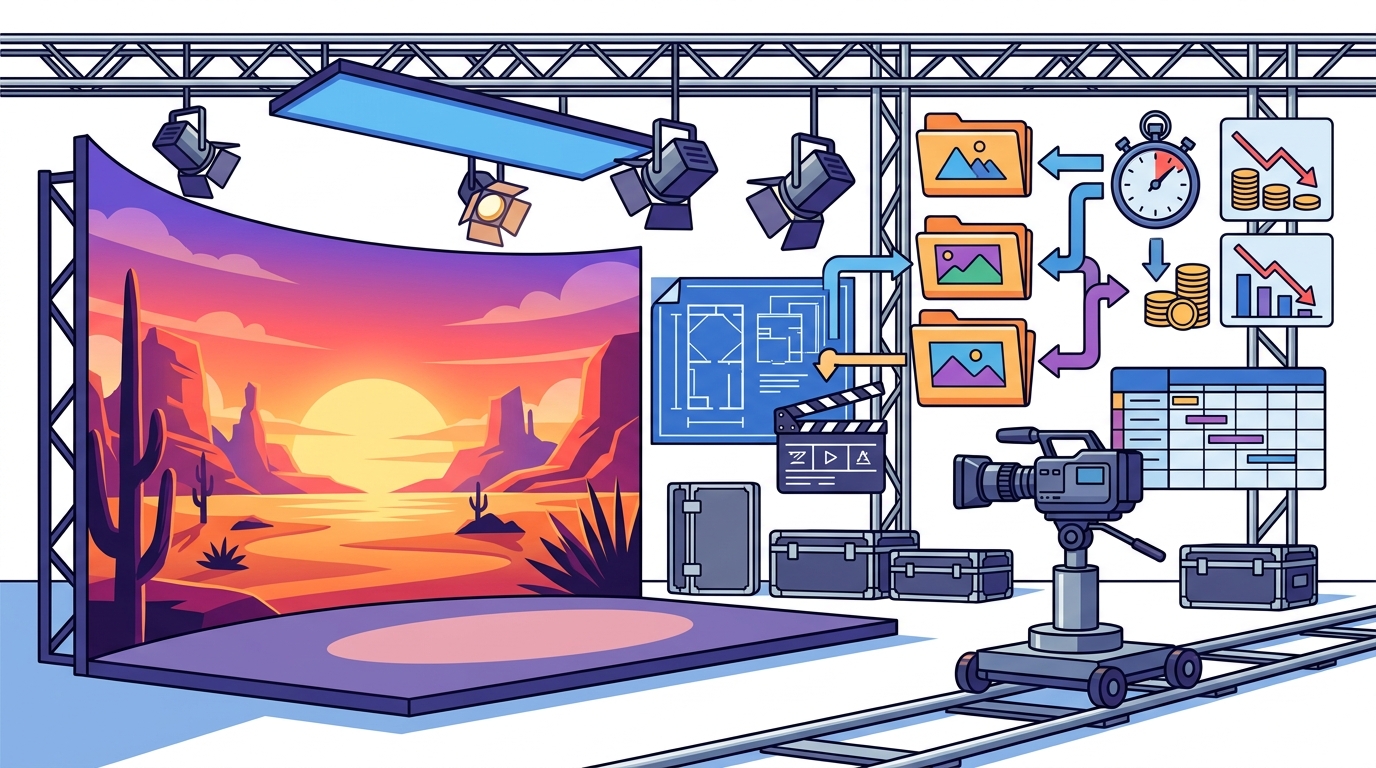
While the initial investment in LED volume technology can be significant, the long-term benefits often outweigh the costs. Productions can save money on location scouting, travel, and post-production visual effects. The ability to see the final composite on set also reduces the risk of costly reshoots.
| Factor | Traditional Green Screen | LED Volume Studio |
|---|---|---|
| Post-Production VFX Costs | High | Low |
| Lighting Accuracy | Manual Matching | Real-Time Dynamic |
| On-Set Feedback | Limited | Immediate |
| Location Flexibility | Restricted | Unlimited |
According to data from recent industry surveys, productions that utilize LED volume studios report a 20 percent reduction in overall production time. This efficiency is due to the reduced need for setup changes and the ability to shoot multiple angles in a single day. For producers looking to maximize their budget, the LED volume offers a compelling return on investment.
Key Takeaways
- LED volume technology reduces post-production VFX costs by providing real-time compositing.
- Unreal Engine is the core software powering dynamic, photorealistic virtual sets.
- Pre-production planning is critical for optimizing 3D assets and camera tracking.
- Car processes can be filmed safely and efficiently within the studio environment.
- Specialized roles such as the Virtual Production Supervisor are essential for success.
- Atlanta, GA, offers access to world-class virtual production facilities like 24ATL Studios.
- Real-time lighting feedback improves actor performance and directorial decision-making.
Frequently Asked Questions
What is the primary advantage of using an LED volume over a green screen?
The primary advantage is the ability to see accurate lighting and reflections on set in real time, which eliminates the need for extensive post-production lighting matching and reduces visual effects costs.
How does Unreal Engine contribute to virtual production?
Unreal Engine powers the real-time rendering of digital environments, allowing for dynamic lighting and camera tracking that responds instantly to the physical camera's movement.
Can car processes be filmed in an LED volume studio?
Yes, LED volume studios are equipped to handle car processes, allowing for safe and controlled filming of driving scenes with accurate background scrolling and lighting.
What is the role of the Virtual Production Supervisor?
The Virtual Production Supervisor oversees the technical aspects of the shoot, ensuring that all systems, including camera tracking and Unreal Engine, function correctly and seamlessly.
Is virtual production suitable for commercials and music videos?
Absolutely. Virtual production is highly effective for commercials and music videos, offering creative flexibility and the ability to create unique visual imagery without location constraints.
How does 24ATL Studios support pre-production?
24ATL Studios provides custom-tailored Unreal Engine environments and adaptable scenes/assets to fit the client's concept, ensuring a smooth transition from pre-production to filming.
What is the definition of a virtual set?
A virtual set is defined as a digital environment created in real-time software that is displayed on LED panels to serve as the background for a film or television production.
Why is Atlanta a hub for virtual production?
Atlanta has developed a robust infrastructure for film and television, including access to advanced facilities like 24ATL Studios, making it a strategic location for virtual production shoots.
Frame Your Shoot
Ready to elevate your production with cutting-edge virtual technology? Contact 24ATL Studios today to discuss your project and explore our Unreal Engine virtual set production capabilities. Our team is ready to help you frame your shoot with precision and creativity. Visit our Frame Your Shoot page to get started. You can also reach out directly to our creative director, Nick, at Nick@24atl.com or call him at 407.446.8970. For more information about our services, including Car Process filming and Music Videos, please explore our site. Learn more about our Team and how we can bring your vision to life.