
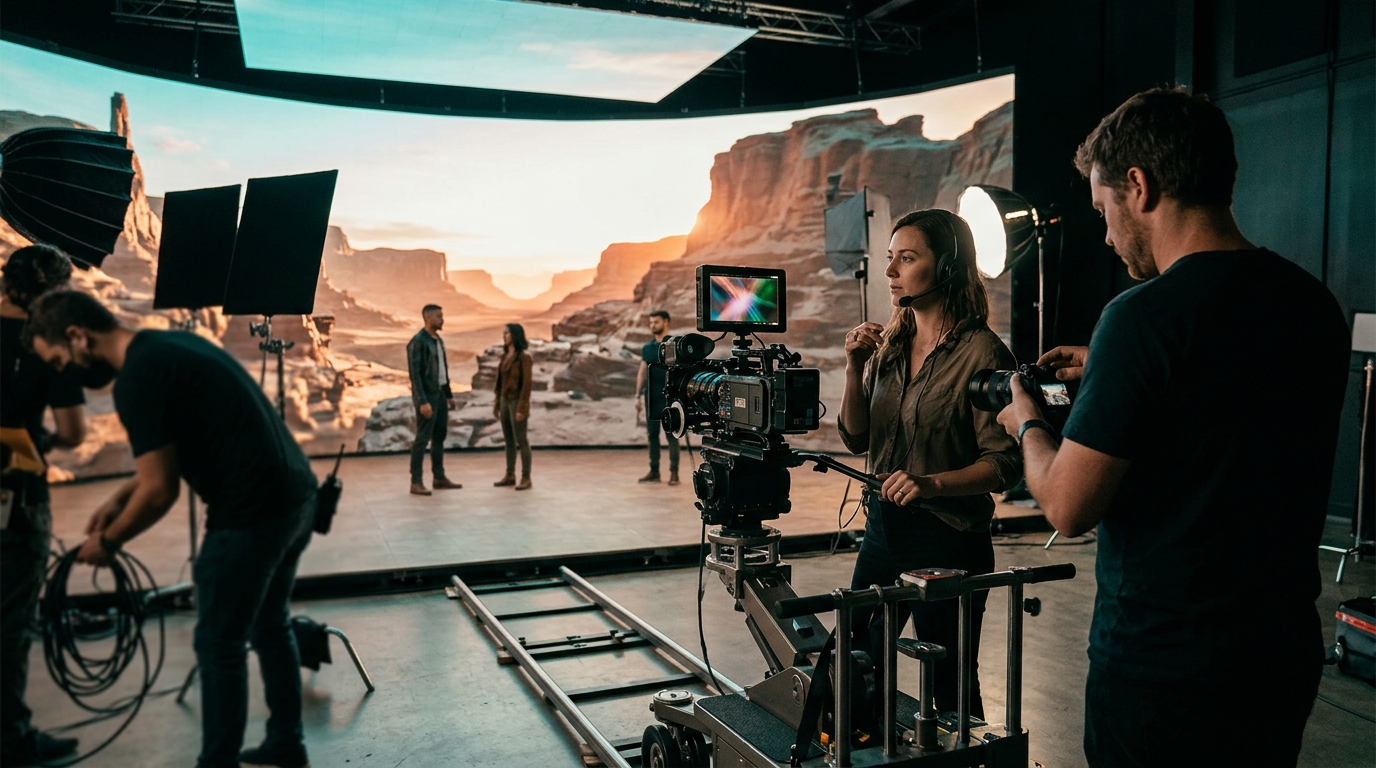
Choosing the right virtual production facility requires more than just a large screen. A high-quality LED volume stage is a complex ecosystem of hardware, software, and physical design that dictates the final look of your production. At 24 ATL Studios, we understand that the technical specifications of the stage directly impact your creative freedom and post-production workflow. This guide breaks down the critical components you must evaluate before booking a virtual set.
1. High-Resolution LED Panel Density
Pixel pitch and resolution determine the clarity of the virtual environment. A professional stage requires a fine pixel pitch to prevent the screen door effect, which is visible when cameras move close to the wall. High-density panels ensure that the virtual background remains sharp and indistinguishable from a physical set. This is crucial for close-up shots where the camera lens is positioned near the LED surface. For additional details, review the Our Team 24ATL Studios.
2. Seamless Curvature and Geometry
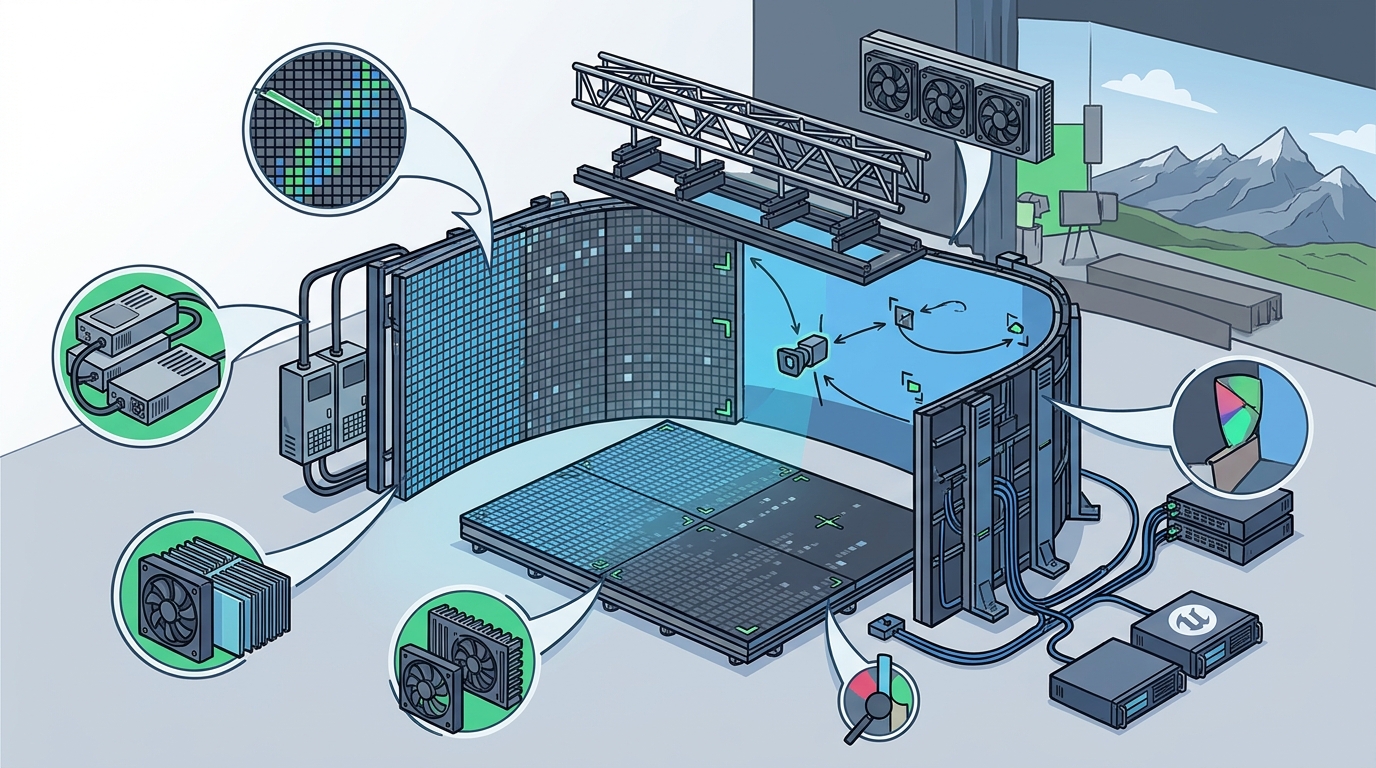
Curved geometry eliminates visible seams and enhances immersion. Flat screens can create awkward reflections and limit the field of view for wide-angle lenses. A curved volume wall wraps around the set, providing a wider horizontal and vertical field of view. This curvature allows for more dynamic camera movements and reduces the need for extensive digital compositing in post-production.
3. Real-Time Rendering Engine Integration
4. Accurate Camera Tracking System
Precise tracking hardware is among the backbone of virtual production. The stage must utilize a robust camera tracking system that can handle complex movements, including cranes, gimbals, and handheld shots. The tracking system must be calibrated to the specific lens and camera body to ensure that the virtual perspective matches the physical camera exactly. Any error in tracking results in a visible mismatch between the actor and the background.
5. High-Dynamic-Range (HDR) Output
HDR capability allows the LED wall to match the lighting of the physical set. The LED panels must be capable of producing a wide range of brightness levels, from deep blacks to bright whites. This dynamic range is essential for creating realistic lighting interactions, such as reflections on car paint or wet surfaces. It allows the virtual environment to act as a practical light source for the actors and props in the foreground.
6. Modular and Scalable Design
7. Integrated Post-Production Workflow
Choosing the Right Stage for Your Production
Frequently Asked Questions
What is the difference between a green screen and an LED volume stage?
An LED volume stage displays the virtual environment in real-time during the shoot, allowing actors to see their surroundings. A green screen requires the background to be added in post-production, which can limit the lighting and performance of the actors.
How does camera tracking work in virtual production?
Can LED volume stages be used for car commercials?
Yes, LED volume stages are ideal for car commercials because they allow for realistic lighting reflections on the vehicle's paint and glass. The high dynamic range of the LED panels ensures that the car looks authentic in any virtual environment.
What is the role of Unreal Engine in LED volume production?
Unreal Engine is a real-time 3D creation tool that renders the virtual environment. It allows artists to create detailed worlds that can be updated instantly as the camera moves, providing a seamless experience for the production team.
How much does it cost to rent an LED volume stage?
Costs vary based on the size of the stage, the duration of the rental, and the specific services included. It is best to request a quote from a provider like 24 ATL Studios for accurate pricing based on your project requirements.
Do I need a virtual production team to use an LED stage?
While you can rent the hardware, a skilled virtual production team is essential for setting up the tracking, rendering, and lighting. This team ensures that the technical aspects of the stage are optimized for your specific creative vision.