
How to Choose the Right Virtual Production Studio for Your Project
According to recent industry reports, virtual production adoption has increased by over forty percent across major film markets in 2024. This rapid shift forces production managers to evaluate technical infrastructure before committing to a location. Studios now compete on rendering speed, LED panel resolution, and Unreal Engine integration. You must align your creative vision with a facility that offers scalable hardware and experienced technical directors. Selecting the wrong environment can inflate post-production budgets and delay principal photography by several weeks.
Evaluating Core Infrastructure
The foundation of any successful shoot relies on the physical dimensions and technical specifications of the soundstage. Virtual production requires massive floor space to accommodate camera rigs, lighting grids, and crew movement. You should request detailed floor plans before signing any agreements. Studios with smaller footprints often restrict camera movement and limit directorial options.
LED Wall Specifications
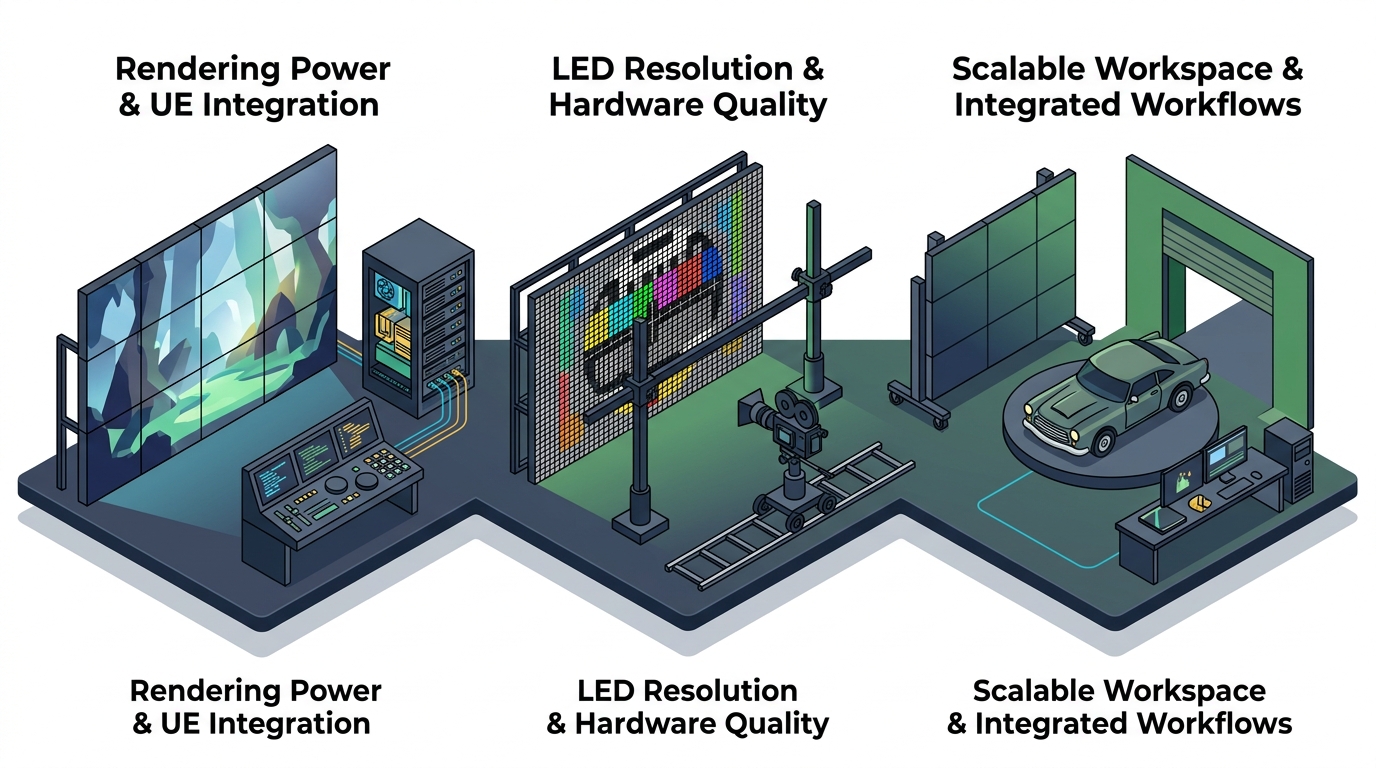
Virtual production is a filmmaking methodology that captures real-time computer graphics alongside live-action footage. The quality of your final frame depends entirely on the pixel pitch and brightness of the display panels. Lower resolution panels create visible moiré patterns when cameras shoot at wide apertures. Always verify that the facility uses high-density LED arrays capable of supporting 4K and 8K camera sensors.
Lighting consistency matters just as much as resolution. Inconsistent brightness across panels creates uneven color grading challenges during post-production. A professional environment maintains uniform luminance across the entire curved surface. You can verify these metrics by requesting a technical specification sheet from the studio management team.
Assessing Unreal Engine Integration
Modern virtual production relies heavily on real-time rendering software to generate dynamic backgrounds. Unreal Engine remains the industry standard for this workflow. You must confirm that the studio employs certified technical directors who specialize in asset optimization and scene management.
Asset Pipeline Compatibility
LED volume wall refers to a curved array of high-resolution display panels that project dynamic backgrounds. These walls require seamless integration with your 3D modeling software. Studios that enforce proprietary asset pipelines often create bottlenecks during pre-production. You should verify that the facility accepts standard file formats like USD, FBX, and OBJ without requiring expensive conversion services.
Real-time lighting calculations directly impact actor performance and camera exposure. When the environment updates instantly, directors can capture accurate reflections on costumes and props. This capability eliminates the need for extensive green screen spill removal. You can test this workflow by scheduling a technical rehearsal before your official shoot date.
Understanding Service Delivery Models
Production budgets fluctuate based on how a studio structures its service packages. Some facilities charge strictly by the hour, while others offer comprehensive production support. You must clarify which services are included in the base rate.
Pre-Production Support
Pre-production support typically includes technical directors, 3D environment artists, and on-set lighting technicians. These professionals ensure your virtual sets render correctly during principal photography. You should verify whether the studio provides custom tailored Unreal Engine environments or relies on pre-built marketplace assets. Custom environments require additional development time but deliver superior visual fidelity.
Background plates or environments are also available for creating visual imagery and unique lighting via mobile wall configurations. These portable setups allow productions to shoot on location while maintaining virtual production benefits. You can evaluate this option by reviewing the studio portfolio and requesting case studies from recent commercial projects.
Reviewing Specialized Filming Capabilities
Complex productions often require specialized rigging and motion control systems. You must verify that the facility offers dedicated support for vehicles, drones, and complex camera movements.
Car Process Integration
Car process describes a specialized rigging system that mounts vehicles to a stationary platform for safe interior filming. This system allows actors to perform realistic driving sequences without road safety risks. You should confirm that the studio maintains certified car process trailers with integrated motion platforms. These trailers synchronize with the LED wall to create accurate parallax effects.
Event space utilization often overlaps with commercial production requirements. Studios that offer flexible booking windows allow marketing teams to shoot multiple brand campaigns in a single week. You can maximize your budget by consolidating commercial and music video shoots under one production schedule.
Analyzing Pricing and Contract Structures
Transparent pricing models prevent unexpected financial surprises during principal photography. You must request a detailed breakdown of hourly rates, technical director fees, and overtime charges.
Hourly Rates vs. Package Deals
Hourly rates typically range from two thousand to five thousand dollars depending on studio location and equipment tier. Package deals often include technical support, asset development, and post-production oversight. You should compare these options against your specific project timeline. Long-form television series usually benefit from package deals, while short-form commercials often save money with hourly billing.
Post process costs are mitigated due to the simplicity of VFX in the post processing cycle. This financial advantage directly impacts your overall production budget. You can calculate your total expenditure by multiplying your estimated shoot days by the facility hourly rate. Always request a written contract that outlines cancellation policies and equipment damage liabilities.
| Studio Tier | LED Resolution | Unreal Integration | Car Process Support | Estimated Hourly Rate |
|---|---|---|---|---|
| Entry Level | 2.5mm Pixel Pitch | Basic Asset Library | Limited Compatibility | $1,500 - $2,500 |
| Professional Grade | 1.5mm Pixel Pitch | Custom Asset Pipeline | Full Integration | $2,500 - $4,000 |
| Enterprise Broadcast | 0.9mm Pixel Pitch | Proprietary Engine Mods | Advanced Motion Platforms | $4,000 - $6,500 |
Key Takeaways
- Virtual production adoption has increased by over forty percent across major film markets in 2024.
- LED panel pixel pitch directly impacts 4K and 8K camera sensor performance.
- Unreal Engine integration requires certified technical directors for optimal asset management.
- Car process trailers synchronize with LED walls to create accurate parallax effects.
- Post production costs decrease significantly when environments render in real time.
- Hourly rates typically range from two thousand to six thousand five hundred dollars.
- Custom tailored Unreal Engine environments deliver superior visual fidelity compared to marketplace assets.
Frequently Asked Questions
What pixel pitch should I request for 4K camera shoots?
You should request a 1.5mm pixel pitch or lower for 4K camera shoots. Higher resolution panels eliminate visible pixelation when cameras shoot at wide apertures. Studios with 2.5mm panels often create moiré patterns that complicate color grading.
Can I bring my own 3D assets to the studio?
Most professional facilities accept standard file formats like USD, FBX, and OBJ. You must verify the studio asset pipeline before shipping your environments. Proprietary conversion services can add thousands of dollars to your pre-production budget.
How long does a typical virtual production shoot take?
Principal photography typically requires two to four days for commercial projects. Television episodes often demand five to seven days due to complex scene transitions. You should schedule technical rehearsals to minimize on-set downtime.
Do virtual production studios provide lighting equipment?
Professional facilities include comprehensive lighting grids and motion control rigs in their base packages. You should verify whether follow spots and practical lighting fixtures are included. Additional equipment rentals often incur hourly surcharges.
What happens if my 3D environment fails to render correctly?
Technical directors monitor rendering pipelines in real time during principal photography. They can adjust asset complexity or swap background plates without halting production. You should request a backup rendering protocol in your service agreement.
Can I shoot music videos using the LED volume wall?
Music video productions frequently utilize the LED volume wall for dynamic background switching. Artists can change environments between takes without location permits or travel costs. You can maximize your budget by consolidating multiple music video shoots under one production schedule.
Book Your Production
Ready to elevate your next project with cutting-edge technology? Contact our production team today to schedule a facility tour and discuss your creative requirements. Our experienced staff will guide you through the booking process and ensure your shoot aligns with our technical capabilities. Visit our main page to explore our complete service offerings and view recent project highlights. Schedule your consultation now and secure your preferred production dates.