
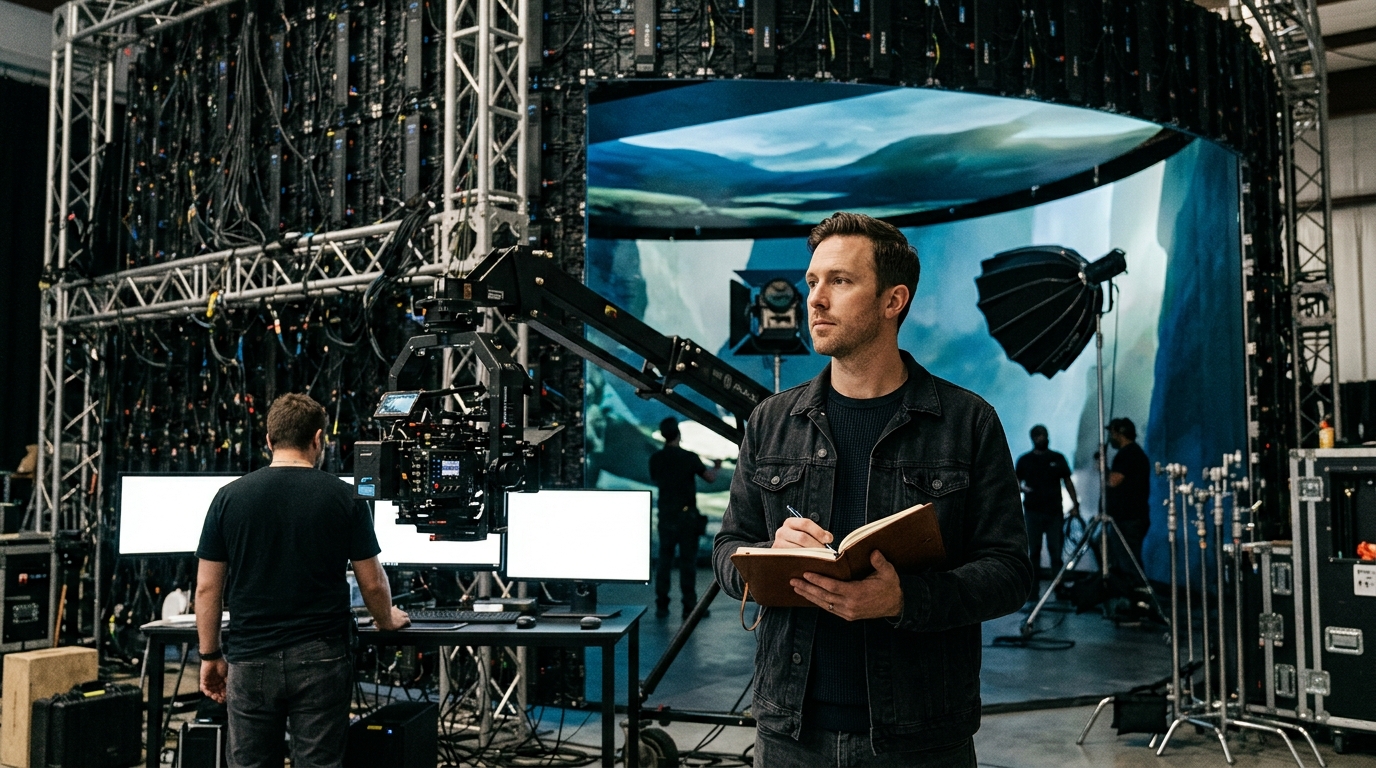
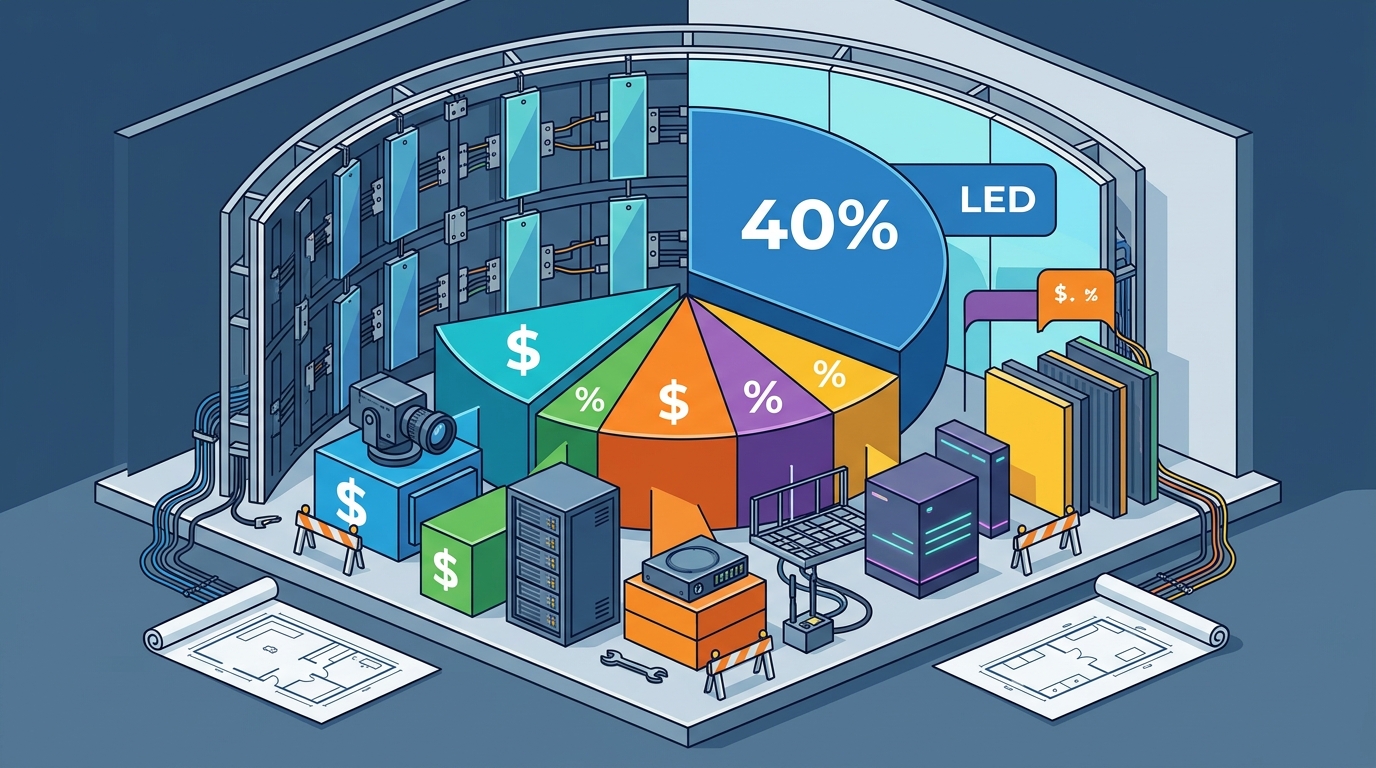
Building a functional virtual production studio requires a substantial capital investment that typically ranges from two hundred thousand to over one million dollars. Industry data shows that average LED volume wall installations alone consume roughly forty percent of the total budget. Production teams must account for high-resolution displays, real-time rendering hardware, and specialized software licensing to achieve broadcast-ready results. Understanding these financial parameters allows creative directors to allocate resources efficiently before breaking ground on a new facility.
LED Infrastructure Costs
An LED volume wall is a high-resolution display system that replaces traditional physical sets with dynamic, real-time digital backgrounds. The physical panels represent the largest single line item in any studio build. Premium micro-LED panels typically cost between eighty and one hundred fifty dollars per square foot. A standard twelve by twelve meter wall requires approximately one hundred forty-four square meters of display surface. This translates to a base hardware expenditure of roughly one hundred twenty thousand dollars. Higher pixel pitch ratings improve image clarity but increase the price per panel. Studios targeting 4K camera workflows must invest in sub-millimeter pitch displays to prevent moiré patterns during close-up shots.
Panel Resolution
Resolution directly impacts the final broadcast quality. Lower pitch panels deliver sharper edges and smoother gradients. Production companies shooting in 8K resolution require the highest tier of display technology. The cost premium for 8K readiness often adds thirty percent to the initial hardware budget.
Wall Configuration
Curved walls require custom mounting brackets and specialized calibration software. Straight walls are easier to install but limit the immersive field of view. Most commercial studios opt for a hybrid configuration that balances cost with creative flexibility.
Rendering Hardware Requirements
Real-time rendering is the computational process that generates visual frames instantly to match camera movement without perceptible lag. The rendering farm must process complex 3D environments at sixty frames per second. High-end GPU clusters typically cost between fifty thousand and one hundred thousand dollars. Each graphics card must support ray tracing and global illumination to match practical lighting conditions. Network topology plays a critical role in data transmission between the control room and the display wall.
GPU Clusters
Enterprise-grade graphics processing units handle the heavy lifting. Studios often deploy four to eight high-performance workstations per camera rig. Redundant power supplies ensure continuous operation during long shooting days.
Network Topology
Fiber optic cabling eliminates latency between the rendering nodes and the LED panels. Low-latency switches prevent frame drops during complex camera tracking sequences. Proper bandwidth allocation guarantees seamless synchronization across all studio zones.
Software Licensing Fees
Virtual production is a filmmaking methodology that combines physical sets with digital environments during principal photography. The software ecosystem requires annual subscription models and perpetual licenses. Real-time engine subscriptions typically cost between five thousand and fifteen thousand dollars per year. Asset management platforms charge additional fees for cloud storage and version control. Creative teams must budget for ongoing updates and technical support contracts.
Real-Time Engines
Modern engines provide physics simulation and particle effects. Studios pay premium rates for enterprise support packages. These packages guarantee rapid bug resolution during active shoots.
Asset Management
Centralized libraries streamline the handoff between pre-production and post-production. Subscription tiers scale based on the number of concurrent users. Enterprise licenses often include dedicated technical account managers.
Facility Construction Variables
Constructing a soundproof studio space requires specialized architectural planning. Blackout treatments prevent ambient light from washing out the LED displays. Soundproofing materials add roughly twenty thousand dollars to the base construction budget. Climate control systems must maintain consistent temperatures to protect sensitive electronics. Power distribution networks require dedicated circuits for high-draw rendering equipment.
Soundproofing
Acoustic panels absorb reverberation and prevent audio bleed. Studios targeting dialogue recording require higher noise isolation standards. Professional acoustic engineering adds significant upfront costs.
Power Distribution
Uninterruptible power supplies protect against sudden outages. Dedicated transformers prevent voltage fluctuations from damaging display panels. Electrical upgrades often exceed initial budget estimates.
Operational Expenses
Running a fully equipped studio demands consistent monthly expenditures. Staffing models typically require a technical director, two camera operators, and a real-time artist. Monthly payroll costs average between thirty thousand and fifty thousand dollars. Maintenance cycles include panel replacement and software patching. Marketing and sales efforts require dedicated budget allocation to secure recurring contracts.
Staffing Models
Full-time employees provide consistent oversight across multiple productions. Freelance technicians offer flexibility during peak demand periods. Hybrid staffing strategies optimize long-term financial health.
Maintenance Cycles
Regular calibration prevents color drift across the display surface. Firmware updates introduce new features and security patches. Preventative maintenance reduces unexpected downtime during critical shoots.
Key Takeaways
- LED volume wall installations typically consume forty percent of the total studio budget.
- Micro-LED panels cost between eighty and one hundred fifty dollars per square foot.
- High-performance GPU clusters range from fifty thousand to one hundred thousand dollars.
- Real-time engine subscriptions average five thousand to fifteen thousand dollars annually.
- Professional soundproofing adds roughly twenty thousand dollars to construction costs.
- Monthly operational payroll typically falls between thirty thousand and fifty thousand dollars.
- Studios utilizing Unreal Engine technology can cut production costs in half by eliminating location fees.
Frequently Asked Questions
What is the minimum square footage required for a functional virtual production studio?
A functional studio requires a minimum of two thousand square feet to accommodate a twelve by twelve meter wall, camera tracking rigs, and rendering workstations. Smaller spaces compromise camera movement and limit the immersive field of view.
How long does it take to construct a fully operational LED volume wall studio?
Construction typically takes between four and six months. This timeline includes structural reinforcement, electrical upgrades, panel installation, and system calibration. Rushed projects often result in calibration errors and delayed launch dates.
Can existing film studios be retrofitted with LED volume technology?
Yes, most traditional soundstages can be retrofitted with modern display systems. Retrofits require reinforced flooring to support heavy panel mounts and upgraded power infrastructure. Structural assessments determine the feasibility of the conversion.
What software platforms integrate seamlessly with LED volume walls?
Modern engines provide physics simulation and particle effects. Studios pay premium rates for enterprise support packages. These packages guarantee rapid bug resolution during active shoots.
How does virtual production impact post-production budgets?
Virtual production significantly reduces post-production expenditures. In-camera visuals eliminate extensive green screen keying and background replacement. Studios report up to fifty percent savings on final editing and compositing phases.
What insurance requirements apply to LED volume wall facilities?
Facilities must carry comprehensive liability coverage and equipment insurance. Premiums scale based on the total asset value and annual production volume. Risk management protocols require regular safety audits and staff training.
Is specialized training required for camera operators working with LED walls?
Operators must understand camera tracking synchronization and lens mapping. Training programs typically span two to four weeks. Certified technicians ensure optimal image quality and prevent motion sickness during playback.
Book Your Studio
Constructing a virtual production studio demands precise financial planning and technical expertise. Our team manages every aspect of the creative and operational workflow. We provide fully adaptable scenes and assets to match your exact concept. Schedule a studio tour today and discover how our immersive technology streamlines your entire production cycle.