
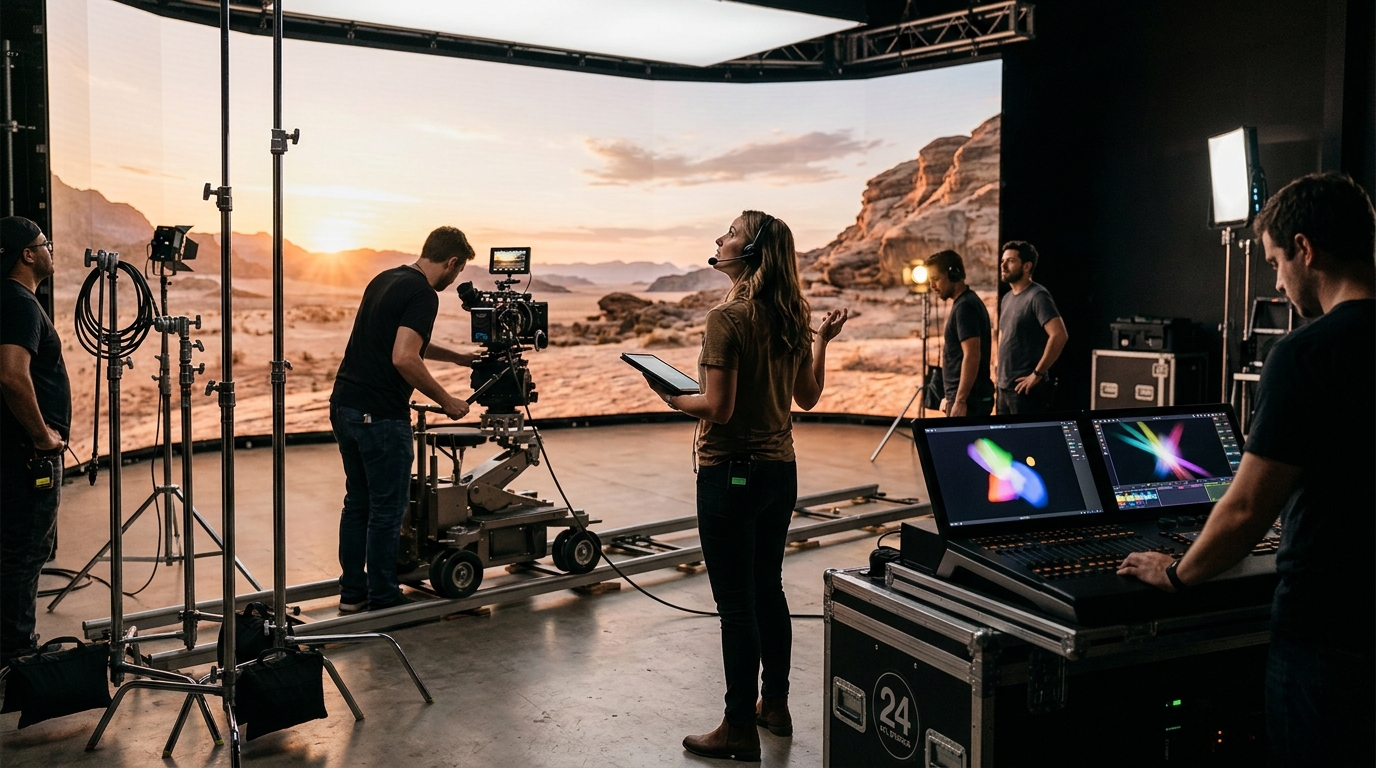
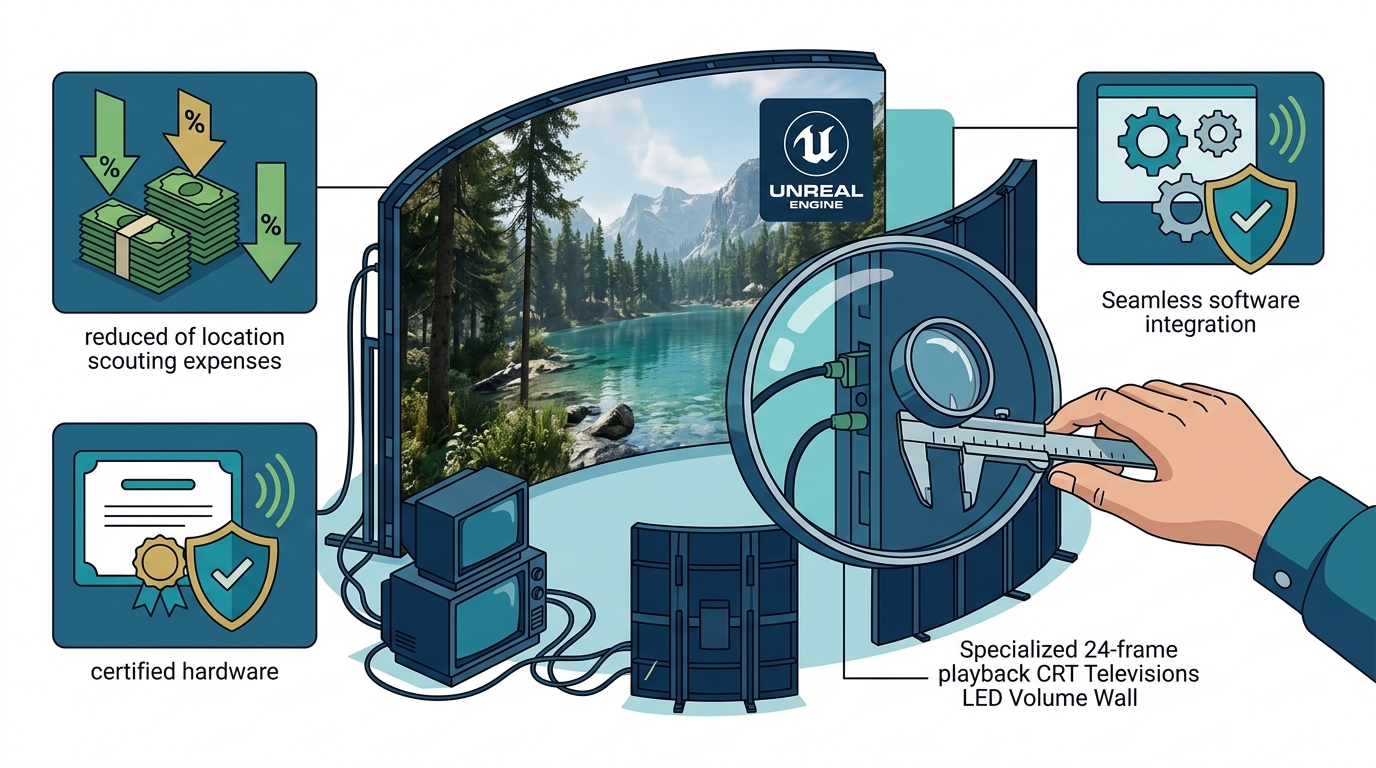
Selecting the correct virtual production facility requires careful evaluation of technical infrastructure and creative alignment. Industry data shows that modern productions utilizing LED volume walls reduce location scouting expenses by nearly forty percent. This financial advantage stems from replacing physical travel with real-time digital environments. You must verify that your chosen partner operates certified hardware and maintains seamless software integration. The right facility will streamline your entire workflow from initial concept to final delivery. Production managers consistently report that accurate lighting capture eliminates costly post-production visual effects overhead.
Technical Infrastructure
LED Panel Specifications
An LED Volume Wall is a high-resolution digital backdrop that replaces traditional physical sets and green screens. You should verify pixel pitch and refresh rates before signing a contract. Low refresh rates cause moiré patterns that ruin camera sensor data. High-end facilities utilize curved panels to eliminate blind spots and maintain consistent perspective. This curvature allows camera tracking systems to render accurate parallax shifts during movement.
Check the color gamut and brightness output of the installed panels. Professional productions require wide color spaces to match natural daylight and artificial lighting sources. Inadequate brightness forces cinematographers to lower camera ISO settings, which introduces unwanted digital noise. Always request a live technical walkthrough to verify panel calibration and color consistency.
Lighting Accuracy
Real-time lighting reflection on actor costumes and reflective surfaces demands precise panel luminance. Standard green screens fail to project accurate color spill onto talent. LED environments solve this problem by projecting the exact background colors onto physical objects. This capability drastically reduces the need for extensive color grading in post-production. You should confirm that the studio provides dedicated lighting technicians who understand digital environment mapping.
Software Integration
Real-Time Rendering Engines
A Virtual Production system is a complete hardware and software ecosystem that renders digital environments in real time. You must ensure your chosen studio utilizes industry-standard rendering engines like Unreal Engine. These platforms allow directors to adjust lighting, camera angles, and environmental assets on set. This immediate feedback loop prevents costly reshoots and accelerates creative decision making. Verify that the studio maintains active support contracts with major software developers.
Asset Customization
Your production team will need access to fully adaptable scenes and background plates. Top-tier studios offer custom tailored environments that match your specific script requirements. You should confirm whether the facility provides pre-built asset libraries or requires full custom modeling. Custom modeling increases pre-production timelines but guarantees exact creative control. Request examples of previous scene adaptations to assess their technical flexibility.
Workflow Compatibility
Pre-Production Planning
Successful shoots require meticulous technical rehearsals and asset preparation. You should verify that the studio provides dedicated pre-production support staff. These specialists convert your storyboards into functional digital environments. They also conduct camera tracking tests to ensure seamless integration between physical and digital elements. Clear communication channels between your production office and the studio technical team prevent scheduling conflicts.
Post-Production Handoff
A Car Process is a specialized vehicle mounting system that integrates seamlessly with LED volume walls for dynamic driving shots. You must confirm whether the facility offers dedicated car process trailers and tracking rigs. These systems allow vehicles to move naturally while the background environment shifts in perfect synchronization. Studios that lack this infrastructure force productions to rely on impractical static setups. Always request a demonstration of their vehicle tracking capabilities before committing to a booking.
Cost Analysis
Budget Allocation
Financial planning requires a transparent breakdown of rental hours, technical staff fees, and asset development costs. Labor statistics indicate that specialized technical crews command premium rates due to high demand. You should compare total project costs rather than hourly rental fees. Comprehensive packages that include technical directors and lighting specialists often save money overall. Request a detailed line item breakdown to identify hidden expenses.
Hidden Expense Mitigation
Traditional location shoots incur massive transportation, accommodation, and permit fees. LED environments eliminate these logistical burdens by bringing the location to your production. You should calculate the total cost of physical travel versus digital environment rental. Most productions report cutting overall expenses by nearly fifty percent when switching to volume studios. Always verify whether your contract includes unlimited scene iterations or charges extra for asset modifications.
Team Expertise
Creative Direction
Your chosen facility must employ experienced creative directors who understand narrative pacing and visual storytelling. You should review the portfolio of previous projects to assess their creative range. Seasoned directors bridge the gap between technical limitations and artistic vision. They guide your cinematographers through optimal camera framing and lens selection. Verify that the studio assigns a dedicated creative lead to your specific production.
Technical Oversight
Complex digital environments require rigorous quality control and continuous system monitoring. You should confirm that the facility employs certified technical engineers who manage real-time rendering pipelines. These professionals troubleshoot software crashes, tracking drift, and panel calibration issues during active shoots. Their presence ensures zero downtime and maintains production momentum. Always request the names and credentials of the lead engineers who will oversee your project.
| Studio Feature | Standard Green Screen | LED Volume Wall | Hybrid Setup |
|---|---|---|---|
| Lighting Accuracy | Low color spill | High real-time reflection | Moderate reflection |
| Post-Production Overhead | Extensive keying required | Minimal visual effects | Moderate keying required |
| Location Travel Costs | High physical travel | Zero physical travel | Mixed travel requirements |
| Real-Time Feedback | None during shoot | Instant environment changes | Limited environment changes |
Key Takeaways
- LED volume walls reduce location scouting expenses by nearly forty percent according to industry reports.
- Real-time rendering engines allow directors to adjust lighting and camera angles directly on set.
- Car process trailers enable dynamic driving shots with synchronized background environment shifts.
- Comprehensive technical packages often save money overall compared to hourly rental fees.
- Certified technical engineers prevent downtime and maintain production momentum during active shoots.
- Custom tailored environments require active pre-production support staff and asset libraries.
- Curved panel configurations eliminate blind spots and maintain consistent camera perspective.
Frequently Asked Questions
What pixel pitch should I prioritize for close-up shots?
You should prioritize a pixel pitch of P1.5 or lower for close-up camera work. Higher pixel density prevents visible grid patterns when the camera focuses on talent. Standard productions often utilize P2.5 panels, which work adequately for wide shots. Always verify panel specifications against your primary camera focal lengths.
Can I bring my own digital assets to the studio?
You can absolutely bring your own digital environments to the facility. Most studios accept standard Unreal Engine project files and optimized 3D models. You should confirm file format requirements and optimization guidelines before delivery. The technical team will assist with asset scaling and lighting integration.
How long does it take to build a custom environment?
Custom environment development typically requires two to four weeks depending on complexity. Simple background plates may require only a few days to render. Complex interactive scenes with physics simulations demand extended technical rehearsal periods. You should schedule asset handoff meetings early in your pre-production phase.
Do you offer weekend or overnight rental rates?
Most professional studios operate on standard business hours with premium weekend rates. You should inquire about extended hour packages to maximize your rental window. Overnight shoots often require additional technical staff and security personnel. Confirm all scheduling constraints before finalizing your booking agreement.
What happens if a panel fails during an active shoot?
Professional facilities maintain redundant panel backups and hot-swappable hardware systems. Your technical director will instantly replace faulty modules without interrupting the recording. You should verify the studio's hardware redundancy protocols before signing your contract. Reliable backup systems prevent costly production delays and maintain shooting momentum.
Ready to Elevate Your Production?
Stop compromising on visual quality and logistical efficiency. Our facility provides the exact Unreal Engine technology used on major streaming productions. You can book a technical consultation or schedule a live studio tour today. Visit our main portal to review available dates and request a custom production quote. Contact our team to secure your preferred shooting window and begin your virtual production journey.