
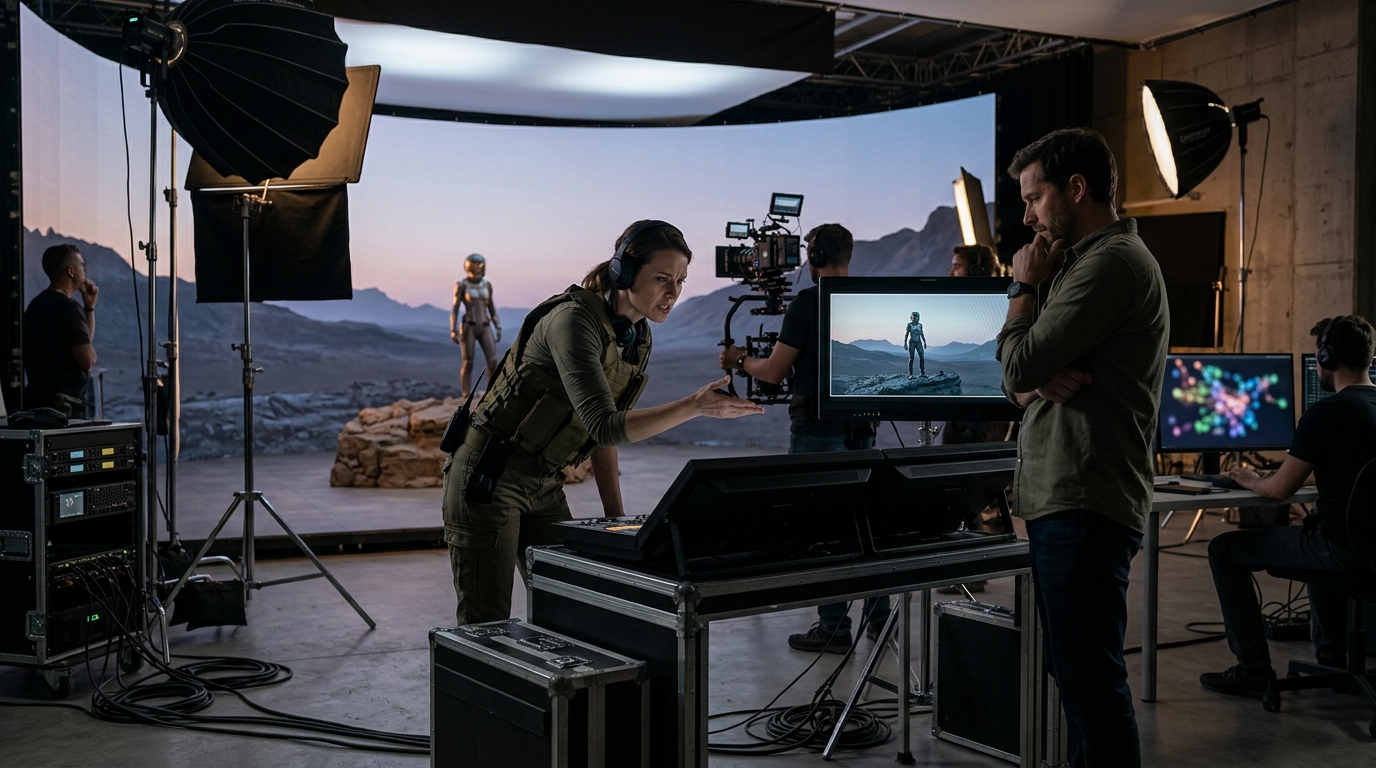
Common LED Volume Mistakes That Make Green Screen the Better Choice
Virtual production has revolutionized the film industry, with LED volume walls offering real-time lighting and immersive backgrounds. However, this technology is not a universal solution for every production need. According to industry data, the global virtual production market is projected to grow significantly, yet many productions still fail to see a return on investment due to technical missteps. Understanding the limitations of LED volumes is crucial for producers who want to avoid costly overruns and creative compromises.
Understanding LED Volume Technology
LED volume technology, popularized by stages like those used in The Mandalorian, uses massive LED walls to display real-time environments. This allows actors to interact with realistic lighting and reflections immediately. The technology relies heavily on Unreal Engine to render these environments in real time. This integration creates a seamless experience for both the cast and the camera crew.
Virtual production is defined as the use of real-time computer graphics to create visual effects during the filming process. This definition highlights the core advantage: seeing the final image on set rather than in post-production. However, this advantage comes with significant technical requirements. The hardware must be robust, and the software must be optimized for low latency. Any failure in this chain can disrupt the entire shoot.
Common LED Volume Mistakes
Many productions assume that LED volumes are a simple plug-and-play solution. This assumption often leads to critical errors. One of the most frequent mistakes is underestimating the complexity of asset creation. Creating high-fidelity 3D environments that match the camera's perspective requires extensive pre-production work. If the assets are not detailed enough, the illusion breaks when the camera moves.
Another common error is ignoring the physical constraints of the stage. LED walls have a specific curvature and resolution. If the camera lens choice does not align with the screen's pixel pitch, the image can appear distorted or pixelated. This issue is particularly problematic for wide-angle shots. Producers must carefully plan their camera movements to stay within the "sweet spot" of the volume.
Lighting mismatches are also a frequent pitfall. While LED walls provide realistic lighting, they may not match the intensity or color temperature of practical lights used on set. This discrepancy can cause color grading issues in post-production. The reflection of the LED wall on actors' skin or props can also create unwanted artifacts. These artifacts are difficult to remove without advanced VFX techniques.
When Green Screen Wins
Despite the hype, green screen technology remains superior in several specific scenarios. The primary advantage of green screen is flexibility. Producers can change the background entirely in post-production without returning to the stage. This flexibility is invaluable for productions with tight schedules or uncertain creative directions.
Green screen is also more cost-effective for small-scale projects. Renting an LED volume stage is expensive due to the high cost of hardware and technical staff. For projects with limited budgets, green screen offers a more accessible entry point. The technology requires less specialized equipment and can be set up in standard studio spaces.
Additionally, green screen allows for greater control over lighting. Directors can light the subject independently of the background. This separation provides more creative freedom in post-production. It also avoids the risk of moiré patterns, which can occur when filming LED screens with certain camera sensors. Moiré patterns are visual artifacts that appear as wavy lines or patterns on the screen.
Cost and Workflow Analysis
Understanding the cost structure of both technologies is essential for budgeting. LED volumes require significant upfront investment in assets and technical support. Green screen, while cheaper on set, can incur higher costs in post-production for keying and compositing. The total cost depends on the complexity of the project.
| Factor | LED Volume | Green Screen |
|---|---|---|
| Pre-Production Cost | High (Asset Creation) | Low (Planning Only) |
| On-Set Cost | High (Stage Rental) | Low (Standard Studio) |
| Post-Production Cost | Low (Minimal VFX) | High (Keying & Compositing) |
| Creative Flexibility | Real-Time Changes | Post-Production Changes |
| Technical Risk | High (Hardware/Software) | Low (Standard Tech) |
For large-scale productions, the reduced post-production time of LED volumes can justify the higher on-set costs. However, for smaller projects, the flexibility and lower initial cost of green screen often make it the better choice. Producers must weigh these factors against their specific creative goals.
Decision Framework
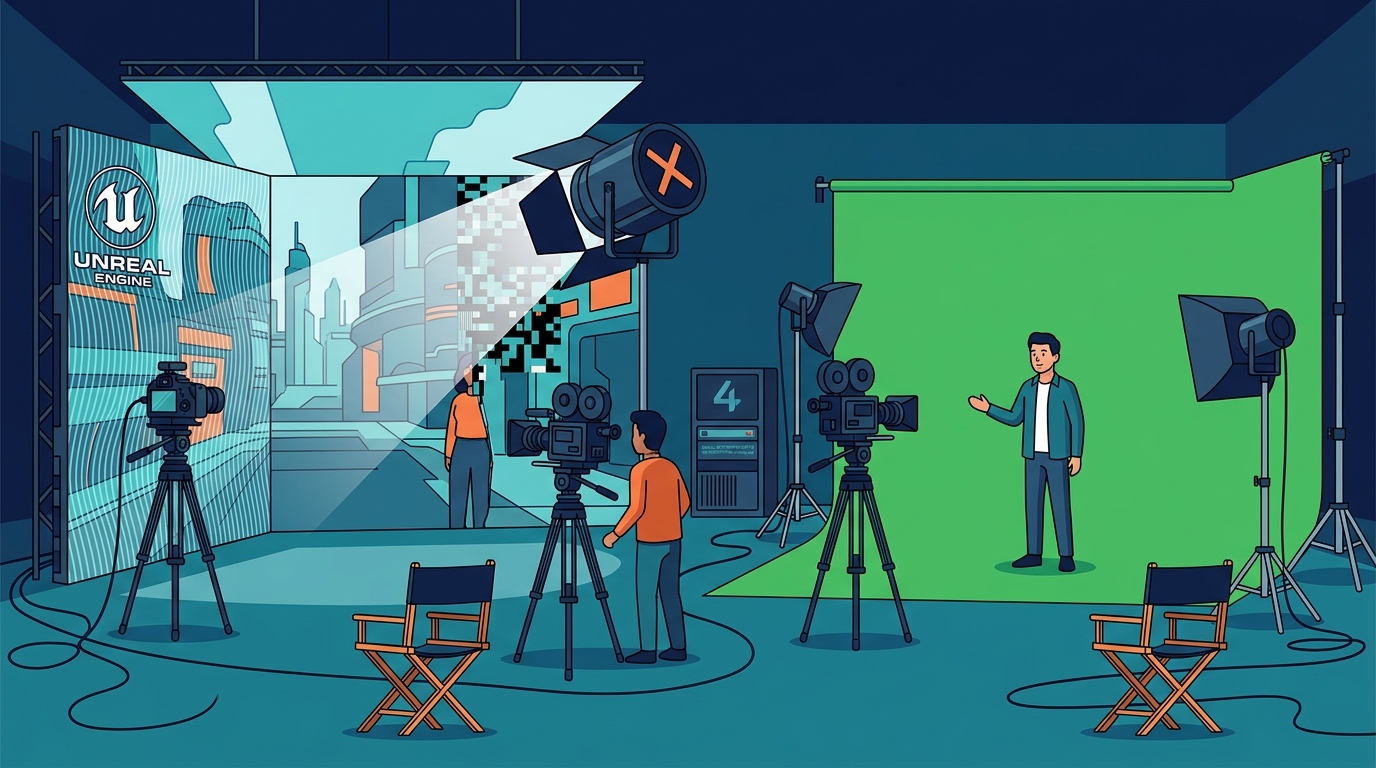
Choosing between LED volume and green screen requires a clear understanding of the project's needs. Consider the following questions to determine the best approach:
- What is the budget? LED volumes are generally more expensive on set.
- What is the timeline? Green screen allows for more post-production time.
- What is the creative vision? LED volumes offer real-time immersion.
- What are the technical constraints? Green screen is more forgiving of lighting errors.
At 24ATL Studios, we help producers navigate these decisions. Our team provides expert guidance on virtual production techniques and helps you choose the right technology for your project. We specialize in creating immersive environments that enhance the storytelling process.
Key Takeaways
- LED volumes offer real-time lighting and immersion but require high pre-production investment.
- Green screen provides greater flexibility and lower on-set costs for small projects.
- Moiré patterns and lighting mismatches are common technical risks with LED volumes.
- Asset creation is a critical component of successful LED volume productions.
- 24ATL Studios offers custom Unreal Engine environments for tailored production needs.
- The choice between technologies depends on budget, timeline, and creative goals.
- Virtual production is defined as using real-time graphics during filming.
Frequently Asked Questions
Is LED volume always better than green screen?
No, LED volume is not always better. It depends on the budget, timeline, and creative requirements of the project. Green screen offers more flexibility for post-production changes.
What is the main advantage of LED volume?
The main advantage is real-time visualization. Directors can see the final image on set, which helps with lighting and performance decisions.
How does 24ATL Studios handle asset creation?
24ATL Studios creates custom Unreal Engine environments tailored to the specific needs of each production. We ensure high-fidelity assets that match the camera's perspective.
Can green screen be used for large-scale productions?
Yes, green screen can be used for large-scale productions. However, it may require more post-production time and VFX work compared to LED volumes.
What is virtual production?
Virtual production is defined as the use of real-time computer graphics to create visual effects during the filming process. It integrates pre-visualization and post-production workflows.
Are there technical risks with LED volumes?
Yes, technical risks include hardware failures, software latency, and lighting mismatches. Proper planning and technical support can mitigate these risks.
How do I choose the right studio?
Consider the studio's experience, equipment, and technical support. 24ATL Studios offers a team of experts to guide you through the production process.
Contact 24ATL Studios
Ready to elevate your production? Contact 24ATL Studios today to discuss your project. Our team is ready to help you choose the right technology and create immersive environments that bring your vision to life. Frame your shoot with the best in virtual production.