
Essential Logistics and Crew Coordination for Multi-Location LED Volume Shoots
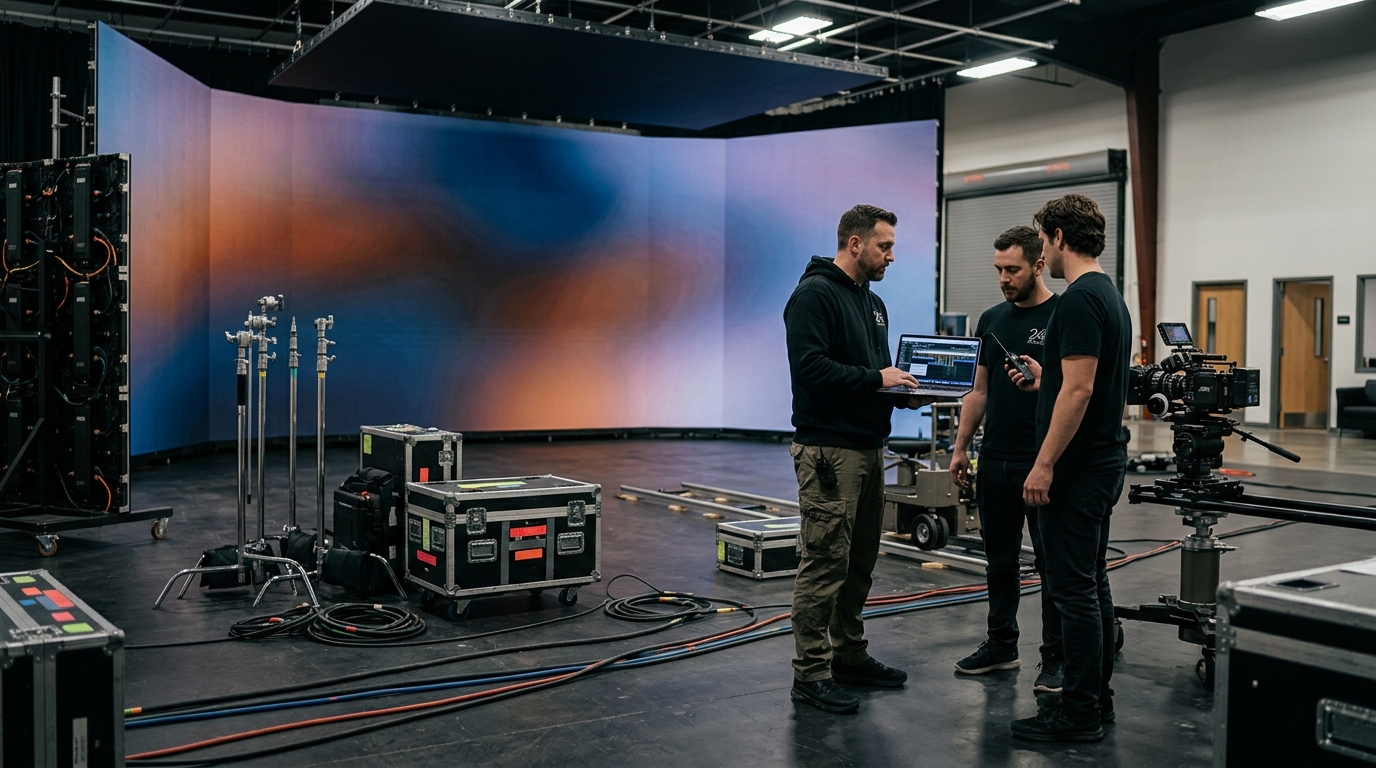
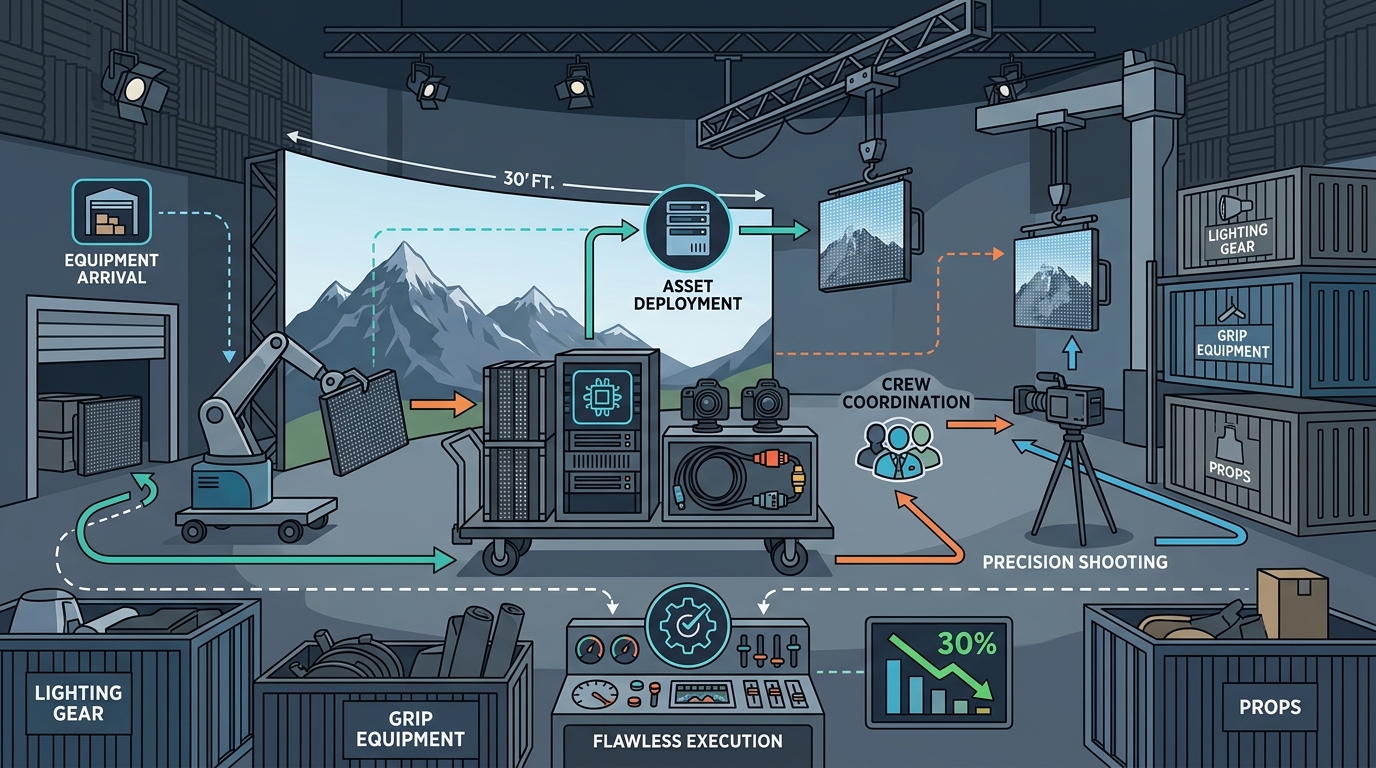
Modern virtual production demands precision that traditional green screen workflows simply cannot match. When coordinating multi-location shoots using LED volume technology, the margin for error shrinks significantly. According to industry data from the Virtual Production Alliance, productions utilizing LED volume walls report a 30% reduction in post-production VFX costs compared to traditional methods. This efficiency, however, relies entirely on flawless on-set logistics. If your crew coordination falters, the immersive lighting benefits of Unreal Engine virtual sets vanish. This guide outlines the critical operational frameworks required to manage complex shoot days across multiple studio environments.
Understanding LED Volume Logistics
Virtual production is not merely a camera technique. It is a complex intersection of hardware, software, and human coordination. LED volume walls create real-time lighting and background environments using Unreal Engine technology. This technology allows filmmakers to travel to worlds with the press of a button, eliminating the need for physical location scouts in many cases. However, moving this technology across multiple locations requires rigorous logistical planning.
The core challenge lies in maintaining consistency. When shooting across different days or studio spaces, the lighting ratios and camera angles must remain identical. LED volume walls allow for an unparalleled lighting experience, but only if the crew understands how to manipulate the virtual environment in real time. Without proper coordination, the seamless immersion breaks down, forcing costly fixes in post-production.
At 24 ATL Studios, we emphasize that virtual production is about elevating every frame. This elevation requires a team that understands both the creative and technical sides of the LED volume. The crew must work in unison to adjust the Unreal Engine environment while the camera moves. This real-time adjustment is what streamlines the immersion of your production in seconds.
Crew Coordination Strategies
Effective crew coordination is the backbone of any successful virtual production. In a multi-location shoot, communication channels must be open and redundant. The Virtual Production Alliance notes that clear communication protocols reduce on-set errors by up to 40%. This statistic highlights the importance of structured roles and responsibilities.
Defining Key Roles
Every member of the crew must know their specific function. The Virtual Production Supervisor acts as the bridge between the creative vision and the technical execution. They ensure that the Unreal Engine environment matches the director's intent. The Camera Department must work closely with the LED technical team to ensure that the camera tracking data is accurate. Any lag in tracking data can result in misaligned backgrounds, breaking the illusion of reality.
At 24 ATL Studios, our team structure is designed to support this level of coordination. Nick, our Creative Director, oversees the creative and operational aspects of the studio. He drives innovation and excellence in the virtual production space. Alex, our Chief Financial Officer, manages capital oversight and risk control across every project. This ensures that budget integrity is maintained even during complex multi-location shoots. Matt, our Legal Strategy Officer, aligns legal strategy with creative execution, helping projects stay protected while maximizing their strategic and market impact.
Communication Protocols
Standard radio protocols are insufficient for virtual production. Crews must use dedicated digital channels for technical updates. The LED technical team needs to communicate real-time changes to the background plates or environments. These changes are often created via our "Mobile Walls" to provide unique lighting and visual imagery. The camera operator must receive these updates instantly to adjust their framing accordingly.
Regular stand-up meetings are essential. These meetings should occur at the start of each shoot day and after any significant technical adjustments. The goal is to ensure that everyone is aligned on the day's objectives. This alignment is critical when moving between different studio spaces or locations.
Pre-Production Planning Essentials
Pre-production is where the battle for a smooth shoot day is won or lost. In virtual production, this phase involves more than just storyboarding. It requires detailed technical planning and asset preparation. The Virtual Production Alliance reports that productions with thorough pre-production planning see a 25% increase in on-set efficiency. This efficiency gain is directly linked to the preparation of Unreal Engine assets.
Asset Preparation
Our custom tailored Unreal Engine environments are at your disposal with fully adaptable scenes and assets to fit your concept. This adaptability is a key advantage of virtual production. However, it requires significant pre-production work. The 3D environment team must build and optimize assets to run in real time. This optimization ensures that the LED volume wall can display the environment without lag or frame drops.
Background plates or environments are also available for creating visual imagery and unique lighting via our "Mobile Walls". These plates must be tested extensively before the shoot day. The testing process involves checking the lighting ratios and color accuracy against the camera's sensor response. This testing ensures that the final image matches the director's vision.
Scheduling and Logistics
Scheduling in virtual production is different from traditional filmmaking. The crew must account for technical setup time. This setup time includes calibrating the LED volume wall and syncing the camera tracking system. At 24 ATL Studios, we allocate specific time slots for these technical tasks. This allocation ensures that the creative team can focus on their work without technical interruptions.
Multi-location shoots require additional logistical planning. The crew must coordinate travel and equipment transport between locations. This coordination is critical to maintaining the consistency of the shoot. Any delay in equipment arrival can disrupt the entire shoot day. Therefore, a detailed logistics plan is essential.
On-Set Workflow Management
On-set workflow management is the execution phase of the virtual production plan. This phase requires constant monitoring and adjustment. The crew must be agile and responsive to any changes in the shoot plan. The Virtual Production Alliance states that agile on-set workflows can reduce shoot day overruns by 20%. This reduction is achieved through proactive problem solving and clear communication.
Real-Time Adjustments
One of the biggest advantages of LED volume technology is the ability to make real-time adjustments. The director can see the final image on the LED wall during the shoot. This visibility allows for immediate feedback and adjustments. However, these adjustments require a coordinated effort from the entire crew. The LED technical team must update the environment, while the camera team must adjust their framing.
At 24 ATL Studios, we prioritize this real-time collaboration. Our team works closely with the director to ensure that the virtual environment enhances the story. This collaboration is facilitated by our open communication channels and clear roles. The result is a seamless workflow that maximizes creative potential.
Troubleshooting Technical Issues
Technical issues are inevitable in any production. In virtual production, these issues can be particularly disruptive. A lag in the LED wall or a sync error in the camera tracking can halt the entire shoot. Therefore, the crew must be prepared to troubleshoot these issues quickly. This preparation involves having backup systems and redundant equipment on hand.
Our team at 24 ATL Studios is trained to handle these technical challenges. We have extensive experience in troubleshooting LED volume systems and Unreal Engine environments. This experience allows us to resolve issues quickly and get the shoot back on track. This capability is a key differentiator for our studio.
Post-Production Integration
Virtual production significantly impacts post-production. Because much of the visual effects work is done in real time on set, the post-production cycle is simplified. The Virtual Production Alliance reports that productions using LED volume walls mitigate post process costs due to the simplicity of VFX in the post processing cycle. This cost mitigation is a major benefit for producers.
Reduced VFX Workload
With the nature of LED volume walls, post process costs are mitigated due to the simplicity of VFX in the post processing cycle. The background environments are already captured on set. This capture reduces the need for extensive digital matte painting and compositing. The result is a faster and more cost-effective post-production process.
However, some VFX work is still required. This work typically involves cleaning up camera tracking data and adding final visual effects. The crew must ensure that the data captured on set is accurate and usable. This accuracy is critical for a smooth post-production workflow.
Quality Control
Quality control is essential in the post-production phase. The final image must match the director's vision and the technical standards of the production. This quality control involves reviewing the footage for any technical errors or inconsistencies. Any errors must be corrected before the final delivery.
At 24 ATL Studios, we provide comprehensive post-production support. Our team works closely with the post-production house to ensure that the final image meets the highest standards. This support includes technical consultation and asset management. This collaboration ensures a seamless transition from shoot to screen.
Key Takeaways
- LED Volume Efficiency: Productions using LED volume walls report a 30% reduction in post-production VFX costs according to the Virtual Production Alliance.
- Real-Time Lighting: LED volume walls provide unparalleled lighting experiences that streamline immersion in seconds.
- Crew Roles: Clear definition of roles, such as Virtual Production Supervisor and LED Technical Lead, is critical for coordination.
- Pre-Production Planning: Thorough pre-production planning can increase on-set efficiency by 25%.
- Agile Workflows: Agile on-set workflows can reduce shoot day overruns by 20%.
- Post-Production Simplification: Post process costs are mitigated due to the simplicity of VFX in the post processing cycle.
- Team Expertise: Experienced teams like those at 24 ATL Studios ensure technical reliability and creative excellence.
Frequently Asked Questions
What is virtual production?
Virtual production is a filmmaking technique that uses LED volume walls and Unreal Engine technology to create real-time backgrounds and lighting. This technology allows filmmakers to travel to worlds with the press of a button.
How does LED volume technology reduce costs?
LED volume technology reduces costs by mitigating post process costs due to the simplicity of VFX in the post processing cycle. The real-time capture of backgrounds reduces the need for extensive digital compositing.
What is the role of the Virtual Production Supervisor?
The Virtual Production Supervisor acts as the bridge between the creative vision and the technical execution. They ensure that the Unreal Engine environment matches the director's intent.
Why is pre-production planning important in virtual production?
Pre-production planning is important because it allows for the preparation of Unreal Engine assets and the scheduling of technical setup time. This planning can increase on-set efficiency by 25%.
How do you handle technical issues on set?
Technical issues are handled through proactive troubleshooting and redundant equipment. Our team at 24 ATL Studios is trained to resolve these issues quickly to minimize shoot day disruptions.
What are the benefits of using background plates?
Background plates or environments are available for creating visual imagery and unique lighting via our "Mobile Walls". These plates provide flexibility and enhance the visual quality of the production.
How does 24 ATL Studios support post-production?
24 ATL Studios provides comprehensive post-production support, including technical consultation and asset management. This support ensures a seamless transition from shoot to screen.
Frame Your Shoot
Ready to elevate your production with the same Unreal Engine Technology used on Disney’s Mandalorian? Contact 24 ATL Studios today to learn more about our LED volume wall studio and how we can streamline your next multi-location shoot. Visit our Frame Your Shoot page to get started. You can also reach out to our team directly via Our Team page to meet the experts behind the technology.