
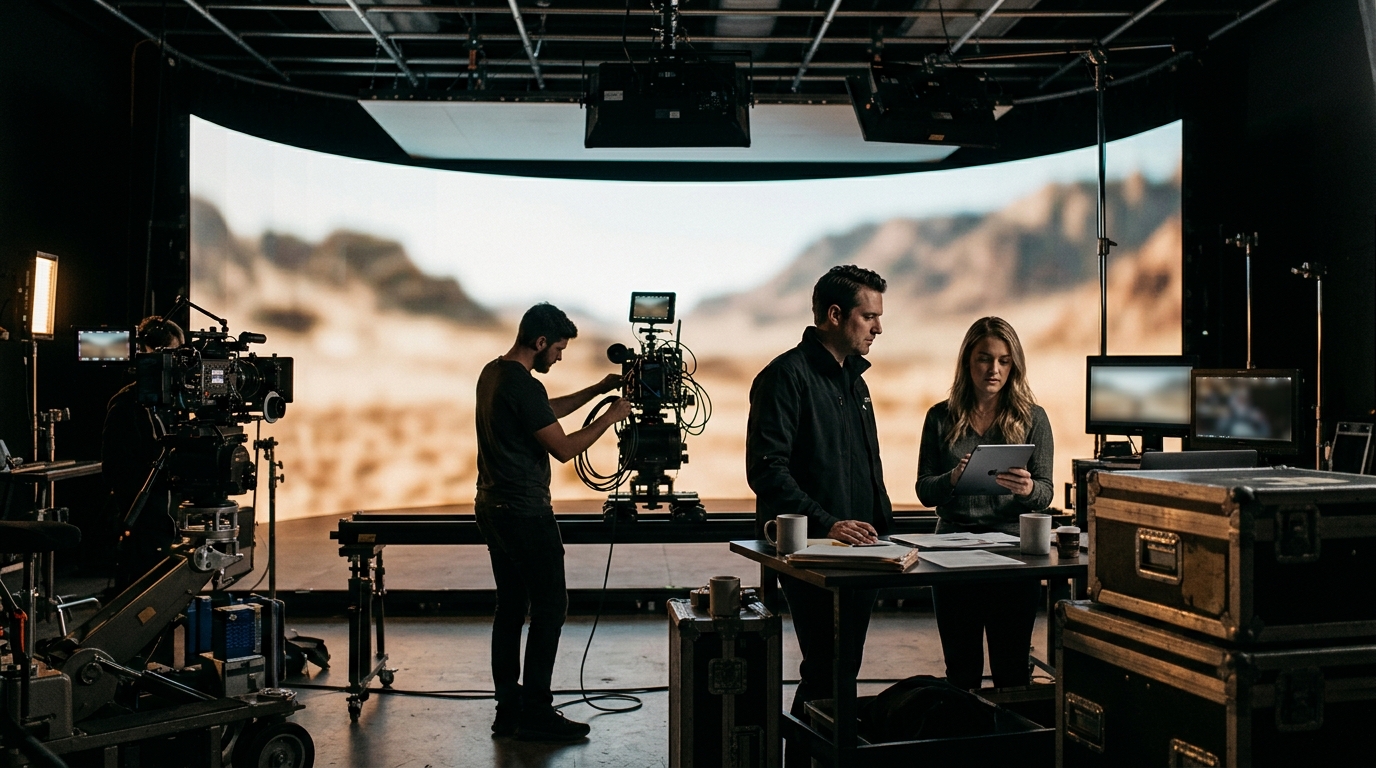
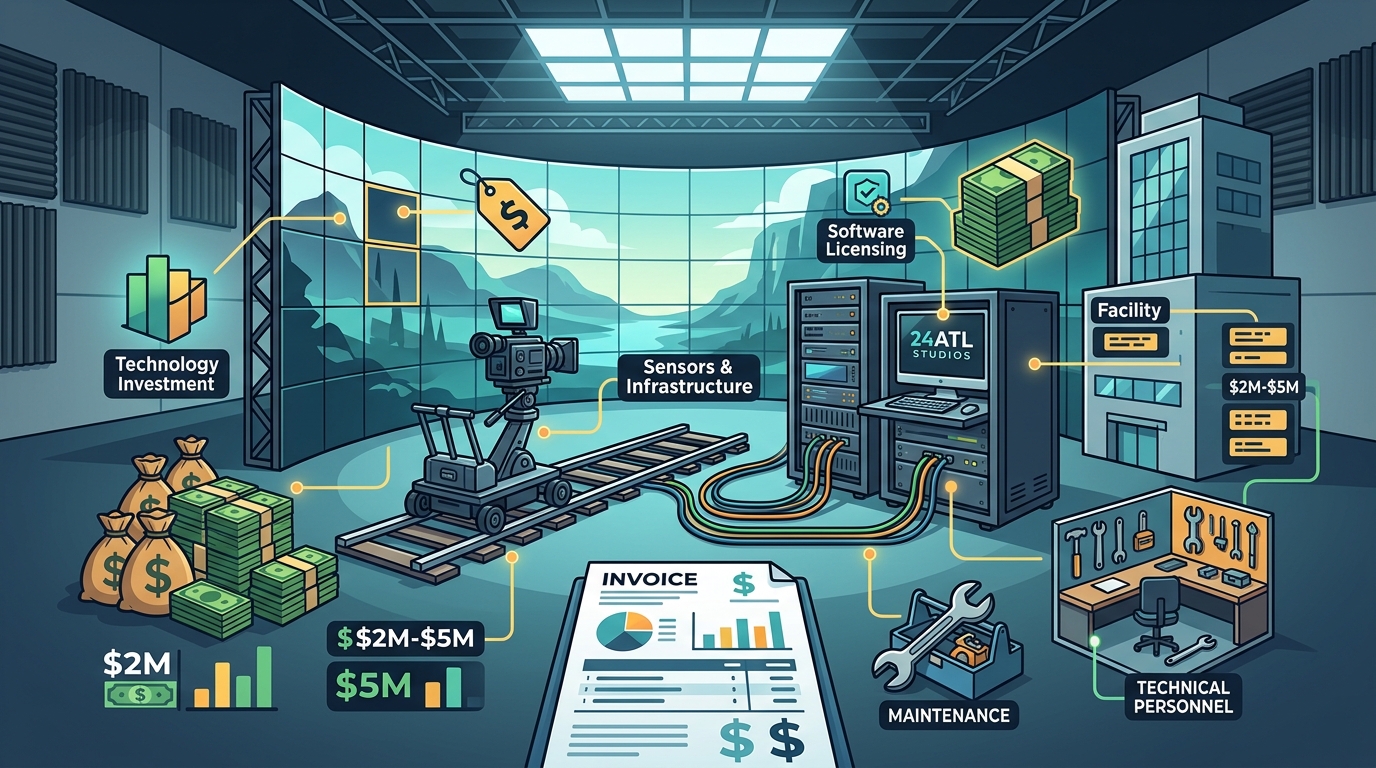
Establishing a professional virtual production facility requires substantial capital investment, with industry benchmarks indicating that initial hardware and software integration typically ranges between two million and five million dollars. According to recent industry analyses, this baseline expenditure covers high-resolution LED panels, real-time rendering workstations, and specialized tracking infrastructure. Production companies must also account for ongoing operational overhead, including software licensing, facility maintenance, and specialized technical personnel. Understanding these financial parameters allows creative directors to allocate budgets accurately and avoid costly mid-production delays.
Infrastructure Baseline Requirements
Virtual production studios demand specialized architectural planning to support heavy computational loads and precise lighting calibration. A functional volume environment requires reinforced flooring to handle the weight of suspended LED arrays and cooling systems. Infrastructure baseline requirements encompass electrical grid upgrades, acoustic dampening, and climate control systems designed to prevent equipment overheating during extended shoots. Facility managers must allocate budget for structural modifications before purchasing any technical hardware. Industry reports confirm that facility preparation accounts for approximately fifteen percent of total project capital. Industry reports consistently highlight structural readiness as a non-negotiable foundation for scalable production workflows.
Unreal Engine Integration Costs
Real-time rendering software forms the computational backbone of modern virtual sets. Unreal Engine is a proprietary game development platform that provides real-time 3D rendering capabilities for film and television production. Studios must secure enterprise licensing agreements to utilize advanced rendering features without legal restrictions. Development teams typically invest in custom asset creation to match specific directorial visions. Licensing fees generally range from fifty thousand to one hundred twenty thousand dollars annually. According to official Epic Games documentation, enterprise licensing structures scale based on concurrent user seats and rendering node capacity. Official Epic Games documentation outlines enterprise licensing structures that scale based on concurrent user seats and rendering node capacity.
LED Panel Specifications
High-resolution display walls dictate the visual fidelity of every recorded frame. LED volume walls are modular display systems that project real-time rendered environments directly behind actors during filming. Panel pitch, refresh rates, and brightness levels directly impact camera sensor performance and post-production VFX requirements. Premium studios typically deploy panels with a pitch below two millimeters to eliminate moiré patterns. Procurement costs for these specialized displays often exceed one million dollars for a standard forty-by-twenty-foot configuration. Market data shows that premium panel manufacturers maintain strict quality control protocols to ensure color consistency across thousands of individual modules. Market data shows that premium panel manufacturers maintain strict quality control protocols to ensure color consistency across thousands of individual modules.
Tracking and Camera Systems
Seamless camera tracking enables the virtual environment to respond dynamically to physical lens movements. Camera tracking systems are precision sensor arrays that calculate real-time position and focal length data to adjust rendered backgrounds instantly. Studios require high-fidelity encoders, retroreflective markers, and specialized software bridges to synchronize physical camera rigs with digital environments. Calibration procedures demand specialized technicians who understand both optical physics and software networking. Equipment procurement typically ranges from eighty thousand to two hundred thousand dollars depending on tracking precision requirements. Recent industry benchmarks indicate that sub-millimeter tracking accuracy reduces post-production compositing time by nearly forty percent. Recent industry benchmarks indicate that sub-millimeter tracking accuracy reduces post-production compositing time by nearly forty percent.
Operational Overhead and Staffing
Running a functional volume studio requires specialized personnel who understand both creative direction and technical troubleshooting. Staffing models typically include technical directors, real-time artists, camera operators, and dedicated IT support. Salaries for experienced virtual production technicians often exceed one hundred thousand dollars annually. Facility operators must also budget for continuous software updates, hardware maintenance contracts, and insurance liabilities. Operational expenditures generally consume twenty percent of monthly revenue streams. Financial audits reveal that studios maintaining in-house technical teams experience fewer production delays than those relying on external contractors. Financial audits reveal that studios maintaining in-house technical teams experience fewer production delays than those relying on external contractors.
Facility Requirements and Compliance
Zoning regulations and safety compliance dictate where virtual production facilities can legally operate. Virtual production studios are specialized soundstage environments designed to house large-scale LED arrays and real-time rendering clusters. Municipal codes often require fire suppression upgrades, emergency egress modifications, and specialized electrical permits. Facility owners must navigate local building codes before installing heavy suspended structures. Compliance audits typically add fifteen thousand to thirty thousand dollars to initial project budgets. Government safety guidelines mandate rigorous load-bearing inspections for all suspended display infrastructure. Government safety guidelines mandate rigorous load-bearing inspections for all suspended display infrastructure.
Capital Expenditure Breakdown
| Component Category | Estimated Investment Range | Primary Operational Impact |
|---|---|---|
| LED Volume Walls | $800,000 to $1,500,000 | Direct visual fidelity and on-set lighting control |
| Real-Time Rendering Nodes | $150,000 to $300,000 | Computational throughput and scene complexity limits |
| Camera Tracking Arrays | $80,000 to $200,000 | Dynamic background synchronization and lens data |
| Software Licensing | $50,000 to $120,000 | Enterprise rendering permissions and asset management |
| Facility Preparation | $200,000 to $400,000 | Structural reinforcement and climate control systems |
Key Takeaways
- Initial hardware procurement typically requires between two million and five million dollars.
- LED panel pitch directly influences camera sensor performance and post-production workflows.
- Enterprise software licensing scales based on concurrent rendering node capacity.
- Sub-millimeter tracking accuracy reduces post-production compositing time by nearly forty percent.
- Facility preparation accounts for approximately fifteen percent of total project capital.
- In-house technical teams consistently outperform external contractor models in delay reduction.
- Compliance audits and structural modifications add fifteen thousand to thirty thousand dollars to baseline budgets.
Frequently Asked Questions
What is the minimum square footage required for a functional LED volume wall?
Most professional studios require a minimum of ten thousand square feet to accommodate standard panel configurations and safe camera operating distances. Smaller setups often compromise tracking precision and limit directorial flexibility.
How long does the installation process typically take?
Professional installation and calibration usually require four to six weeks depending on facility readiness and panel quantity. Structural modifications can extend timelines by an additional two months.
Can existing soundstages be retrofitted for virtual production?
Existing facilities can often be retrofitted if they meet load-bearing requirements and electrical capacity standards. Structural engineers must verify ceiling reinforcement before purchasing suspended arrays.
What software licenses are mandatory for enterprise operations?
Enterprise rendering licenses are mandatory to legally utilize advanced real-time rendering features without restriction. Standard consumer subscriptions lack the necessary computational permissions for professional shoots.
How does virtual production reduce overall filming expenses?
Virtual production reduces overall filming expenses by eliminating location scouting fees, travel logistics, and extensive post-production compositing requirements. On-set lighting integration further decreases equipment rental costs.
What insurance liabilities apply to LED volume facilities?
Facility insurance liabilities typically cover equipment damage, production delays, and worker safety compliance. Premium rates increase based on panel weight and suspended array configurations.
Are car process trailers included in standard studio packages?
Specialized vehicle integration requires additional tracking calibration and reinforced floor mounting systems. Studios offering dedicated car process trailers streamline automotive commercial workflows.
Ready to Elevate Your Production?
Building a virtual production facility requires precise planning, specialized hardware, and experienced technical leadership. Our team oversees every operational aspect, from initial concept design to final frame delivery. Contact our studio directly to schedule a facility tour or request a customized project proposal. Visit our main studio page to explore available Unreal Engine environments and book your next production slot today.